
Key takeaways
- Who decides on a commercial cleaning vendor depends on the building. Usually it is a facilities, property, or operations manager who recommends and someone above or beside them who approves.
- The first person to reply is often a gatekeeper or a champion. A forward to someone else is a good sign, not a brush-off.
- Each person involved cares about something different: day-to-day reliability, budget, risk, or ownership's view. Your pitch has to work for all of them.
- A site walkthrough is the best way to meet the real decision-maker, because it is where trust and fit get built.
- Reach these buyers by being in their inbox with a clear, low-risk offer, then make the reply easy to pass up the chain.
Who decides on a commercial cleaning vendor? In most commercial buildings, a facilities manager, property manager, or office/operations manager runs the search and makes the recommendation. Someone with budget authority, such as an owner, regional director, asset manager, or procurement lead, approves it. Smaller sites often collapse this into one person. Larger portfolios split it across several people. The title on the door matters less than where that building sits in the chain.
That is worth knowing before you send a single email, because the person who replies to you is often not the person who signs.
The roles you will meet
Think of four jobs, not four titles. One person can hold more than one.
The day-to-day owner
This is the facilities, property, or office manager. They live with the cleaning. They hear when a restroom is out of supplies or the lobby floors look tired. They usually write the scope, collect the bids, and walk contractors through the building. If you only get to one person, this is it.
The budget holder
Sometimes the same person, often not. In a multi-site portfolio this might be a regional or operations director. For a single building, it could be the owner or the property's asset manager. They care less about how the floors are stripped and more about cost, continuity, and whether this vendor will cause problems.
Procurement or purchasing
Larger organizations route contracts through a purchasing function. They tend to ask for insurance, references, and a formal proposal. ISSA, the cleaning industry association, speaks directly to facility managers and purchasing professionals when it explains why a buyer might pre-qualify cleaning contractors with CIMS certification, and it notes that some buyers write that certification into their requirements. That tells you who is reading proposals: more than one function, using more than one filter.
The end user or tenant
In leased space, tenants and building staff have a quiet veto. If the people in the building complain, the contract does not last, however good the bid looked.
Why the first reply is usually not the final decision
B2B research keeps landing on the same point: purchases involve groups, not individuals. Gartner's sales research describes buying groups that span several people and functions, and that is general B2B, not cleaning specifically. A cleaning contract is a smaller buy than enterprise software, so the group is smaller. The pattern still holds: someone finds you, someone else has to agree.
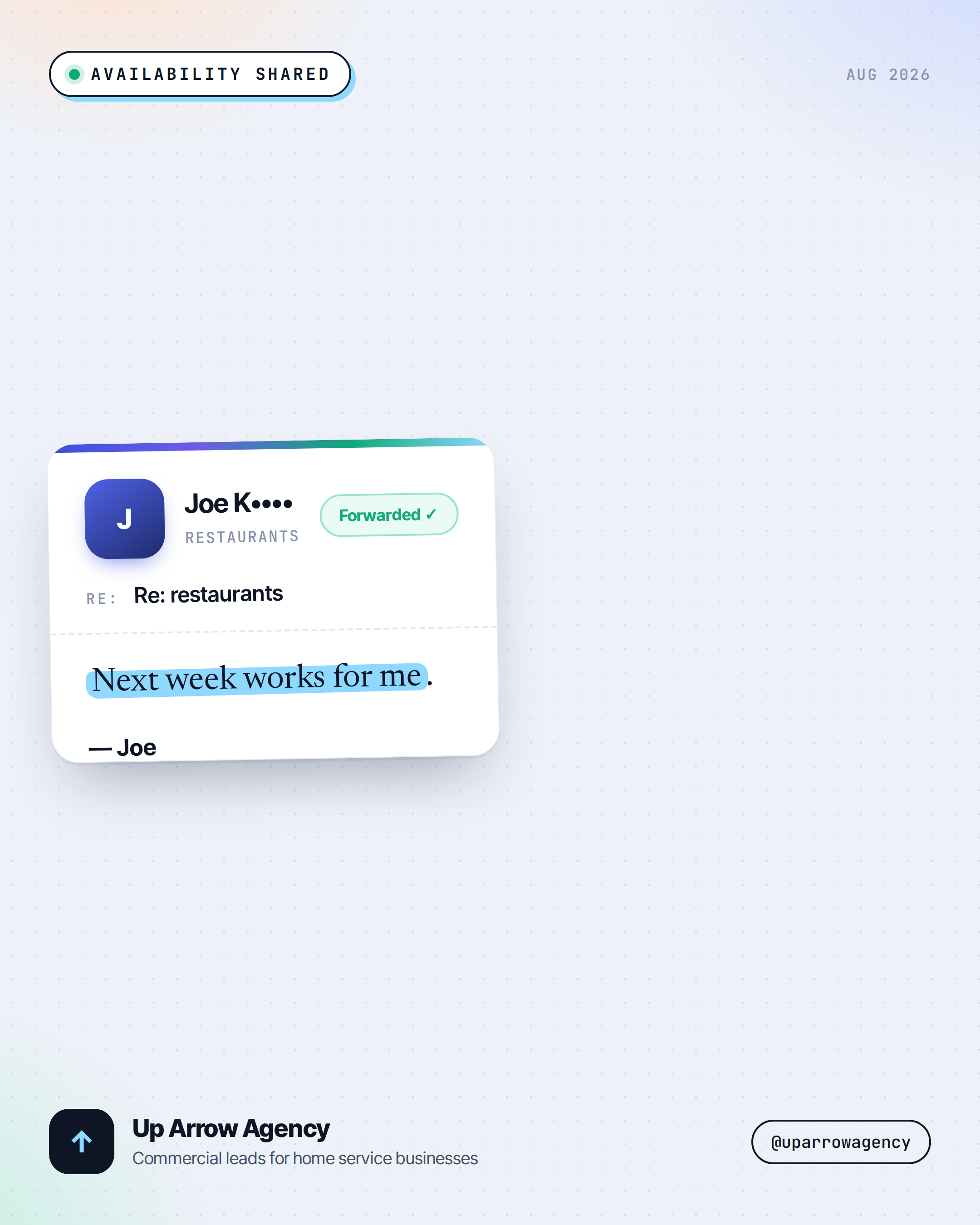
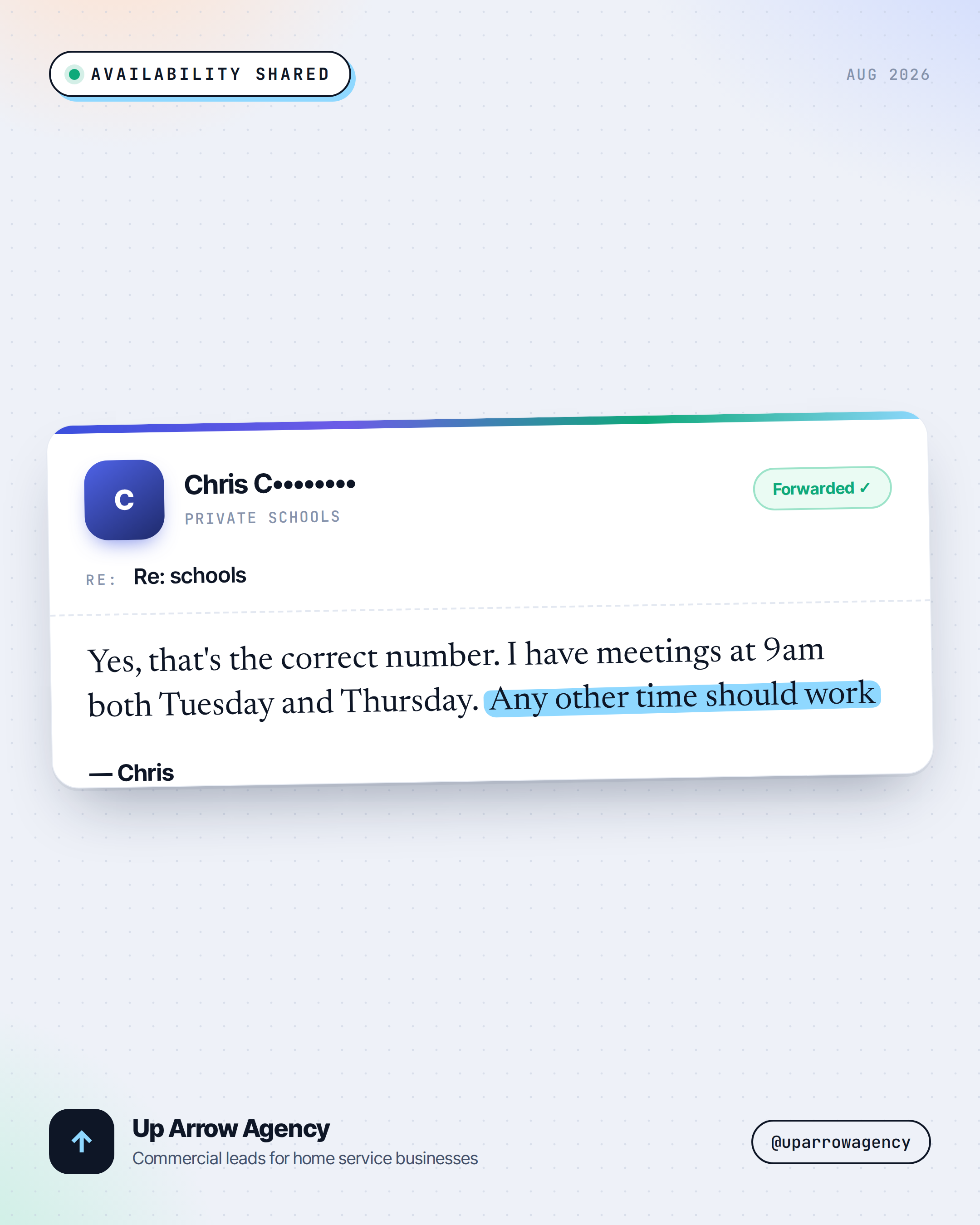
We see this in our own campaigns. Between April 2026 and October 2026, 1,090 genuine replies to our clients' cold emails were forwarded internally to a decision-maker. That is the reply saying, in effect, "this is not mine alone, let me pass it on." Of those, 404 also asked about pricing or a quote. That is not a sign these buyers only want a number. It is what a person does when they are handed something new and want a quick handle on it. It is an invitation, and the right response is to get into a conversation, not to fire back a figure.
What each person actually wants
If you write one pitch, you will lose someone. The day-to-day owner wants fewer headaches and a vendor who shows up. The budget holder wants predictability and a clear reason this is worth it. Procurement wants paperwork that holds up. Ownership wants the building to look good and tenants to stay quiet.
Price comes up with all of them, because it is the easiest question to ask about something you have not seen yet. The way to answer is to give them more to evaluate than a number. An older piece in Entrepreneur, which credits BOMA International, advises buyers to have contractors examine the premises before bidding and to ask for references and facilities they can inspect. The advice is old, and it still describes how careful buyers behave. They want to see the space, see the vendor, and check the track record.
How to reach them
Start with the person who will feel the problem
For most of the home-service companies we work with, whether commercial cleaning, janitorial, pressure washing, or carpet and upholstery, the best first contact is the facilities, property, or operations manager. Start there, not with the highest title you can find. A senior executive often forwards a cold message down anyway.
Write so the email survives a forward
Assume your message will be passed along. Keep it short, specific to what the building needs, and clear on what happens next. If the second reader has no context, the email should still make sense. Our guide to cold email for cleaning companies covers how we structure that.
Make the next step a walkthrough
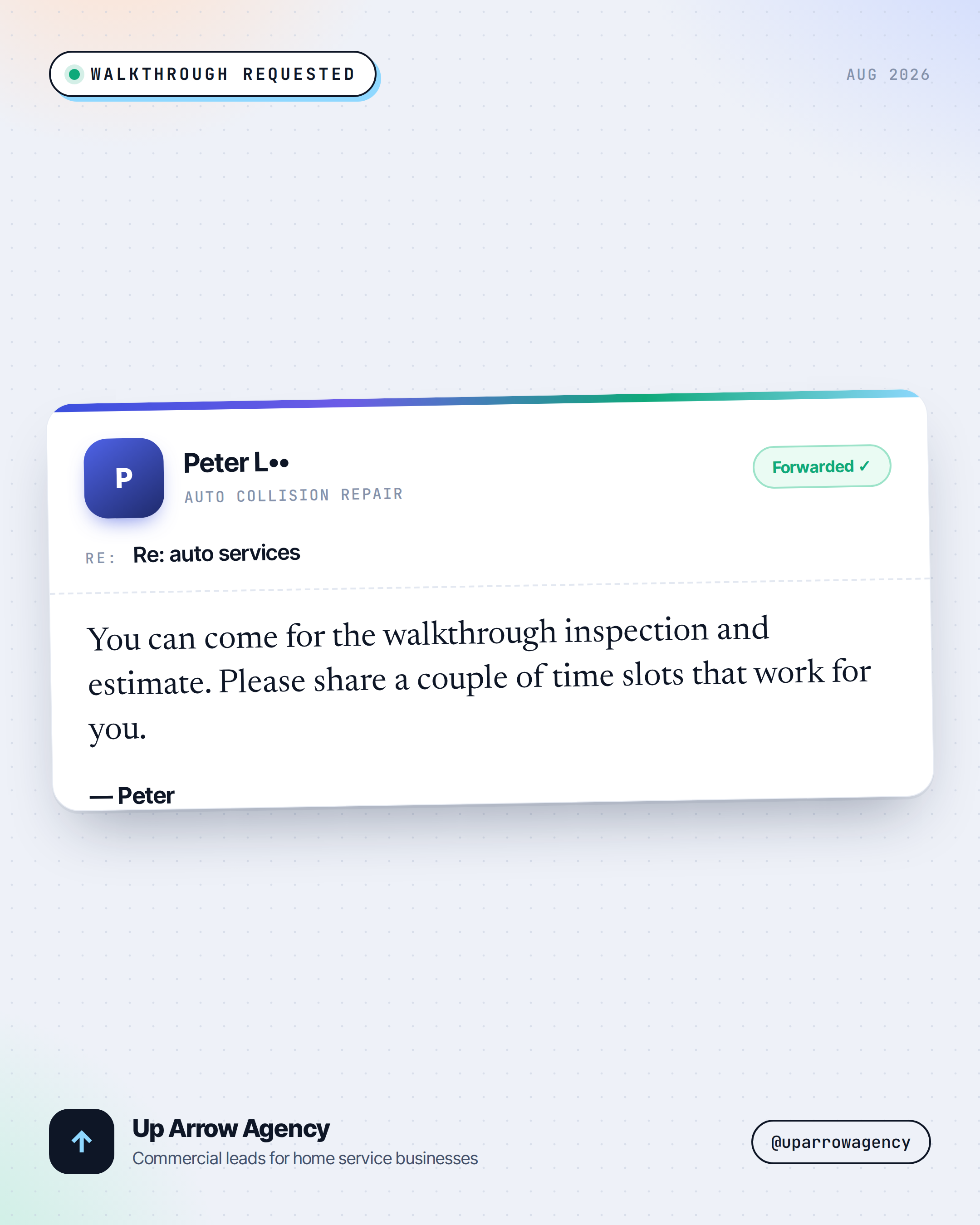
When someone replies, the goal is not to close by email. It is to get on site. A walkthrough lets you see the building, understand what actually bothers them, and meet whoever else is involved. Often the budget holder or an owner shows up, or joins by call. It also takes risk off their plate: they get to judge you in person before committing to anything. People hire vendors they have met and trust. The walkthrough is where that begins.
Ask who else weighs in
Once you are talking, ask plainly: "Who else will want to see this before a decision?" Most managers will tell you. Then help that person. Offer a short summary they can forward, and invite them to the walkthrough.
A composite example
Picture a property manager at a mid-sized office building, for example. They get a short email about commercial cleaning, reply with a quick question about cost, and forward it to the regional operations lead. The operations lead sees the cost question but not the context, and the thread stalls. In the version that works, the vendor answers the question warmly, says the number depends on the building, and offers a free walkthrough. The property manager invites the operations lead along. By the end of that visit, both of them know the vendor, and the conversation has moved from "how much" to "when can you start."
What this looks like in practice
Our published results reflect this approach: 48 commercial leads in 6 weeks for one client, a $38K/year recurring cleaning contract from a single campaign, and $160K in commercial cleaning jobs closed from cold email. None of those came from quoting blind. They came from getting replies into real conversations with the right people, then showing up.
If you want the wider picture of how these contracts get won, start with our guide on how to get commercial cleaning contracts.
The short version
Find the manager who feels the problem, write for the person it will be forwarded to, and get yourself into the building. Trust is built in person, and the people who sign want to have met you first.
Frequently asked questions
Who makes the final decision on hiring a commercial cleaning company?
Should I contact the facilities manager or the owner first?
What does it mean when my email is forwarded to someone else?
How do I meet the real decision-maker?
Want these replies landing in your inbox?
We run the whole cold-email engine for commercial cleaning & pressure washing companies — targeting, inboxes, and booking — so you get decision-maker conversations without ads or cold calling.
Book a 30-minute callMore from the guides: How to get commercial cleaning contracts · Lead generation: DIY vs. done-for-you · All guides