Key takeaways
- Judge a lead generation company on how many leads turn into on-site walkthroughs, not on cost per lead.
- Ask who the leads are: decision-makers at properties you can actually serve, or shared lists and form fills from anyone.
- Prefer a model where the vendor carries risk, such as performance-based pricing, over long retainers with vague deliverables.
- Exclusive leads from outreach built for your service beat shared leads that three other cleaners are also calling.
- Before signing, ask for results in your service line, a look at the actual copy, and a plain explanation of how a reply becomes a booked walkthrough.
The way to choose a lead generation company for cleaning is to ignore the headline price per lead and ask three things: who exactly are the leads, are they exclusive to you, and what happens between a prospect saying "interested" and a walkthrough on your calendar. A vendor who can answer those in plain language is worth talking to. One who pivots back to volume and price is selling you a number, not a pipeline.
That is the short version. The rest of this post explains why, and what to check before you sign anything.
What You Are Actually Buying
A cleaning company does not need leads in the abstract. It needs a conversation with the person who signs off on the vendor: a property manager, a facilities manager, an office or operations manager. Commercial cleaning is a recurring-contract business, so one good conversation can be worth a year or more of revenue. That changes how you should shop.
Residential-style lead sellers often sell a form fill. Someone typed a zip code into a site, and that record was sold to you and a few other companies. For a one-time house clean, that can work. For a building with a multi-year relationship at stake, it usually produces a lot of calls and very few contracts.
The Main Types of Lead Generation Companies
Lead marketplaces and shared-lead platforms
You pay per lead or per click, and the same inquiry goes to several companies. The buyer is shopping, so the first thing they compare is price. You win by being cheapest, which is the one race a good cleaning company should not be running.
Pay-per-click and ad agencies
These can work if you already have a strong offer and a way to handle inbound. They are a fit for emergency or consumer-facing work. For commercial accounts, where the buyer is a manager at a property who was not searching that day, ads reach the wrong moment.
Outbound agencies (cold email and similar)
These start the conversation with the right person instead of waiting for them to search. Done well, you get a direct reply from a decision-maker who has never heard of you and is willing to talk. That is the model we run, and we cover how it works in our guide to cold email for cleaning companies. Done badly, it is a blast to a scraped list with a generic template, and you inherit the spam complaints.
Seven Questions to Ask Before You Hire
1. Who are the leads, specifically?
Ask for the titles being targeted and the kinds of properties. "Business owners" is too vague. You want the people who actually hire cleaners at offices, medical and dental practices, gyms, restaurants and similar sites, matched to what you clean.
2. Are the leads exclusive?
If the same reply goes to other cleaners, the buyer will collect three quotes and compare numbers. Exclusive conversations let you build the relationship at your own pace.
3. Can I see the outreach copy?
A company that hides its emails is hiding something. You are sending messages under your brand's reputation. Read them. They should sound like a person wrote them for your service, not like a template with a merge field.
4. What happens after someone replies?
This is the question most owners skip, and it matters most. The reply is the start of the sale, not the end. A prospect who asks "how much?" is giving you an opening, and the right move is to offer a walkthrough so you can see the space and understand what they need. Blind quotes get compared on price. A walkthrough is where trust gets built and where the scope is defined properly. Ask the vendor how they handle this stage, and whether they help you get to the site visit.
5. How are you paid?
Long retainers with no guaranteed output put all the risk on you. Performance-based pricing, where the agency earns when real conversations happen, lines up their interest with yours. It also tells you how confident they are in their own system.
6. What results have you produced in my service line?
Results in commercial carpet cleaning do not automatically transfer to pressure washing or nightly janitorial, because the buyers and the buying cycle differ. Ask for outcomes in your specific line, and be careful with anyone quoting a single huge number without context. For reference, published results from our own clients include 48 commercial leads in 6 weeks, a $38K per year recurring contract from a single campaign, and $23K in commercial carpet-cleaning jobs from one campaign. Those are specific, and you should expect that level of specificity from anyone you consider.
7. What do you need from me?
A good partner will ask about your capacity, your service area, the kinds of buildings you want, and how quickly you can walk a site. If the answer is "nothing, just pay the invoice," the targeting is probably generic.
What the Replies Look Like When It Works
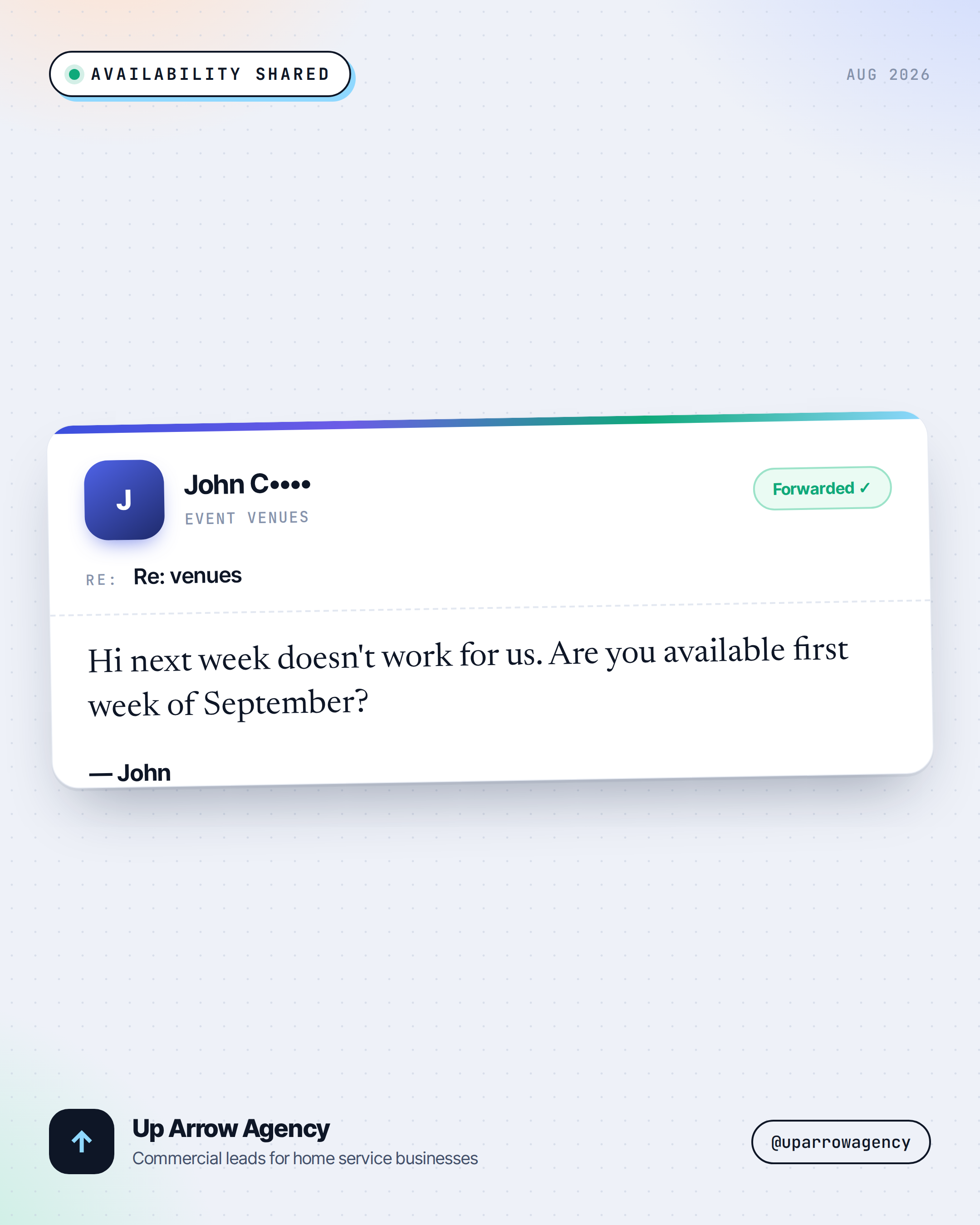
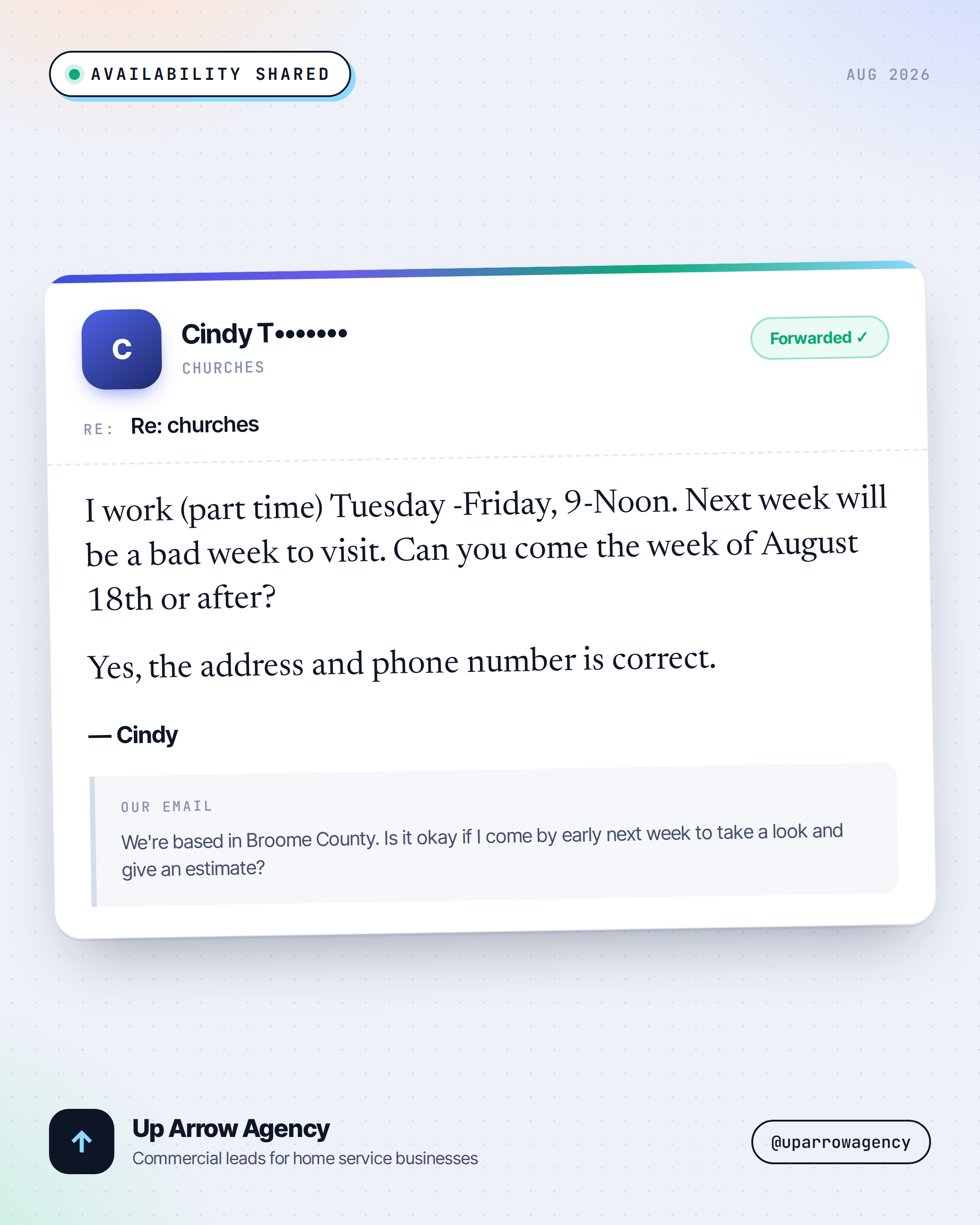
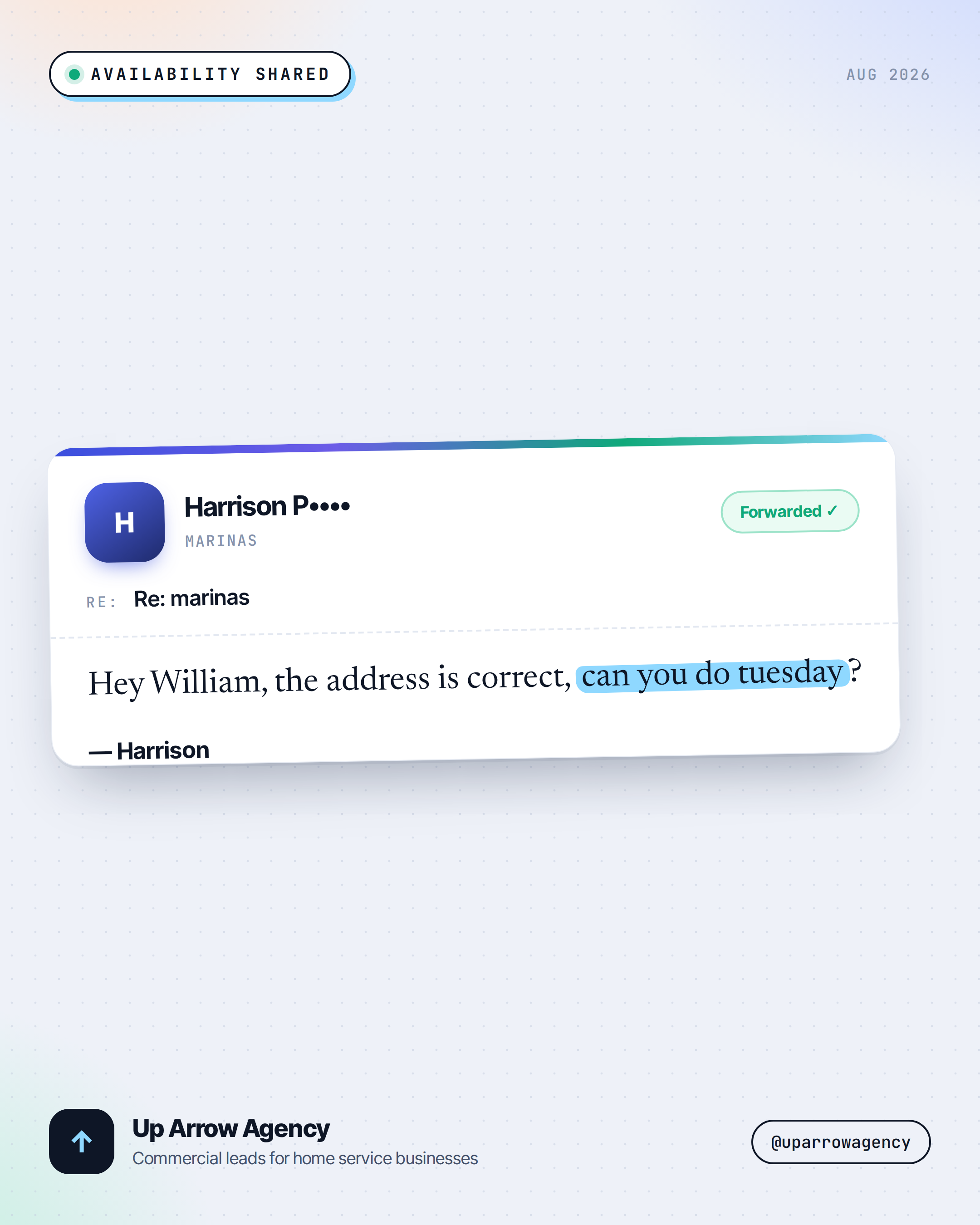
It helps to know what a healthy campaign produces so you can tell whether a vendor's numbers are real. Across our commercial cleaning campaigns from April 2026 to October 2026, we saw 2,158 genuine inbound replies. Most were not a signed contract waiting to happen. They were a mix: many forwarded us to the decision-maker, many asked about pricing, some offered a call, and a smaller group asked outright for a walkthrough or site visit.
Read that mix correctly. A forward means someone trusted the message enough to pass it up the chain. A price question is a normal first question from a buyer who does not yet have enough context to ask anything else. Neither means "only wants a cheap quote." Both are invitations. The cleaning companies that win recurring contracts are the ones who take that invitation and move it to a site visit, instead of replying with a number and hoping.
So when a vendor shows you a reply count, ask what the replies were and how they were handled. A thousand replies that sit unanswered are worth less than a handful that become walkthroughs.
Red Flags That Should End the Conversation
- Guaranteed contracts. Nobody controls whether a buyer signs. They can only control whether you get in the room.
- No clarity on list sourcing. Bought or scraped lists with no verification hurt deliverability and your domain.
- Price-per-lead as the only metric. It pushes the vendor toward volume over fit.
- No say over messaging. If you cannot approve what goes out under your name, walk.
- Silence about what happens after the reply. If they cannot explain the handoff to a walkthrough, they have not thought about your sale.
How to Judge It After You Start
Give a campaign enough time to produce data before deciding, and measure the right things. Count conversations with real decision-makers, count walkthroughs booked, then count proposals and contracts. Cost per lead is the least useful number on that list. Cost per walkthrough, and what share of walkthroughs turn into recurring work, tell you whether the channel pays.
Also be ready on your side. Reply quickly, offer a specific time for the walkthrough, and show up prepared. A fast response gets you to the conversation sooner, and the conversation is where value and trust get built. Some owners hire a vendor, then take two days to answer replies and wonder why the numbers are soft. If you want the full picture of how a pipeline fits together, start with our guide to commercial cleaning lead generation.
A Simple Way to Decide
Shortlist two or three companies. Ask each the seven questions above in writing. Compare the answers on targeting, exclusivity, transparency and the post-reply process, and only then look at price. The company that explains how a reply becomes a walkthrough, and how a walkthrough becomes a contract, understands your business. The one that talks mainly about lead volume is selling something else.
Frequently asked questions
How much should a cleaning lead generation company cost?
Are exclusive leads better than shared leads for commercial cleaning?
Does cold email work for finding commercial cleaning clients?
How long before I know if a lead generation company is working?
Want these replies landing in your inbox?
We run the whole cold-email engine for commercial cleaning & pressure washing companies — targeting, inboxes, and booking — so you get decision-maker conversations without ads or cold calling.
Book a 30-minute callMore from the guides: How to get commercial cleaning contracts · Lead generation: DIY vs. done-for-you · All guides