
Key takeaways
- You win cleaning contracts with property managers by getting into the building: a walkthrough where you see the scope, ask about their problems, and show you can deliver.
- Price is the easiest first question, not the deciding one. Property managers read bids as a band and then choose on proof, references, and fit.
- Credentials and a quality-control process get you onto the shortlist. The person you are in front of decides who wins from it.
- The first reply you get is usually an invitation: a price question or a forward to the decision-maker is your cue to ask for a site visit.
- Recurring contracts come from a repeatable way of starting conversations with property managers, not from waiting for RFPs.
To win cleaning contracts with property managers, get a walkthrough of the building before you talk numbers, show you understand how that property runs, and make it easy and low-risk for them to say yes. Property managers are responsible for tenants, budgets, and an owner above them. They are not hunting for the cheapest vendor. They are hunting for the one they will not have to think about again.
The rest of this piece covers what they weigh, why the site visit does most of the selling, and how to start those conversations without paid ads or door-knocking. If you want the full pipeline view first, our guide on how to get commercial cleaning contracts covers it end to end.
What property managers actually evaluate
Ask a property manager what they want from a janitorial vendor and the answer is rarely a number. It is consistency: the same crew, the same standard, no calls from tenants about overflowing bins on a Monday.
Published industry guidance backs this up. A trade piece on how building managers evaluate bids describes managers treating price as a band, rejecting bids that look too good to be true, then checking compliance (references, insurance, certifications), narrowing to a few finalists, and choosing on added value. The price filters people out. It does not pick the winner.
ISSA makes a similar point from the buyer side. Its guidance on running a better cleaning RFP tells buyers to give bidders a building tour, set quality-control expectations, and confirm the bid leaves the contractor a reasonable margin. It also reports that low bids lost in more than 60% of the RFPs managed by one procurement firm. Treat that as one firm's experience, not an industry rate, but the direction is clear.
Proof beats promises
The vendor-selection checklists buyers use ask about a quality assurance program, references from similar buildings, and staff turnover. A contractor with certifications can get past a first screen faster: a facility executive survey reported 49% calling cleaning certifications important when choosing a contractor. It is an older survey, so read it as a signal rather than a current benchmark.
None of that replaces being credible in person. Documents tell a property manager you are not a risk. Only a conversation tells them you are the one they want.
Why the walkthrough wins the contract
If you quote a property you have never seen, you are guessing at scope, and the property manager is comparing your guess against two or three others. The only thing left to compare is the number. You have turned yourself into a commodity.
A walkthrough changes the conversation. You see how many restrooms, what the flooring is, where the traffic is, what the last vendor got wrong. You ask what has been annoying them. By the end, you are the vendor who understood their building, not the third PDF in their inbox.
ISSA's guidance on bidding for facility-service RFPs lists skipping the site visit as a common bidder mistake, and notes that pre-bid walkthroughs are valuable for understanding pain points and staffing logistics. We see the same thing from the other side of the funnel.
What to do on the walkthrough
- Walk the building before you talk about money. Let them point out the problems.
- Ask what the last vendor got wrong. That is the outcome they are actually buying.
- Name the risk and take it off them. Trial period, clear scope, a named contact, a quality check schedule.
- Send a tailored proposal quickly. A short document that repeats their words back to them lands better than a generic rate sheet.
This is a relationship sale. Property managers hire people they have met and who made their life easier during the sales process. That is the whole mechanism.
How to start these conversations without an RFP
Most cleaning contractors wait for bids to be posted or lean on referrals. Both are slow and both put you in a pile of competing quotes. Contracts that never go to bid are won by whoever reached the property manager first.
That is what outbound is for. A short, specific email to a property manager, facilities manager, or operations manager at a commercial building, offering a free walkthrough, gets you into the building before any bid exists. We run this for commercial cleaning companies, and published results include cold email campaigns that produced 48 commercial leads in six weeks, and a single campaign that turned into a $38K per year recurring contract.
Treat the first reply as an invitation
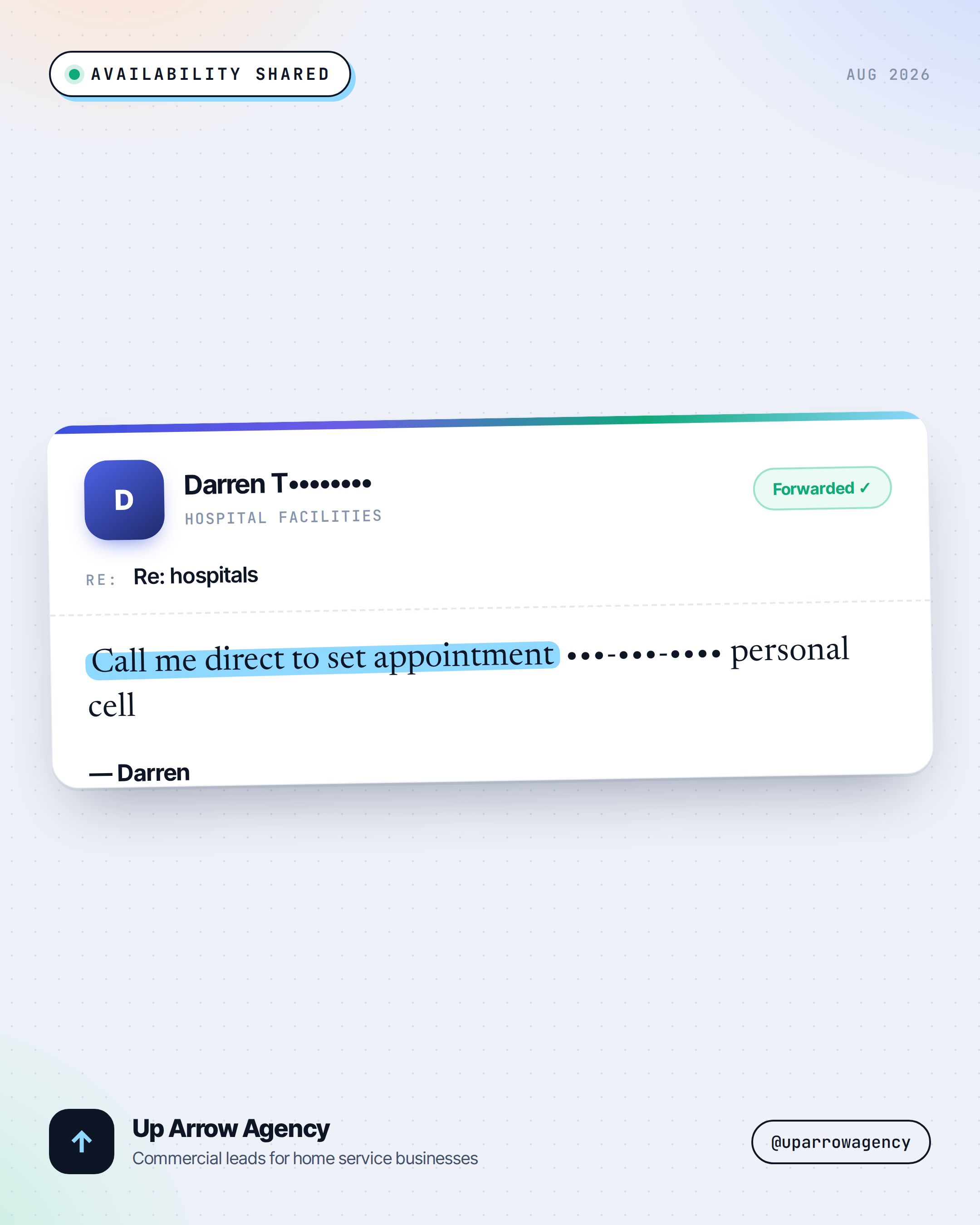
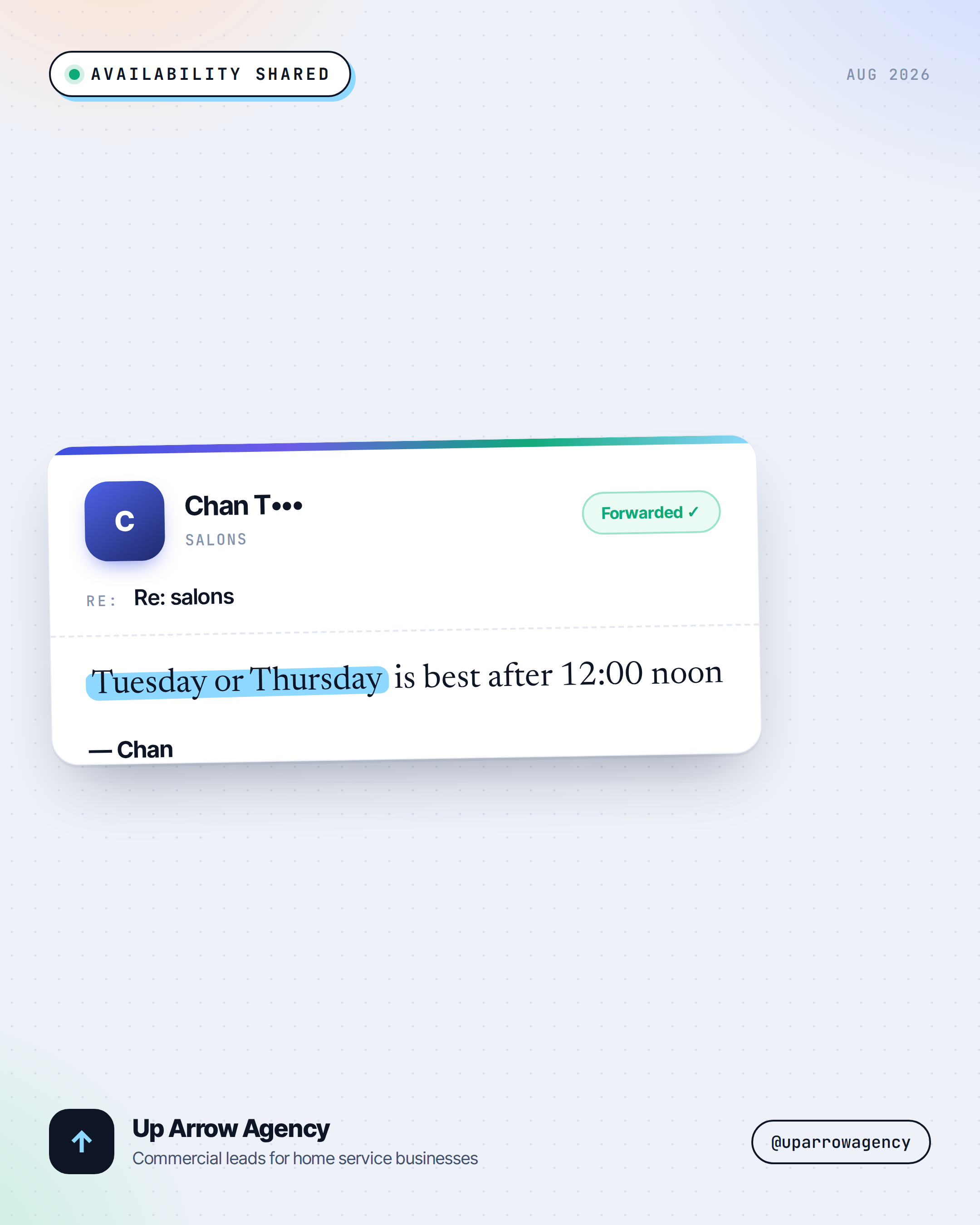
Early replies are rarely a finished buying decision. A property manager who asks "what does this cost?" is saying they are interested and do not yet have enough context. A reply that says "forwarding this to the person who handles it" is a handoff to the decision-maker. Across our clients' campaigns from April to October 2026, 204 of 1,054 replies that were forwarded internally also asked for a walkthrough or site visit, and many of the rest were price questions and offers of a call that were one good reply away from one.
The correct next move on a price question is not a number. It is a short, friendly answer that says the price depends on the building and offers a time to walk it. That keeps the conversation on value, and it is how the relationship starts.
Mistakes that lose property manager contracts
- Quoting blind. You anchor everything on price and give up the one meeting where you could differentiate.
- Sounding like every other vendor. If your pitch could be pasted onto any competitor's website, it will be forgotten.
- Ignoring the owner above the property manager. They report upward. Give them something easy to forward, with a clear scope and clear accountability.
- Underpricing to get in. Buyers distrust bids that look too good, and you inherit a contract that cannot fund good staffing.
- Slow follow-up after the walkthrough. A good visit loses momentum in a week of silence.
If your focus is specifically office buildings and managed properties, our guide on how to get janitorial contracts goes deeper on the janitorial side.

The short version
Property managers buy from people they trust to make a problem go away quietly. Start the conversation early, get into the building, listen, take the risk off their plate, and follow up fast. Do that consistently and the recurring contracts follow.
Frequently asked questions
How do you get cleaning contracts with property managers?
Do property managers choose the cheapest cleaning vendor?
Should I give a price before a walkthrough?
Who is the right person to contact at a commercial property?
Want these replies landing in your inbox?
We run the whole cold-email engine for commercial cleaning & pressure washing companies — targeting, inboxes, and booking — so you get decision-maker conversations without ads or cold calling.
Book a 30-minute callMore from the guides: How to get commercial cleaning contracts · Lead generation: DIY vs. done-for-you · All guides