
Key takeaways
- Facilities managers want a vendor they can stop thinking about: reliable, accountable and easy to reach when something goes wrong.
- Price matters, but lowest bid and best value are different things, and experienced buyers know it.
- Proof beats promises: certifications, references and a visible quality process lower the risk of switching.
- Trust is built in person. A walkthrough shows how you work and what you notice, and a PDF quote cannot do that.
- A pricing question in a reply is an opening, not a verdict. The next step is to get on site.
What facilities managers want from cleaning vendors comes down to one thing: they want the problem to go away and stay away. They want the building cleaned the way it was promised, a vendor who answers the phone when it isn't, and no surprises they have to explain to their own boss. Price is part of the decision. It is rarely the whole decision, and it is almost never the first thing that earns the vendor a long contract.
If you sell commercial cleaning, that changes how you introduce yourself, what you send after the first reply, and where you spend your time. The rest of this article covers what buyers are really weighing and how to show up with it.
The facilities manager's actual job
A facilities manager, an office manager or a property manager is rarely judged on how clean the building is. They are judged on complaints. A bad week of overflowing bins or a missed restroom gets noticed by tenants, executives and the people who sign off on their budget. A vendor that works well makes the buyer invisible.
So the question running in their head while they read your email is not "who is cheapest?" It is "if I hand this to them, will I have to think about it again?" Every item below is a version of that question.
What they look for, in order of how much it matters
1. Reliability they can verify
Showing up on schedule, with a full crew, with supplies, every night, is the baseline. Buyers have usually been burned at least once by a vendor that started strong and slid. They are looking for signs that you will not be that vendor: a supervisor who actually inspects, a plan for call-outs, and a way to reach a person.
2. Proof, not adjectives
Everyone claims quality and reliability. What separates vendors is evidence. BSCAI's 2021 facility executive survey of contractor expectations found that nearly half of executives (49%) said certifications mattered when choosing a contractor, up 16 percentage points from 2019. The same survey reported that over 54% were willing to pay more for stronger infection control. That is a survey of one period and one set of executives, but the pattern it shows is useful: buyers reward vendors who can document what they do.
In practice, proof looks like a written inspection routine, references from similar buildings, and the specifics of how you train crews. It does not need to be fancy. It needs to exist.
3. Communication that does not need chasing
A recurring finding in IFMA research on outsourcing, reported in Buildings' coverage of IFMA's outsourcing study, is that trust and service delivery are the main hurdles when a facility hands work to an outside provider. The same coverage noted that providers struggle to deepen relationships when clients share too little information. The study is old, but the dynamic has not changed. The vendor who asks good questions up front, and reports back without being asked, is the one who gets the next building.
4. A fair price they can defend
Notice the wording: a price they can defend. Buyers know that the lowest number tends to come back to bite them. Buildings magazine has made the point plainly for years: the lowest bid doesn't necessarily mean the best value for cleaning budget dollars, and managers who rebid on price alone can find themselves rebidding again soon after. A manager who has to justify a switch upward wants a reason that sounds sensible in a budget meeting. Give them that reason.
Why the walkthrough does the heavy lifting
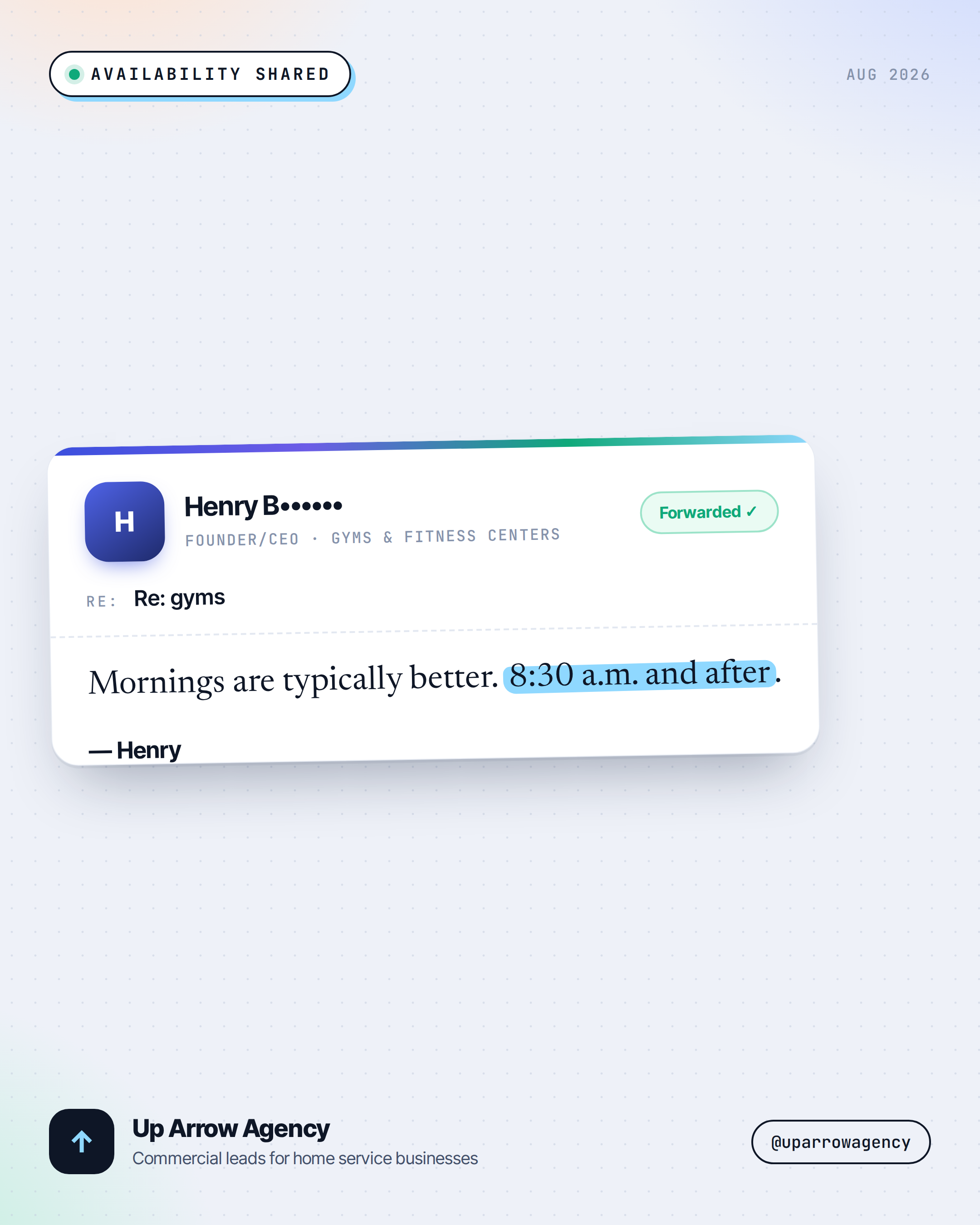
Here is where a lot of cleaning companies lose ground. A buyer replies to a cold email with a quick question, often "what do you charge?", and the vendor answers with a number. The conversation ends there, and the number is the only thing left to compare.
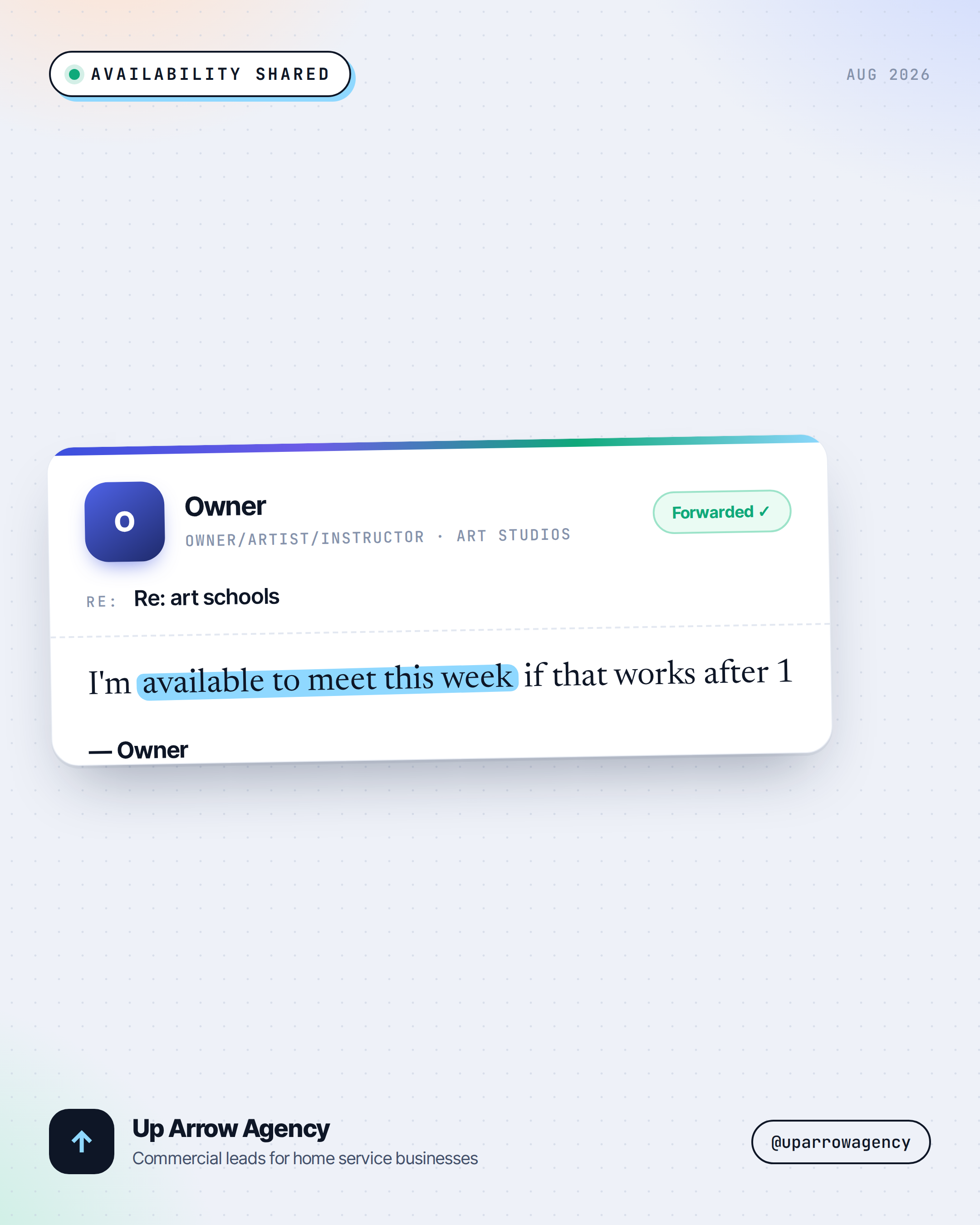
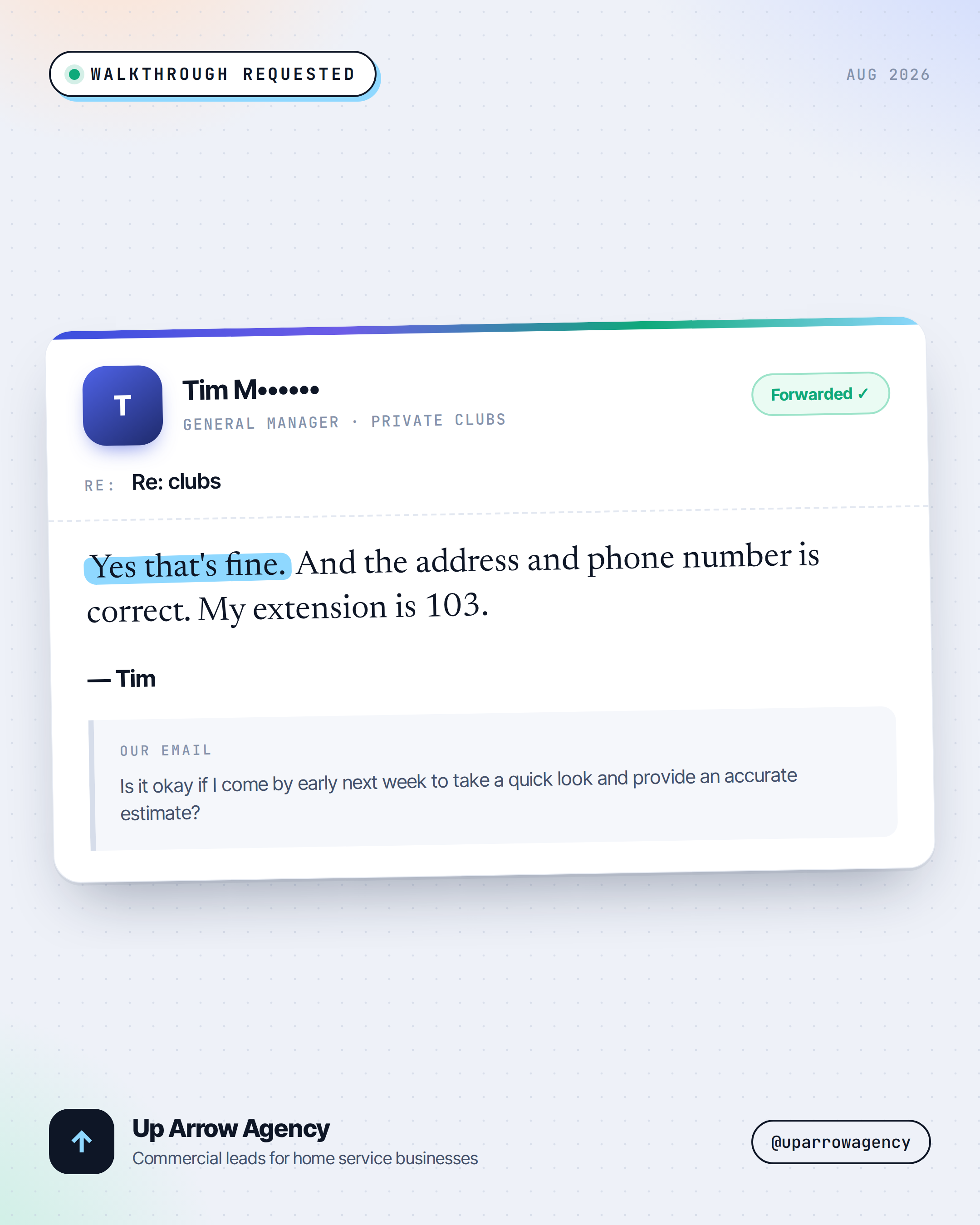
A price question is a normal first question and a buying signal. The buyer asked it because it is the easiest thing to ask, not because it is all they care about. The better response is to offer a walkthrough. On site you see the actual building, the traffic patterns, the problem areas and the expectations that never make it into an RFP. The buyer sees how you think, what you notice and whether you seem like someone who will own the work. That is how trust gets built, and trust is what a recurring contract is made of.
Our own numbers point the same way. Across 1,054 forwarded replies from our clients' cold email campaigns between April 2026 and October 2026, 393 also raised pricing or a quote. Those are not people who ruled the vendor out. They are people asking for a way in. Treat each one as an invitation to a conversation on site.
A composite example
Picture a facilities manager at a multi-site office portfolio, for example. A vendor who sends a flat quote gets filed next to four others. A vendor who asks to walk the three floors, notices that the entry lobby takes the most wear and the loading dock gets ignored, and comes back with a short plan for both is no longer one of five quotes. They are the person who understood the building.
That second vendor can also reverse the risk: a trial period, a clear inspection schedule, a named point of contact. The buyer's effort and exposure go down, and a yes becomes the easy decision.
How to put this into your outreach
- Lead with the outcome. One clean building with no complaints, not a list of services.
- Offer a free walkthrough as the next step. Make it a normal, low-effort thing to say yes to.
- Bring proof to the first meeting. References, certifications, an inspection sheet.
- Follow up with a tailored plan. After the visit, send specifics from that building, not a template.
- Keep it human. They are choosing a person to work with for years.
This is the approach behind the results we have published for our clients, such as 48 commercial leads in 6 weeks and a $38K/year recurring cleaning contract from a single campaign. The leads come from cold email. The contracts come from what happens after the reply. If you want the full path from first email to signed contract, our guide on how to get commercial cleaning contracts walks through it, and cold email for cleaning companies covers the outreach side.
What this means if you are a vendor
You do not need to out-price anyone. You need to be the vendor who looks lowest-risk and easiest to trust, and the quickest way to do that is to get in the building and show it. Reliability, proof, communication and a price that makes sense once they understand the work: that is the list. Everything else is detail.
Frequently asked questions
What do facilities managers look for when hiring a commercial cleaning company?
Do facilities managers always choose the cheapest cleaning vendor?
How should a cleaning company respond when a facilities manager asks about pricing?
Why do certifications matter to facilities managers?
Want these replies landing in your inbox?
We run the whole cold-email engine for commercial cleaning & pressure washing companies — targeting, inboxes, and booking — so you get decision-maker conversations without ads or cold calling.
Book a 30-minute callMore from the guides: How to get commercial cleaning contracts · Lead generation: DIY vs. done-for-you · All guides