
Key takeaways
- Done-for-you cold email for cleaning companies means an agency handles list-building, sending infrastructure, copy, and reply triage, so the owner's job is showing up to the walkthrough and the close.
- Across 69 real inbound replies in a recent 21-day window, 65% were forwarded straight to a decision-maker and 19% asked about price — both are buying signals, not rejections.
- The highest-converting move after any reply, including a price question, is booking a walkthrough, not quoting blind over email.
- Carpet & upholstery cleaning accounted for 85% of replies in this data set, which points to how much niche-specific targeting outperforms generic "commercial cleaning" messaging.
- Published campaign results range from $18,000 to $160,000 in closed commercial cleaning work, and from 4 to 27 leads in 30 days — the model scales with list quality and follow-up discipline, not ad spend.
Done-for-you cold email for cleaning companies is an outsourced lead-generation model: an agency builds the prospect list of property managers, facilities managers, and office or operations managers, writes and sends the campaigns, handles deliverability and inbox warmup, and routes every reply back to the cleaning company so the owner's only job is showing up to the walkthrough and signing the contract. No paid ads, no cold calling, no door-knocking — just direct outreach to the people who actually decide who gets the vendor contract. Below is how the mechanics work in practice, what real reply data from live campaigns looks like, and why the winning move after almost any reply — even "what's your price?" — is not to answer with a number.
How Done-for-You Cold Email for Cleaning Companies Works
The mechanics are simple to describe and harder to run well at volume. An agency running this model typically owns four pieces end to end:
- List building. Property management companies, facilities departments, and multi-site operators get identified and filtered by building type, portfolio size, and service fit. A janitorial pitch and a carpet-cleaning pitch don't go to the same list.
- Sending infrastructure. Dedicated sending domains, inbox warmup, and deliverability monitoring, so volume doesn't land in spam and doesn't put the cleaning company's main domain at risk.
- Copy and sequencing. A short initial email and a follow-up, written around the buyer's actual job — keeping a building clean, passing inspections, not fielding tenant complaints — instead of generic sales language.
- Reply handling. Every reply gets triaged and routed: to the decision-maker if it landed with an assistant or coordinator first, or straight into the cleaning company's sales process if it's already with the right person.
For the full build-out of a list, sequence, and sending setup from scratch, see our complete guide to cold email for cleaning companies.
What Actually Happens When a Reply Comes In
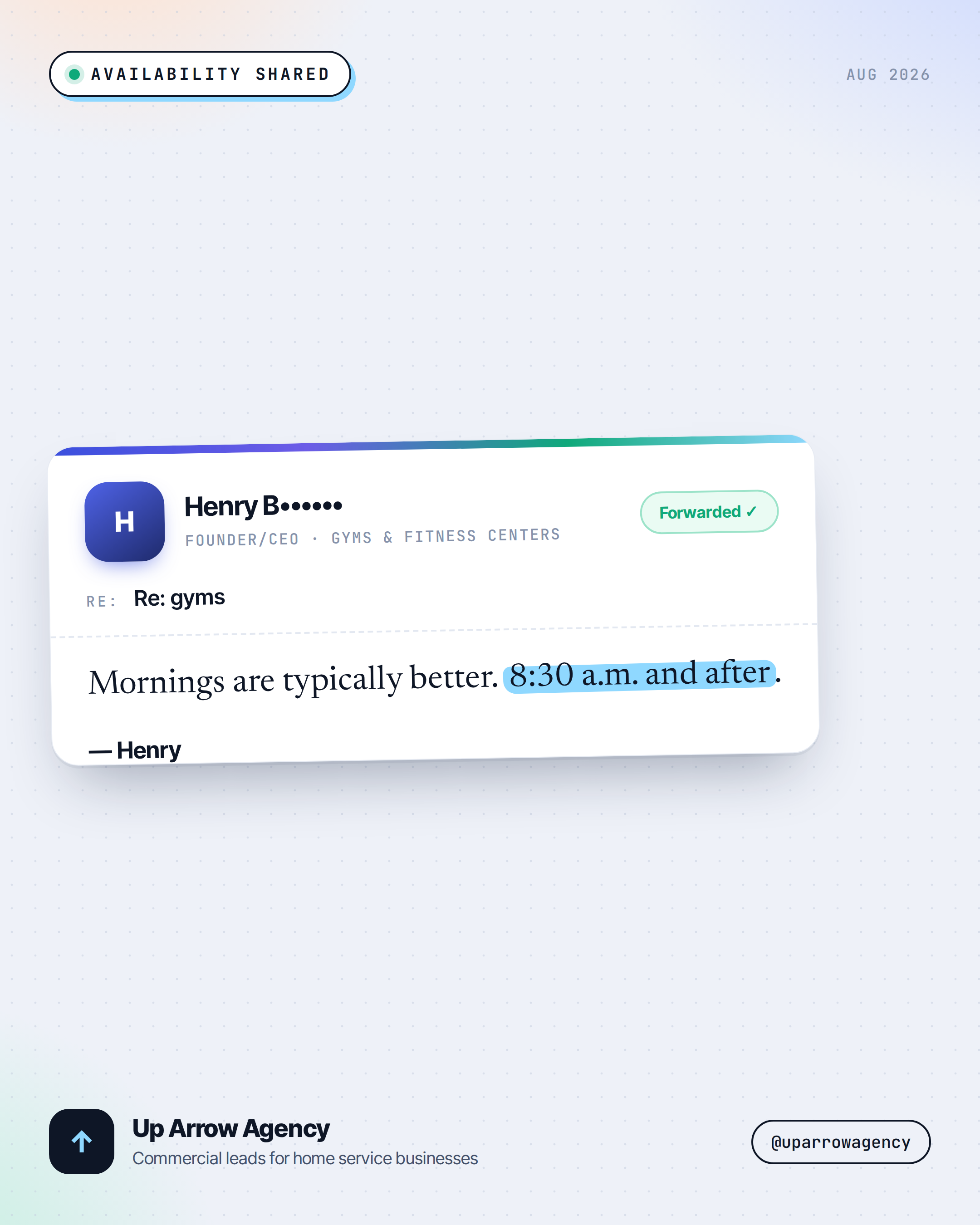
Here's real aggregate data. Across a recent 21-day window of live client campaigns, we tracked 69 genuine high-intent inbound replies — not autoresponders, not unsubscribes, actual humans responding to a cold email about commercial cleaning, carpet and upholstery cleaning, or pressure washing.
| Reply type | Count | Share of replies |
|---|---|---|
| Forwarded to decision-maker | 45 | 65% |
| Asked for pricing / a quote | 13 | 19% |
| Positive inbound reply | 5 | 7% |
| Offered a call / availability | 4 | 6% |
| Requested a walkthrough | 1 | 1% |
| Asked for more details | 1 | 1% |
Two-thirds of replies were forwards: someone without purchasing authority routing the email to the person who has it. That's a gatekeeper doing your targeting work for you, and it only happens because the message was relevant enough to pass along instead of deleting. Outside research backs up why forwards and price questions aren't the same as disinterest. In a RAIN Group survey of B2B buyers, 82% said they'll at least sometimes take a meeting with a seller who reached out to them first. Unsolicited outreach isn't the obstacle buyers treat it as in theory — it's a normal way deals start.
By service line, the mix skewed heavily toward one vertical: 59 of the 69 replies came from carpet and upholstery cleaning campaigns, 7 from pressure washing, and 3 from general commercial cleaning. That's not a claim that carpet cleaning is inherently easier to sell — it reflects which campaigns were running and how tightly the messaging matched a specific, visible pain point. A stained carpet in a lobby is a problem a property manager can picture immediately. The lesson transfers regardless of vertical: the narrower and more specific the pitch, the easier it is for a non-decision-maker to recognize it's worth forwarding.
Why "Just Send the Price" Loses the Deal
Thirteen of the 69 replies asked for pricing outright. The instinct is to answer immediately with a number, and that's the instinct to resist. A price question this early isn't proof someone only cares about cost. It's usually the easiest question to ask before they've seen enough to judge whether a number is good or bad. Quote blind over email and you've handed them a figure with no context to evaluate it against except "cheaper than the last guy" — exactly the comparison you don't want to win on.
Picture a realistic composite: a facilities manager overseeing a handful of multi-tenant office buildings replies to a janitorial cold email with "what's your rate for nightly cleaning?" The wrong move is a per-square-foot number by return email. The right move is an offer to walk the properties first — see the square footage, the foot traffic, the current pain points — before pricing anything. That walkthrough is where the actual sale happens, not because of a script, but because a facilities manager is hiring a vendor they'll depend on, not buying a commodity off a price sheet.
That matches how the facilities management field itself describes vendor selection. FacilitiesNet's guide to selecting a facility vendor frames the relationship in partnership terms, not procurement terms: the buyer is entering a working relationship they need to trust will hold up, and, as the piece puts it, "the teams that succeed trust each other to do their jobs and to do them well." A quote with no context doesn't build that trust. A site visit does.
The Play That Converts: Reply, Walkthrough, Contract
The sequence that actually turns a reply into signed, recurring work looks like this:
- Reply fast. Whoever owns the inbox responds the same business day, every time — forward, price question, or otherwise.
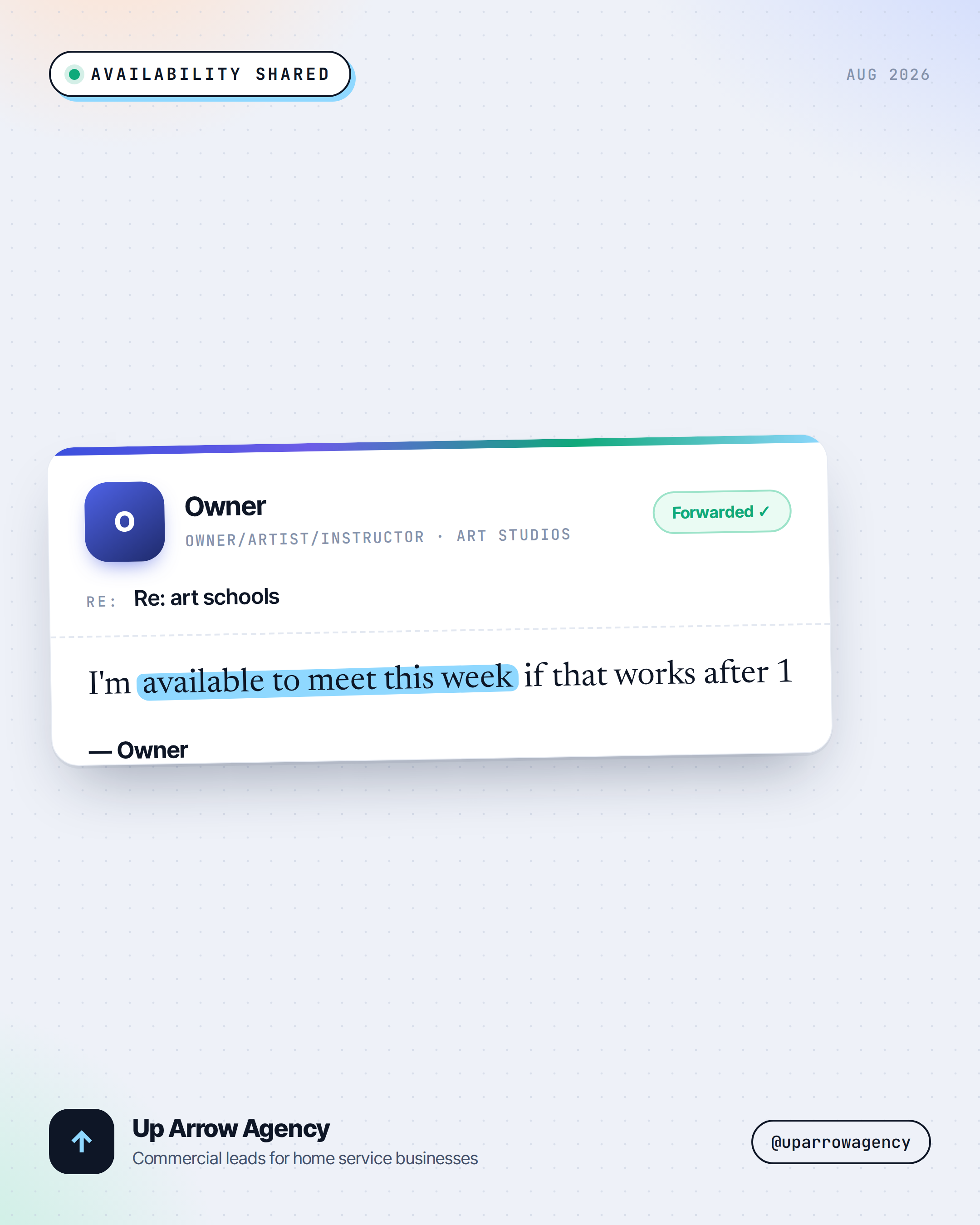
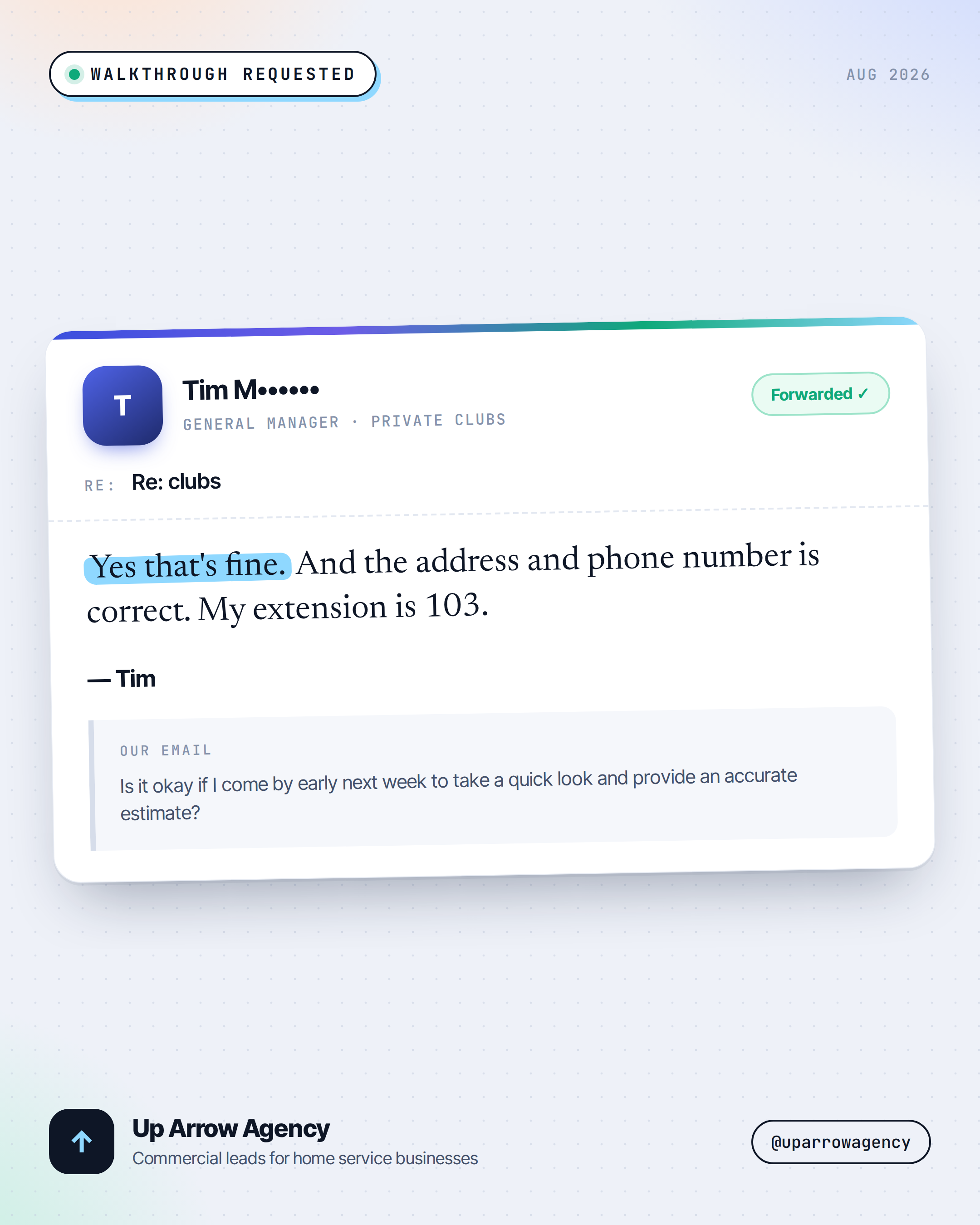
- Offer the walkthrough, not the number. Even to a price question, the response is a short acknowledgment plus an invitation to see the property in person.
- Meet and build the case. On site, the cleaning company sees the real scope and hears the actual complaints — tenant issues, failed inspections, a previous vendor that didn't show up — and can speak to exactly that instead of a generic pitch.
- Present a tailored offer with the risk taken off their plate. A scope and price built around what was actually seen, often with some form of guarantee or trial period, so saying yes feels close to a no-brainer.
- Win the contract, and keep it recurring. Commercial cleaning, janitorial, and carpet contracts are rarely one-off jobs; the walkthrough is also where the ongoing relationship starts.
Speed matters in this sequence for one reason only: it gets you to the walkthrough faster, not because it lets you skip the walkthrough. Once you're standing in the building, closing the actual contract is a different skill than generating the lead — our guide to how to get commercial cleaning contracts covers that next stage in detail.
What Results Look Like When the Model Runs Right
Pulled from live client campaigns run on this model:
- 48 commercial leads generated in 6 weeks
- $160,000 in commercial cleaning jobs closed from cold email
- $23,000 in commercial carpet-cleaning jobs from a single campaign
- Lead volume went from 4 to 27 commercial leads in 30 days
- A $38,000-per-year recurring cleaning contract signed from one campaign
- 12 commercial opportunities generated in 26 days
None of that came from underbidding anyone. It came from getting in front of the right person and then doing the in-person work to earn the contract.
Is This Model Right for Your Cleaning Company?
Done-for-you cold email fits best for companies that can actually service what it books: commercial cleaning, janitorial, pressure washing, and carpet & upholstery operations with the crew capacity to take on new recurring accounts, not just one-off jobs. It's a weaker fit if your business can't handle a fast influx of walkthrough requests, or if your pricing and proposal process can't move quickly once a prospect is ready to meet. If that's where you are, the mechanics of the list-building and sending side are worth understanding before you add a sales process on top of them.
Frequently asked questions
How fast will done-for-you cold email start generating replies for a cleaning company?
A prospect replied just asking for pricing. Doesn't that prove they only care about cost?
Do I still need salespeople if I run a done-for-you cold email program?
Which cleaning services perform best with cold email?
Want these replies landing in your inbox?
We run the whole cold-email engine for commercial cleaning & pressure washing companies — targeting, inboxes, and booking — so you get decision-maker conversations without ads or cold calling.
Book a 30-minute callMore from the guides: How to get commercial cleaning contracts · Lead generation: DIY vs. done-for-you · All guides