Key takeaways
- A reply is the start of the commercial cleaning sales process, not the end — the person who answers your email is often not the final decision-maker.
- In one recent week, 72% of genuine replies (price questions plus forwards to a decision-maker) were a handoff or a question, not a yes or no — and that's normal, not a weak lead.
- Site walkthroughs, not blind quotes, are where trust gets built and contracts get won, according to the cleaning industry's own trade groups.
- The winning sequence: reply fast, offer a walkthrough as the easy next step, find the real decision chain on-site, build a tailored offer, and take the risk off the table.
- This sequence is what turned cold email replies into results like $160K in closed commercial cleaning work and a $38K/year recurring contract for Up Arrow clients.
If you run outbound for a commercial cleaning, janitorial, carpet, or pressure washing company, here's the first thing to get straight about the commercial cleaning sales process: the person who replies to your email is almost never the person who signs the contract. A property manager, office coordinator, or facilities lead can like your pitch and still need sign-off from a regional director, a procurement committee, or whoever controls the maintenance budget. Treat that first reply as a final yes-or-no and you'll misread half of what comes back. Treat it as the opening move in a longer process, and the same replies turn into signed work.
What Actually Happens After Someone Replies
We pulled the genuine, high-intent replies generated across our clients' cold email campaigns for the week of September 28, 2026 — 81 of them, spanning carpet and upholstery cleaning, pressure washing, commercial cleaning, and other home and commercial service campaigns. Carpet and upholstery cleaning accounted for most of the volume that week (69 of the 81), with pressure washing, commercial cleaning, and other services making up the rest. The breakdown of what people actually said back tells you more about the sales process than any funnel diagram:
| Reply type | Count | Share |
|---|---|---|
| Asked for pricing or a quote | 30 | 37% |
| Forwarded to a decision-maker | 28 | 35% |
| Positive inbound reply | 14 | 17% |
| Asked for more details | 8 | 10% |
| Offered a call or availability | 1 | 1% |
Add the first two rows together and nearly three out of four replies (72%) weren't a decision at all — they were a question about cost or a handoff to someone else. That's not a weak response. That's what a real sales process for a recurring service contract looks like at its first step.
Why "What's Your Price?" and "Let Me Forward This" Are Good Signs
It's tempting to read a pricing question as someone who just wants the cheapest option, and a forward as someone passing you off to get rid of you. Both readings are wrong, and both lead to the same mistake: firing back a number or a brochure and waiting.
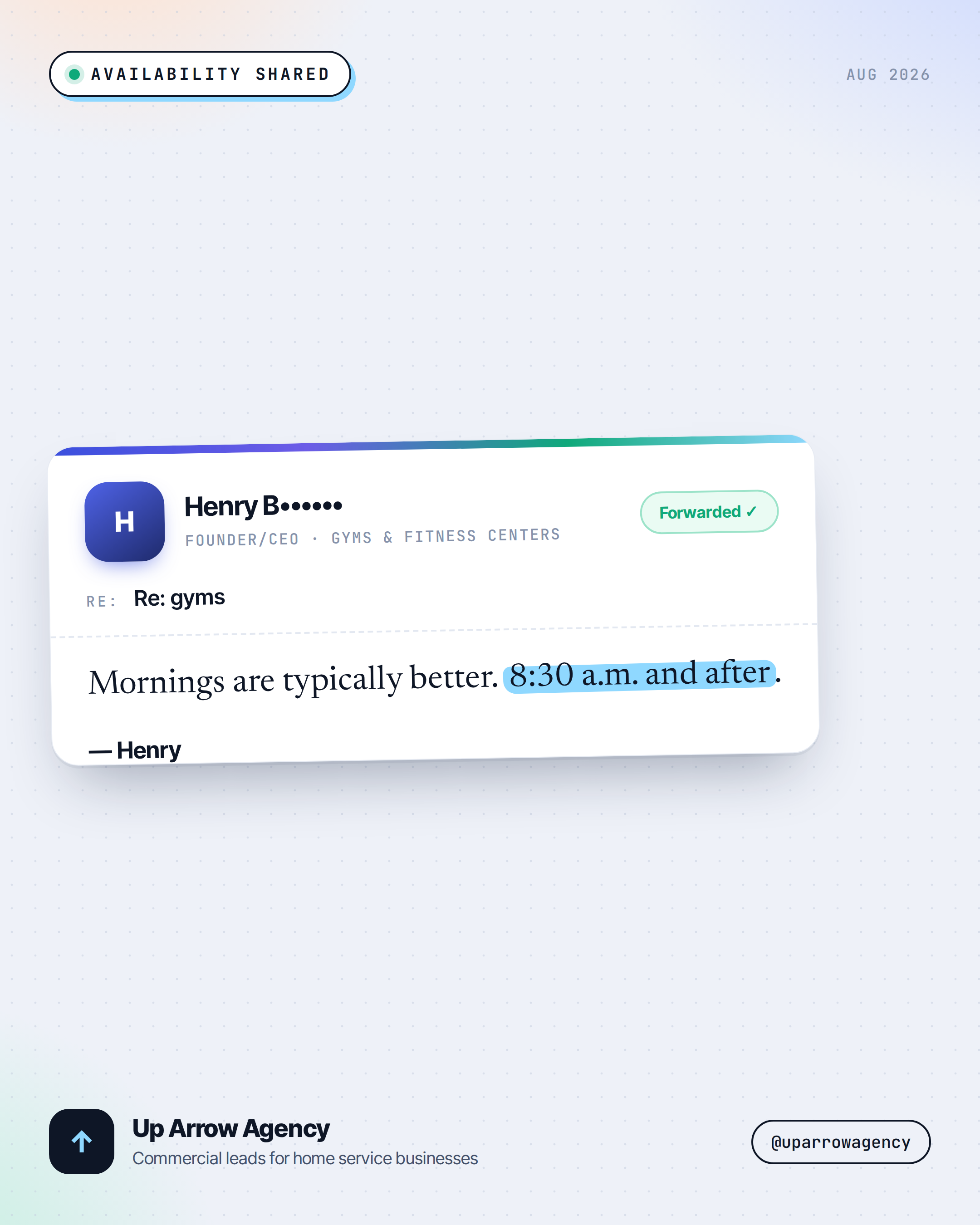
A price question this early is usually just the easiest thing to ask when someone doesn't have enough information yet to judge your offer. They can't picture the outcome of working with you, so cost is the only variable they know how to ask about. The forward is the same signal wearing a different hat — the person who replied doesn't have the authority to say yes alone, so they're routing you toward whoever does.
Neither one is the finish line. Both are an invitation into the next step: a walkthrough. Quoting blind over email before you've seen the space, met the people who'll live with the decision, or heard what's actually bothering them — a problem area, a complaint from tenants, an incident that spooked management — collapses the whole conversation into a price comparison. A walkthrough does the opposite. It's where you find out what a win actually looks like for them, and where you prove, in person, that you can deliver it.
Who's Actually Behind the Cleaning Contract
Picture a facilities coordinator at a multi-site office portfolio replying to ask for a quote. In a lot of organizations, that person doesn't own the budget — they're gathering options to bring to a property manager or regional operations director, who may be collecting two or three bids before anything reaches whoever signs off on vendor spend. For a single-location business, the first reply might genuinely be the owner. For a managed property, a franchise, a school, or a multi-tenant building, it rarely is.
The cleaning industry's own trade groups describe this as a standard, multi-round process rather than a one-call close. BSCAI, the trade association for commercial cleaning and janitorial contractors, notes that competitive bids for janitorial contracts typically move through a shortlisting round before a final round, and that opportunities making the first cut often require an in-person presentation to the client's full evaluation team, with larger opportunities adding a multi-day site tour on top. That's not one person making a snap decision off a price in an email. That's a process with rounds, and your contact is usually running the first one.
The Walkthrough Is Where the Process Actually Gets Won
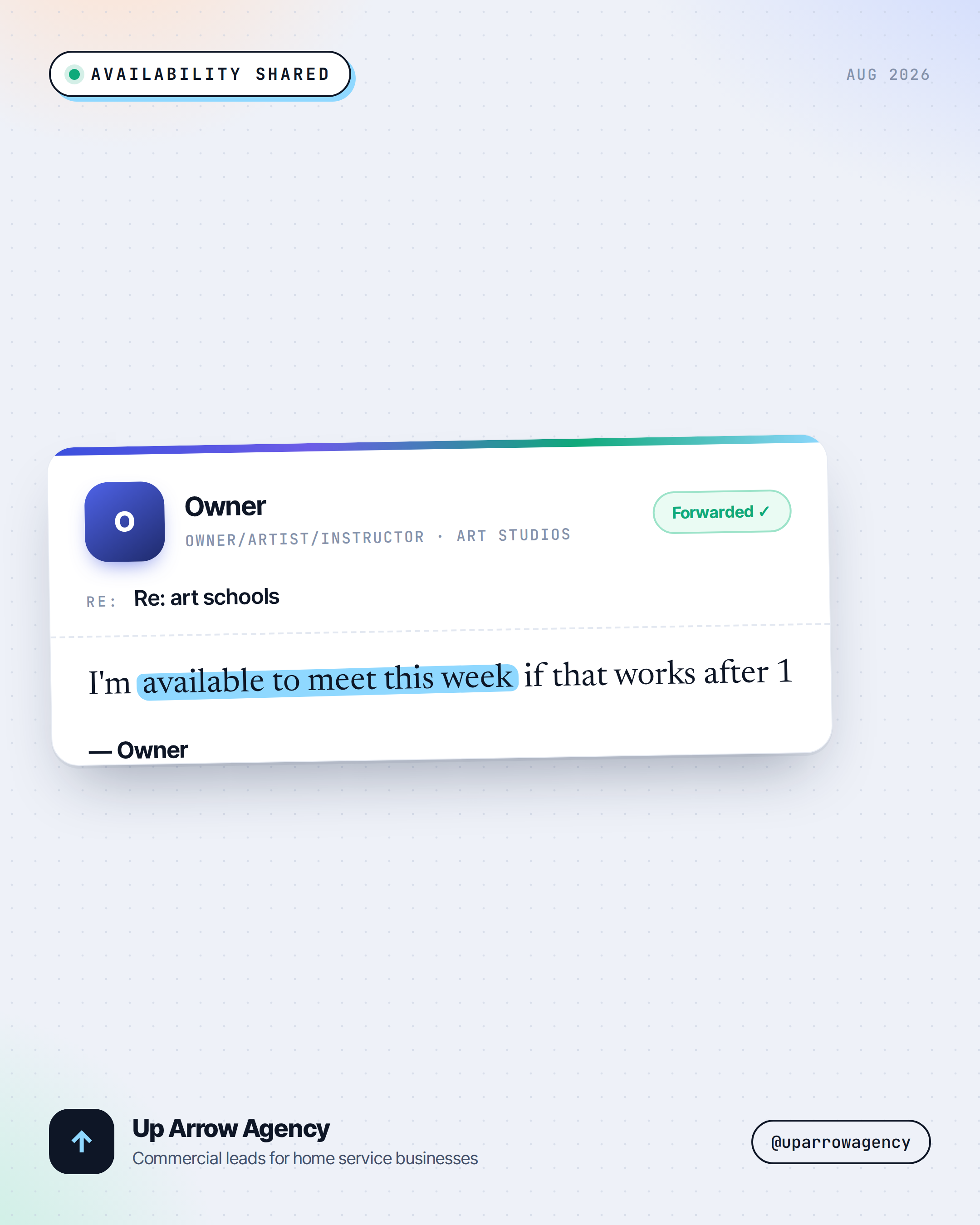
This is the step that gets treated as friction and shouldn't be. A site visit is where you see the real scope — square footage, floor type, traffic patterns, what's actually dirty versus what they assume is dirty — where you hear the complaint that's been quietly driving the search for a new vendor, and where the facilities contact gets to see how you show up before they put their name behind a recommendation.
ISSA, the worldwide cleaning industry association, puts pre-bid walkthroughs in the same category: they're invaluable for asking questions directly, understanding the client's pain points, evaluating logistics, and building rapport with the procurement team, and skipping one signals a lack of commitment to the opportunity. That lines up with what we see from the client side too: a quote with no walkthrough behind it reads as generic. A quote built on a walkthrough reads as understood.
This is also the point where trust actually transfers, from "stranger who emailed me" to "vendor I'd put in front of my boss." Facilities and office managers put their own judgment on the line every time they recommend a vendor. A walkthrough gives them something to point to. A price in an email doesn't.
How to Move a Reply Through the Full Commercial Cleaning Sales Process
The play is the same regardless of which of the five reply types above you get:
- Reply fast and acknowledge the real question. If they asked for pricing, don't dodge it — say you'll put together something accurate, and that the fastest way to do that properly is a quick walkthrough so the number reflects their actual space, not a guess.
- Offer the walkthrough as the easy next step, not an extra ask. Free, no obligation, 15 to 20 minutes on site. The lower the perceived effort and risk for them, the more often they say yes.
- Use the walkthrough to find the real decision chain. Ask directly who else needs to sign off, and ask for an introduction while you're standing in the building — it's a much easier ask in person than by email days later.
- Build the offer around what you saw and heard, not a template. Reference the specific area, the specific complaint, the specific schedule constraint.
- Take the risk off the table. Performance-based terms, a trial period, or a clear guarantee make it easier for the person who vouched for you internally to defend that choice to whoever signs off above them.
This is the same sequence we build into every cold email program for cleaning companies we run, and it's the backbone of our broader approach to how to get commercial cleaning contracts through outbound instead of referrals or price-shopping on review sites.
What It Looks Like When the Process Is Followed
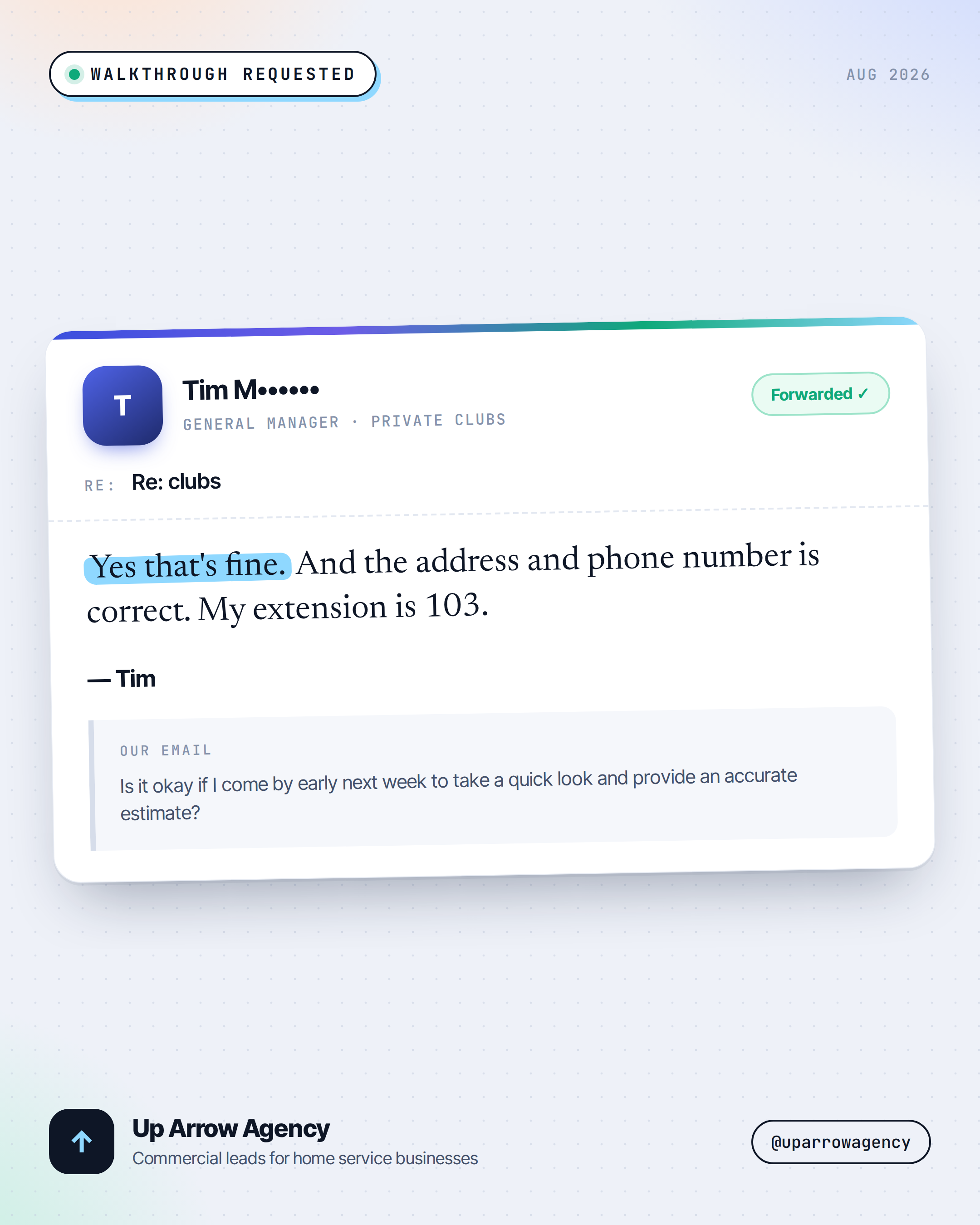
None of this is theoretical. Running replies through walkthroughs instead of quoting blind is how our clients have turned cold email into results like 48 commercial leads in six weeks, a jump from 4 to 27 commercial leads in 30 days, 12 commercial opportunities in 26 days, $160,000 in commercial cleaning jobs closed from cold email, $23,000 in commercial carpet-cleaning jobs from a single campaign, and a $38,000-a-year recurring cleaning contract that started as one reply to one email. Every one of those started with somebody asking a price question or forwarding an email to someone else — the two reply types that get dismissed most often as dead ends.
Frequently asked questions
Is the person who replies to a cold email ever the actual decision-maker?
Should I just ask for the budget decision-maker right away?
What if someone just wants a price and won't agree to a walkthrough?
How long does the commercial cleaning sales process usually take from first reply to signed contract?
Want these replies landing in your inbox?
We run the whole cold-email engine for commercial cleaning & pressure washing companies — targeting, inboxes, and booking — so you get decision-maker conversations without ads or cold calling.
Book a 30-minute callMore from the guides: How to get commercial cleaning contracts · Lead generation: DIY vs. done-for-you · All guides