
Key takeaways
- An exclusive lead is a conversation only you are having. A shared lead is the same buyer's attention split across several vendors, which is why shared leads drift toward price comparison.
- Cost per lead is the wrong yardstick. Compare cost per walkthrough booked and cost per signed recurring contract.
- Commercial cleaning is a trust sale. Facilities managers usually want a walking tour and a face before awarding a contract, and you only get that cleanly when you aren't racing other vendors to the first quote.
- Ask any lead provider three things: who else receives this contact, how the contact was sourced, and what you pay for when the buyer never answers.
- Outbound you control, such as targeted cold email to decision-makers, is exclusive by default because no one else is selling that same list to your competitors.
Exclusive vs shared commercial cleaning leads comes down to one question: how many other cleaning companies are talking to this buyer at the same time as you? With an exclusive lead the answer is zero. With a shared lead it is at least one, and often more. That difference changes how the buyer treats you, what the first conversation is about, and how much of your time is wasted before you find out whether the lead was real.
Below is how each model works, where the money actually goes, and how to evaluate any lead source before you spend on it.
What an exclusive lead actually is
An exclusive lead is a buyer contact, typically a property manager, facilities manager, or office manager, who has been introduced to your company and no one else. If they reply, they're replying to you. Nobody else got the same name, the same inquiry, or the same email.
Exclusive does not mean the buyer has no other options. They may still collect bids later, and a well-run buyer should. It means you are the one who got the first real conversation, and you got it without a race.
What a shared lead actually is
A shared lead is one inquiry sold, routed, or surfaced to several vendors. Marketplaces, directories, and some lead-gen brokers work this way. The buyer filled out a form once, and a handful of cleaning companies get the notification at the same moment.
The mechanics are simple. Whoever calls first gets the attention. Everyone else is chasing. And because the buyer now has multiple vendors reaching out about the same job, the easiest thing for them to do is compare the one visible thing: the number.
Why shared leads turn into price contests
A buyer who hears from four vendors in an hour has no way yet to tell them apart on quality, reliability, or fit. So they ask the question that's easy to ask and easy to compare. How much? That is a reasonable question, not a character flaw. It just means you've been dropped into a situation where price is the only thing on the table.
You can win that situation, but you're fighting the format. Anything that makes you look interchangeable pushes the conversation toward the lowest figure, and a cleaning contract won on the lowest figure tends to be a thin-margin account you'll resent in month six.
Exclusive vs shared commercial cleaning leads: the real cost comparison
Shared leads usually look cheaper per contact. The comparison that matters is further down the funnel:
- Cost per lead is what the provider invoices. It's the easiest number to see and the least useful.
- Cost per walkthrough booked tells you whether the leads are real people willing to meet you.
- Cost per signed recurring contract is the number your business actually runs on, since one account can pay for months of lead spend.
Your time belongs in this math too. Chasing a contact who was also sent to several competitors, and who may have filled in the form out of curiosity, burns hours that never show up on an invoice.
Speed matters, but not for the reason people think
Research published in Harvard Business Review found that most companies respond to online leads far too slowly, and that this costs them opportunities (see The Short Life of Online Sales Leads). Shared-lead sellers lean on this finding hard, because it justifies selling you a notification and telling you to be first.
Speed is worth having. But being first to a shared lead gets you to the quote sooner. It does not get you to trust sooner. The reason to respond fast is to reach the real conversation, a walkthrough where you learn the building and the buyer learns who you are, before the interest cools.
Why commercial cleaning is a trust sale
Commercial cleaning is not a one-click purchase. Someone is handing over keys, after-hours access, and the condition of their building. Procurement guidance reflects that. A Cleaning & Maintenance Management article on formulating a cleaning RFP recommends buyers hold a walking tour of the facility before bidders price anything, and score proposals on published criteria that include experience and service, not just cost.
That is the model we build around. Our job is to get a decision-maker into a conversation, then into a walkthrough, where we understand the site, show we can deliver, and take the risk off their plate. A price sent blind to a stranger skips all of that and commoditizes you.
Shared leads work against this structure. When you are one of several vendors pinged at once, the walkthrough feels optional and the quote feels urgent. With an exclusive contact, the order flips back: conversation, site visit, tailored proposal.
What we see when buyers reply to exclusive outreach
Across our commercial cleaning campaigns from April 2026 to October 2026, we logged 2,158 genuine inbound replies. 962 of them, about 45%, opened with a price or quote question. If you only counted that, you'd think the market is all about price.
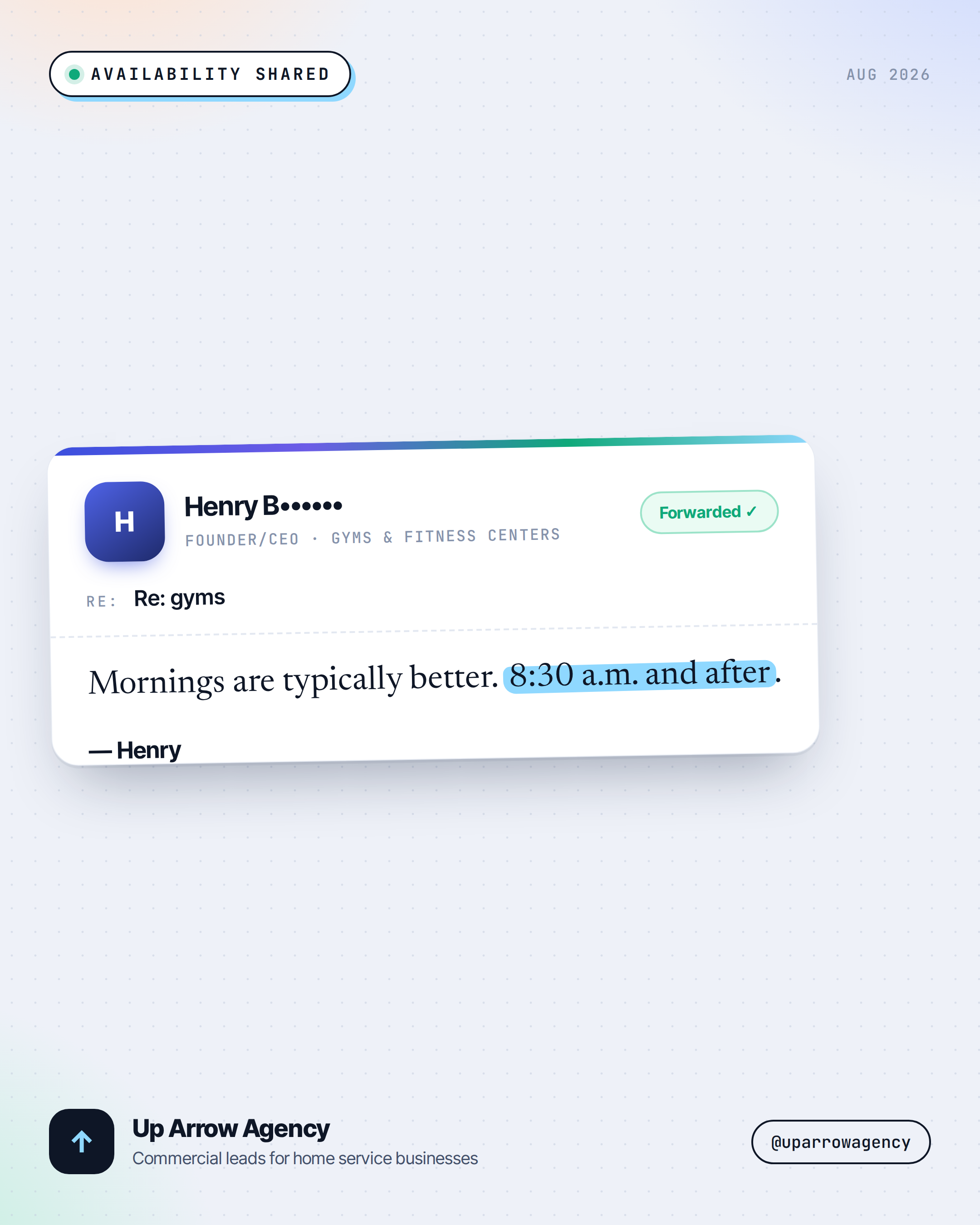
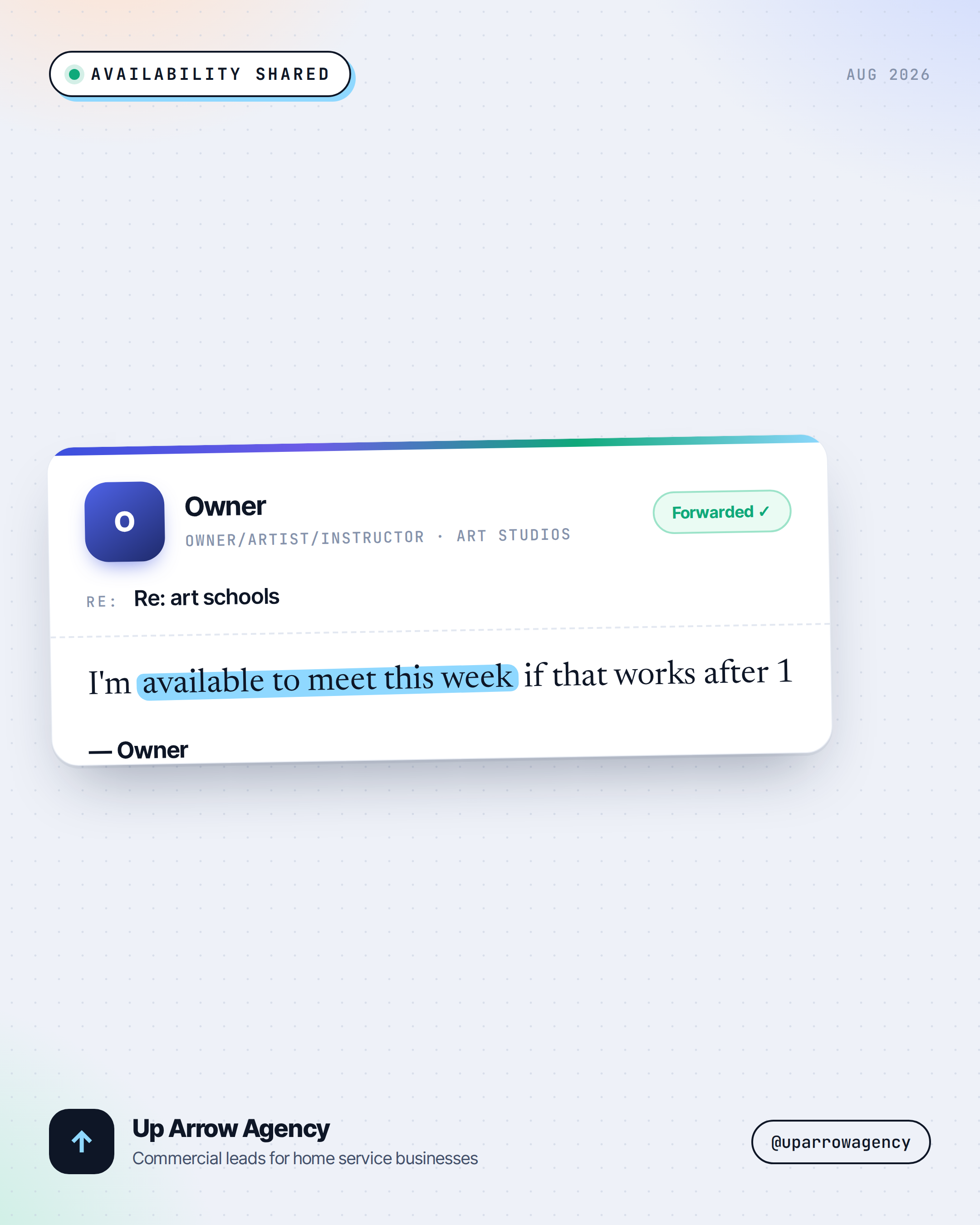
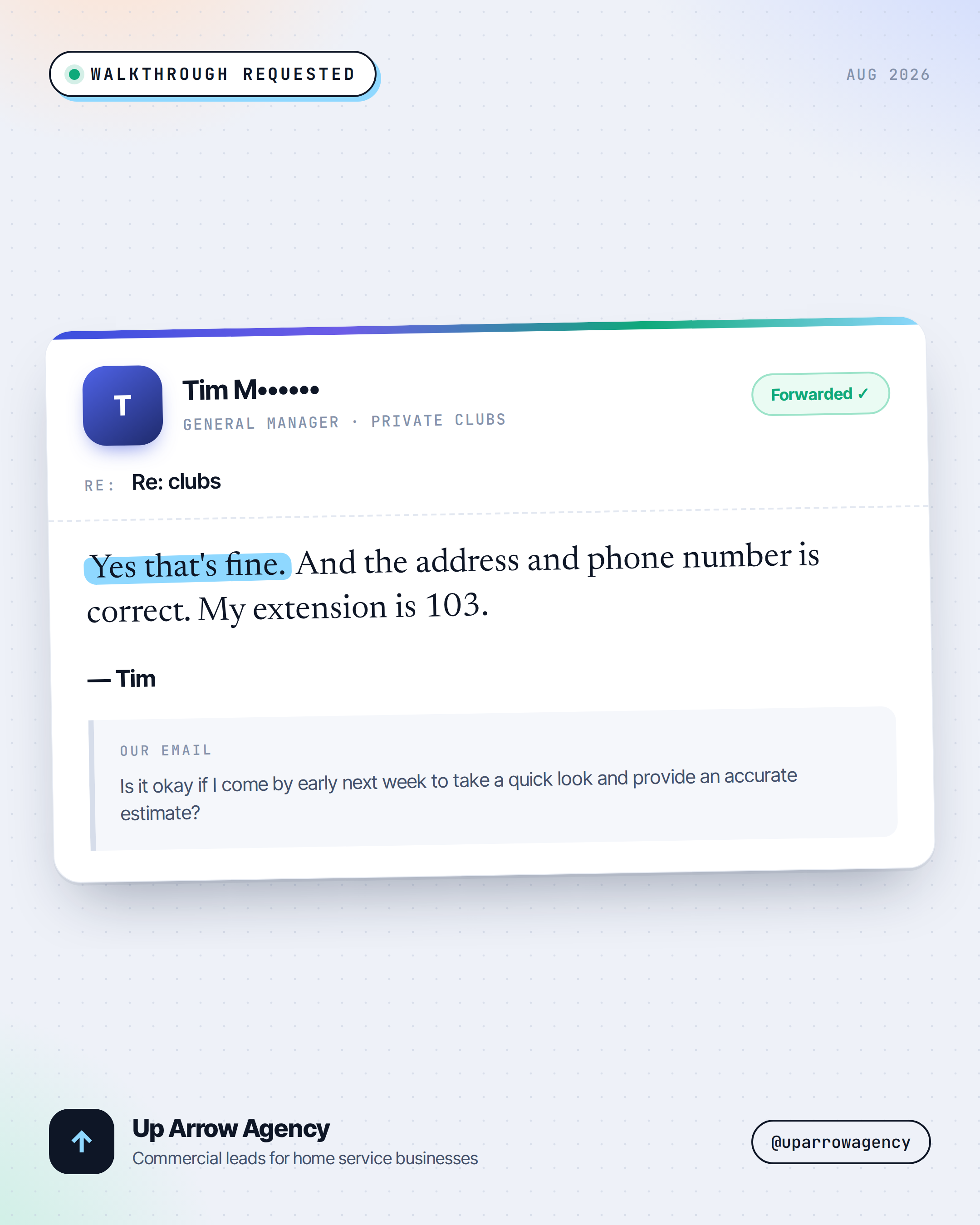
We read it differently. A pricing question is usually the easiest first question, not the only thing the person cares about. In the same period, 1,090 replies forwarded us to the person who makes the decision and 268 asked outright for a walkthrough or site visit. The play is to answer the price question by offering the walkthrough, because that is where value gets built. Because nobody else was competing for that reply, we had room to do it.
How to evaluate any lead source
Whether you're looking at a marketplace, a broker, or an agency, ask these before paying anything:
- Who else receives this contact? If the answer is vague, assume it's shared.
- Where did the contact come from? A real decision-maker at a real building, or a form fill from someone browsing?
- What happens when the lead goes nowhere? Look for replacement terms or performance-based pricing. Our own model is performance-based for this reason.
- Can you talk to the buyer before anyone quotes? If the system pushes you to price immediately, it was built for speed over fit.
A composite example
Picture a facilities manager at a multi-site office portfolio, for example. In one scenario, they fill out a quote form and hear from several vendors within the hour. They compare the numbers and take the shortest list to a call. In the other, they get a short, relevant email from one company that clearly works with buildings like theirs, reply with a question, and agree to a walkthrough. The second company starts the relationship with a head start no discount can buy.
Where exclusive leads come from
The most dependable source of exclusive leads is outbound you run yourself or hire out: targeted cold email to the people who actually decide on cleaning contracts. Because you pick the list and the message, the contacts aren't resold to your competitors.
The results we've published come from that approach: 48 commercial leads in 6 weeks for one client, a $38K/year recurring cleaning contract from a single campaign for another, and $160K in commercial cleaning jobs closed from cold email overall. For a fuller walkthrough of the channel options, see our guide to commercial cleaning lead generation.
Bottom line
Buy shared leads if you have a fast intake process, strong pricing discipline, and the stomach for volume. Choose exclusive if your edge is service quality and you win by being in the room. Most cleaning companies growing on recurring contracts end up in the second group, because the contract is worth far more than the lead.
Frequently asked questions
What is the difference between exclusive and shared commercial cleaning leads?
Are exclusive leads always better than shared leads?
Why do shared commercial cleaning leads convert worse?
How should I measure the true cost of a lead source?
Want these replies landing in your inbox?
We run the whole cold-email engine for commercial cleaning & pressure washing companies — targeting, inboxes, and booking — so you get decision-maker conversations without ads or cold calling.
Book a 30-minute callMore from the guides: How to get commercial cleaning contracts · Lead generation: DIY vs. done-for-you · All guides