
Key takeaways
- A price question in an early cold-email reply is a buying signal, not proof the buyer only cares about cost — the right move is to offer a walkthrough, not fire back a number.
- In a 21-day window of 69 real inbound replies across cleaning, pressure washing, and carpet companies, 65.2% got forwarded to a decision-maker and 18.8% asked about pricing — only 1.4% asked for a walkthrough outright, which means you have to offer one.
- Quoting blind over email anchors the whole deal on price and forces you to compete with whoever is willing to go lowest; a walkthrough lets you price scope, risk, and trust instead.
- ISSA's own bidding guidance treats a site visit before quoting as standard practice, and facility-management research warns that selecting vendors on lowest cost alone tends to cost more later.
- Price for the recurring relationship, not the first clean — one tracked campaign turned into a $38,000-per-year contract, which only happens when the quote reflects the long-term partnership, not a discounted first visit.
Here's how to price a commercial cleaning contract without turning it into a bidding war: you don't quote a number until you've walked the site. Pulling a rate off a square-footage chart and emailing it back might satisfy the lead who wants speed, but it also strips out everything that makes your price defensible — the scope you actually saw, the trust you built standing in the building, and the room to charge for an ongoing relationship instead of a one-time clean. Across 69 real inbound replies we tracked over a recent 21-day run of cold-email campaigns for cleaning, pressure washing, and carpet companies, the pattern held: the leads who asked about price fastest weren't the ones who signed fastest. The ones who got a walkthrough were.
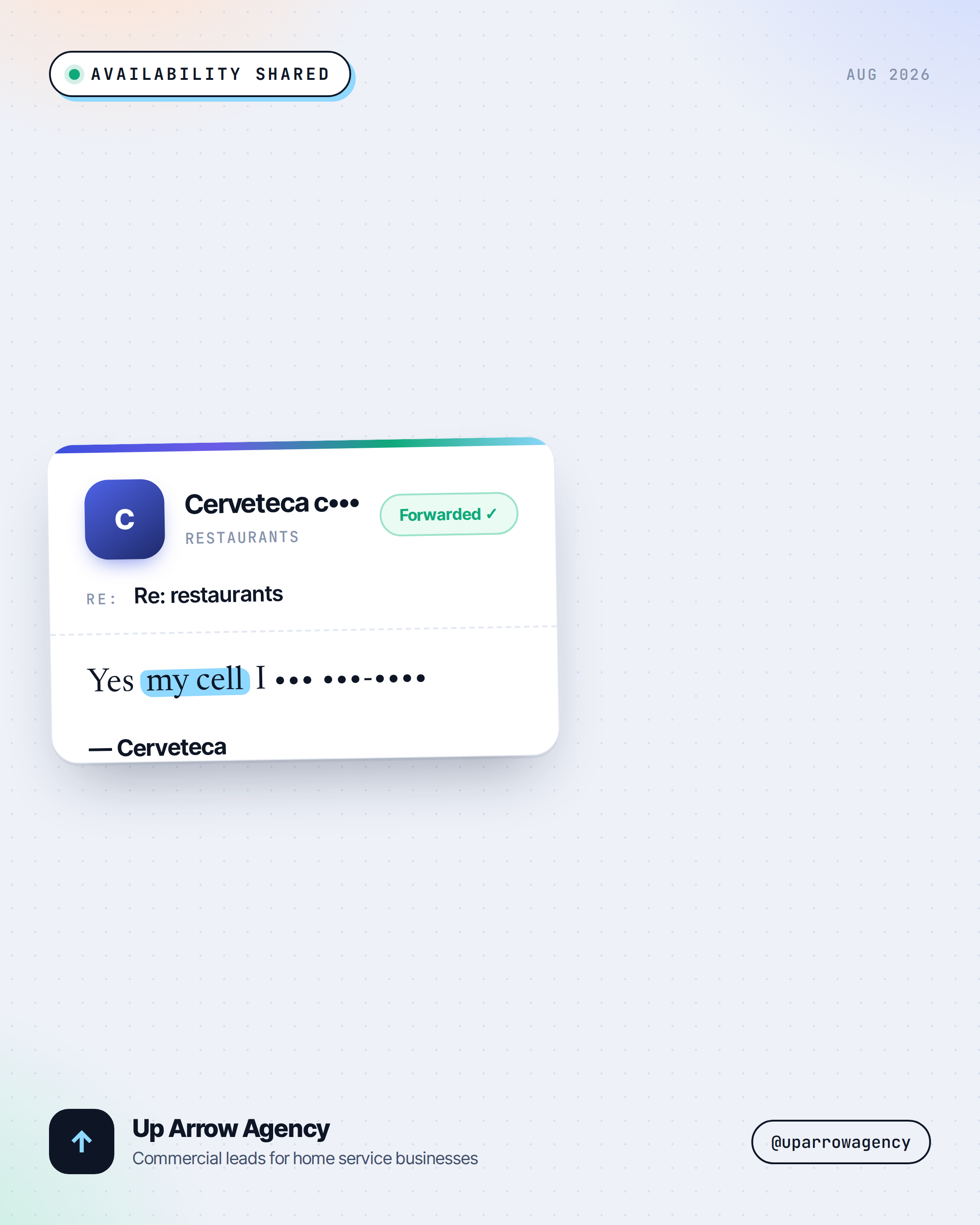
What 69 Real Inbound Replies Reveal About Pricing Conversations
We pulled this from a 21-day window of our own clients' cold-email campaigns across commercial cleaning, janitorial, pressure washing, and carpet & upholstery cleaning companies. Out of 69 genuine, high-intent replies from property managers, facilities managers, and office or operations managers, carpet and upholstery cleaning accounted for 59 of them, pressure washing brought in 7, and commercial cleaning made up the remaining 3. Volume varies by vertical, but reply behavior underneath it barely changed from one service line to the next, which is why the breakdown below is worth studying no matter which of these services you run.
| Reply type | Count | Share of replies |
|---|---|---|
| Forwarded to a decision-maker | 45 | 65.2% |
| Asked for pricing or a quote | 13 | 18.8% |
| Positive inbound reply (general interest) | 5 | 7.2% |
| Offered a call or availability | 4 | 5.8% |
| Requested a walkthrough directly | 1 | 1.4% |
| Asked for more details | 1 | 1.4% |
Two numbers matter more than the rest. Forty-five of the 69 replies — about two-thirds — got forwarded internally before anyone discussed price at all; someone inside the building decided this was worth a second set of eyes. And only one reply asked for a walkthrough outright. That second number is the one to pay attention to: if you wait for a prospect to ask to meet in person, you will wait a long time. Thirteen people asked about price instead, because asking “what's your rate” is a far easier first move than asking a stranger to walk their building. Reading that 18.8% as “they only care about price” is the mistake that costs cleaning companies the contract. It's the easiest question available to someone who doesn't have enough information yet to ask a better one.
Facility-management procurement research backs this up from the other side of the table. FacilitiesNet's guidance for building owners on vendor selection points out that basing a contractor decision on lowest cost alone tends to cost more in the long run, and recommends weighing qualifications, performance, and expertise alongside price — an approach procurement teams call best value selection. A facilities manager asking for your rate in an email reply is rarely trying to build a spreadsheet of the three cheapest bids. They're trying to figure out if you're worth a real conversation.
How to Price a Commercial Cleaning Contract, Step by Step
Here's the process that actually turns a reply into a signed, recurring contract instead of a one-time quote war.
Step 1: Book the Walkthrough Before You Quote Anything
A site visit before pricing isn't a nice-to-have — it's standard practice across the cleaning industry. ISSA's own guidance on bidding cleaning contracts tells contractors to conduct a site visit to inspect the areas that need cleaning before putting a number on paper. When a lead replies asking for pricing, the right answer isn't a number — it's an invitation to walk the building. Something close to: “Happy to put together a real number for you — it usually takes a short walkthrough to see the space and give you something accurate instead of a guess.” That's not a stall tactic. It's also the only way to see the floor conditions, traffic patterns, access restrictions, and current vendor problems that actually set your price.
Step 2: Price the Scope You Saw, Not the Scope You Assumed
Square-footage-based pricing is the standard starting model in commercial cleaning, but square footage alone is a starting point, not the answer. The walkthrough is where you adjust for cleaning frequency, carpet versus hard-surface mix, after-hours access, security or badge requirements, restroom and breakroom density, and whatever the incumbent vendor is currently getting wrong. Two buildings with identical square footage can carry very different real costs to service, and you cannot see that difference from an email.
Step 3: Price the Relationship, Not the First Clean
The number you're actually quoting covers a 12-month relationship, not a single visit. One of our tracked campaigns turned a single inbound conversation into a $38,000-per-year recurring cleaning contract — that number only exists because the deal was priced and sold as an ongoing partnership from the start, not as a discounted first clean meant to “get in the door.” The same logic shows up in the vertical that dominates our reply data: one carpet and upholstery campaign alone generated $23,000 in commercial jobs, and that came from treating each site as an account to win, not a single job to underbid. Price every walkthrough as the start of a relationship a facilities manager will have to defend internally if something goes wrong.
Step 4: Reverse the Risk So Price Stops Being the Objection
Once you've built the number, the fastest way to make it easy to say yes isn't to shave it down — it's to take the risk off their plate. A performance guarantee, a no-penalty exit clause, or a short trial period does more to win a recurring contract than a smaller invoice, because it answers the question underneath “how much” — which is really “what happens to me if this goes wrong.” A buyer who believes the outcome is close to guaranteed will pay more than one who isn't sure, even against a lower bid from someone else.
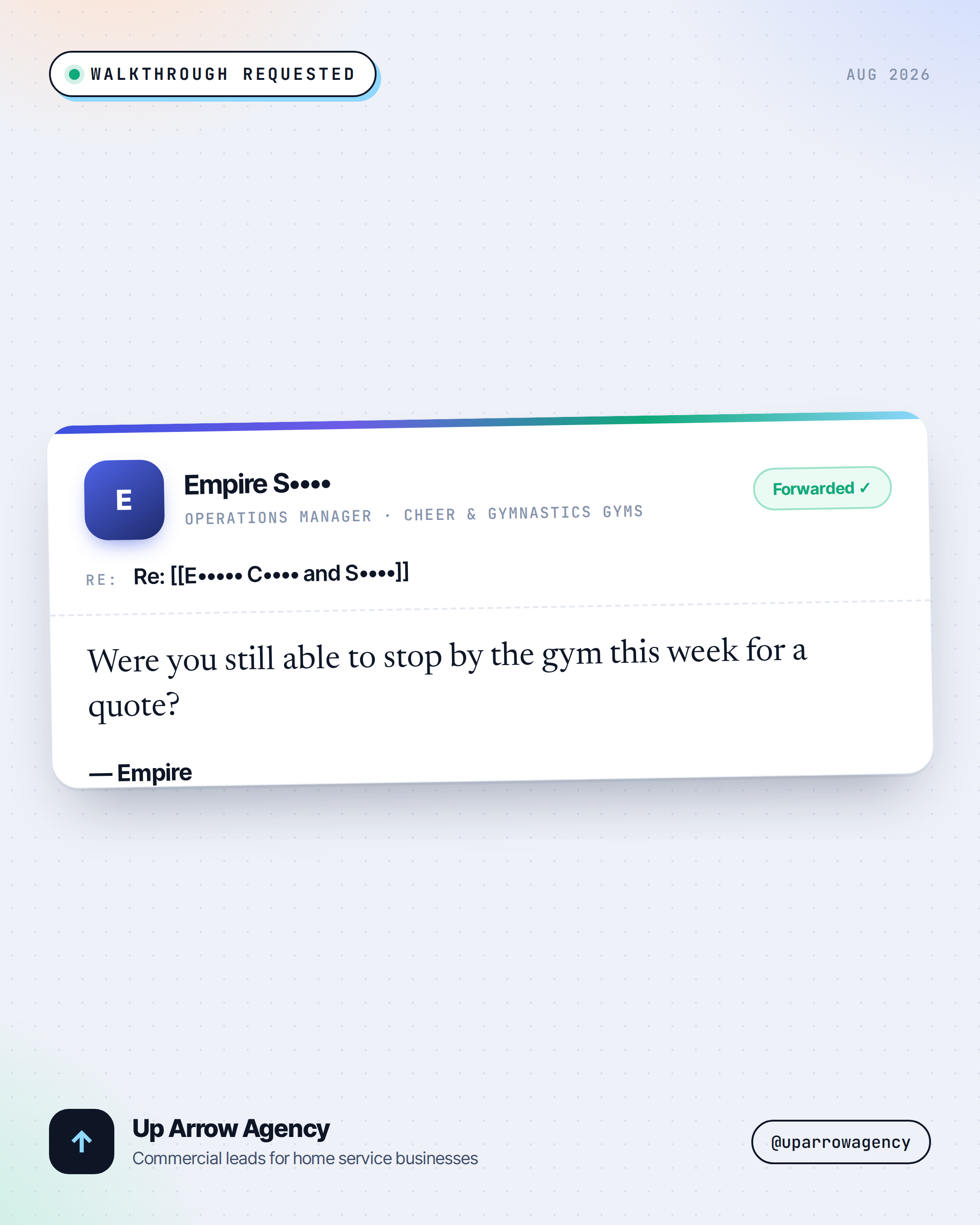
Common Pricing Mistakes That Start a Race to the Bottom
- Quoting blind off an email reply. The moment you send a number without seeing the building, you've let the prospect set the terms of comparison — and the only term left to compare on is price.
- Matching a competitor's number instead of your value. If you don't know what the incumbent is actually delivering, matching their price just means agreeing to compete on the one variable you can't win.
- Discounting to win the job instead of pricing the account. A cheap first clean sets the anchor for every renewal conversation that follows it.
- Treating every price question as a rejection. A fast reply asking about rates made up 18.8% of all the replies in our data. It's a normal opening question, not where the deal gets won or lost — the walkthrough is.
A Composite Example: Same Reply, Two Different Plays
Here's a composite scenario, not a real exchange: a facilities manager overseeing a multi-site office portfolio replies to a cold email within the hour: “What's your rate per square foot?” Play one — reply with a number pulled from a rate sheet. You've now committed to a figure you can't defend, for buildings you've never seen, competing against however many other vendors asked the same question and got a number back. Play two — reply with a short, specific offer to walk one of the sites this week, see the real conditions, and come back with a number instead of a guess. The second reply is the one that turns into a multi-site relationship instead of a quote that gets filed next to four others.
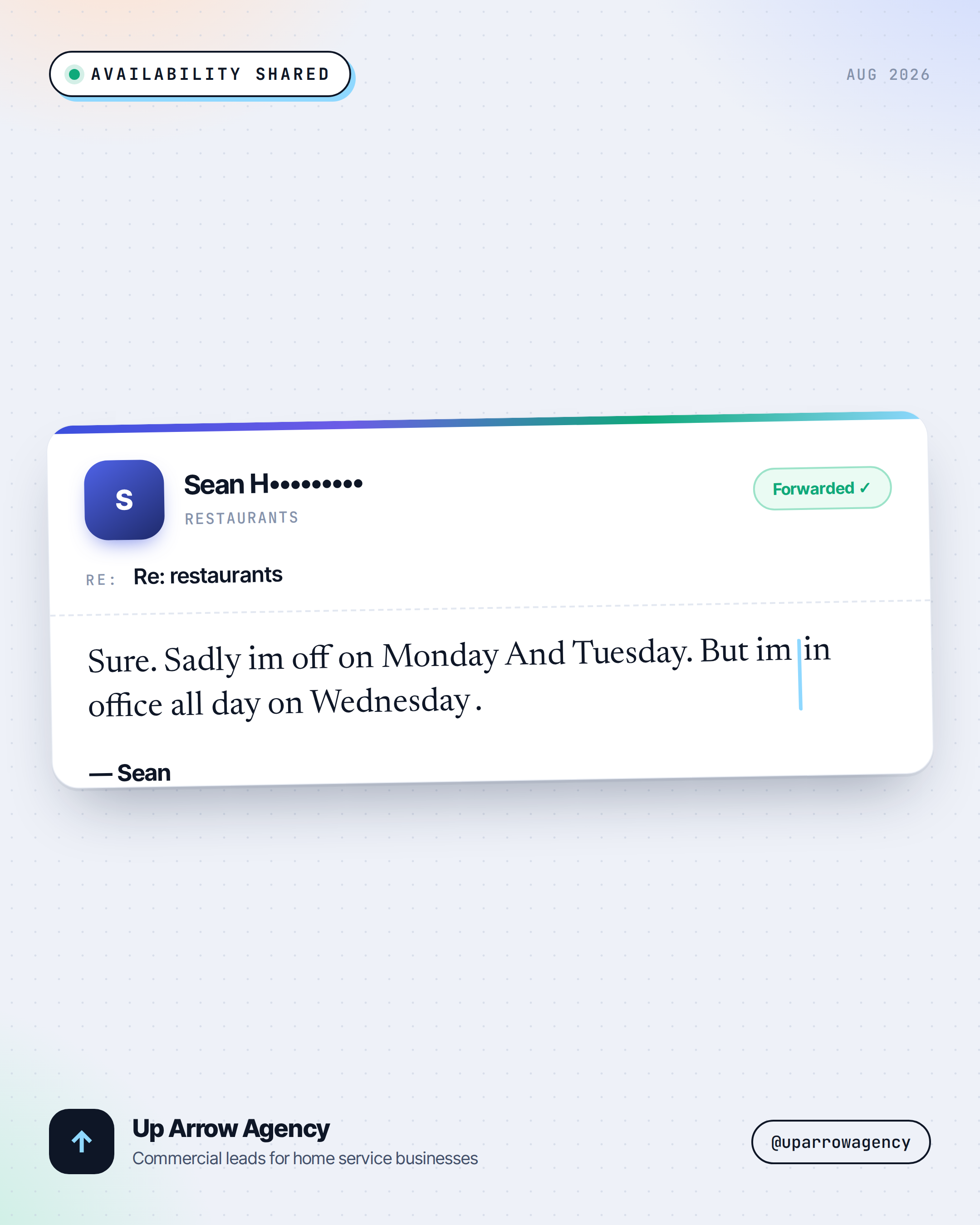
Where Pricing Fits Into Your Lead Generation Strategy
Pricing strategy only matters once you have enough inbound replies to practice it on. If your pipeline is thin, the fix isn't a better rate card — it's a repeatable system for how to get commercial cleaning contracts in the first place, so you're having this pricing conversation every week instead of hoping for it. For the cleaning companies generating replies like the ones in this data set, cold email for cleaning companies is the channel that produced all 69 of them, without paid ads, cold calling, or door-knocking.
Frequently asked questions
Should I send a price before meeting the facilities manager?
What's a normal price per square foot for commercial cleaning?
How do I compete when another company is underbidding me?
A lead asked for pricing in their first reply. Does that mean they only care about cost?
Want these replies landing in your inbox?
We run the whole cold-email engine for commercial cleaning & pressure washing companies — targeting, inboxes, and booking — so you get decision-maker conversations without ads or cold calling.
Book a 30-minute callMore from the guides: How to get commercial cleaning contracts · Lead generation: DIY vs. done-for-you · All guides