Key takeaways
- Cold email outperforms cold calling as the first touch to facilities and property managers because it doesn't require a live, unscheduled pickup — it works around gatekeepers and can be forwarded internally for free.
- In 69 genuine inbound replies across cleaning, pressure washing, and janitorial campaigns over 21 days, 65% were forwarded straight to a decision-maker — the email did the gatekeeper's job without anyone picking up a phone.
- A pricing question in a reply isn't rejection. It's a signal the prospect doesn't have enough information yet, and the right response is a walkthrough invitation, not a blind quote.
- The contract gets won in the free on-site walkthrough, where trust actually gets built. Cold email's only job is getting that walkthrough on the calendar.
- Cold calling still earns its place for warm follow-up and fast local jobs, but as a first-touch channel to facilities managers it competes with voicemail and gatekeepers that email simply bypasses.
Cold email beats cold calling for cleaning companies trying to land commercial contracts. Not because phone outreach is dead — because facilities and property managers rarely answer a number they don't recognize, but they will read and forward an email that lands with a clear ask. In 69 genuine inbound replies to cold email campaigns for commercial cleaning, pressure washing, and janitorial companies over the last 21 days, 65% were forwarded straight to the decision-maker before anyone picked up a phone. That's the real story in the cold email vs cold calling for cleaning companies debate: email does the gatekeeper's job for free, and it turns a maybe into the one thing that actually wins contracts — a face-to-face walkthrough.
Why Cold Calling Struggles to Reach Facilities Managers
A facilities manager running a multi-site office portfolio, for example, is not sitting by the phone. They're walking a building with a contractor, sitting in a budget meeting, or screened by a front desk whose job is keeping sales calls away from them. A cold call has to clear all of that in real time, in the few seconds before someone decides whether to answer a number they don't recognize.
Email doesn't need that timing to work. It sits in the inbox until the person has five minutes, and if it's not their decision to make, they can forward it to whoever owns the vendor relationship without ever talking to the sender. Research from B2B sales firm RAIN Group backs this up: in its research on email prospecting for B2B sales, 77% of buyers said they'd responded favorably to a cold email from a new provider within the past year. Buyer-level data tells a consistent story — RAIN Group's sales prospecting research found only 47% of mid-level managers prefer being contacted by phone at all, compared with 57% of VPs and C-level executives. Facilities and office managers, the people who actually run cleaning contracts, sit at the lower end of that phone-preference curve.
The cleaning industry's own trade groups point the same way. ISSA's guidance on running a better cleaning RFP process recommends building vendor selection around an on-site or virtual building tour with bidders — not a phone pitch. If the association representing janitorial and cleaning buyers says the tour is the step that matters, a cold call was never going to replace it. The real question isn't phone versus walkthrough. It's which channel gets you to the walkthrough fastest.
What 69 Real Cold Email Replies Told Us
We pulled the reply data from active cold email campaigns run for cleaning-industry clients over a 21-day window — 69 genuine, high-intent inbound replies across carpet & upholstery cleaning (59), pressure washing (7), and commercial cleaning (3). Here's how those replies broke down by type:
| Reply Type | Count | Share of Replies |
|---|---|---|
| Forwarded to decision-maker | 45 | 65.2% |
| Asked for pricing / a quote | 13 | 18.8% |
| Positive inbound reply | 5 | 7.2% |
| Offered a call / availability | 4 | 5.8% |
| Requested a walkthrough | 1 | 1.4% |
| Asked for more details | 1 | 1.4% |
Two-thirds of every reply was someone routing the email to the person who actually controls the vendor decision. No cold call generates that kind of unpaid internal referral — a phone call either reaches the decision-maker or it doesn't; it can't be quietly handed off down the hall the way an email thread can.
Cold Email vs Cold Calling for Cleaning Companies: Side-by-Side
Put the two channels next to each other and the gap isn't about which one is more polite. It's about which one survives the real obstacles standing between a sales message and a decision-maker's attention.
| Factor | Cold Email | Cold Calling |
|---|---|---|
| Reaching the decision-maker | Sits in the inbox until read; can be forwarded internally | Blocked by front desk, voicemail, or an unrecognized number |
| Gatekeeper handling | Not needed — the recipient can route it themselves | Gatekeeper decides if the call gets through at all |
| Outreach volume | Hundreds of personalized sends a day, no live conversation required | Limited by dial time, hold queues, and voicemail |
| What a response means | An opt-in — the prospect chose to engage | A pickup is often just bad timing, not interest |
| How it actually closes | Leads to a booked walkthrough | Leads to a booked walkthrough |
That last row is the point. Neither channel closes a commercial cleaning contract on its own. Both are just the knock on the door. For the full first-touch system, see our complete guide to cold email for cleaning companies.
A Price Question Is a Buying Signal, Not a Rejection
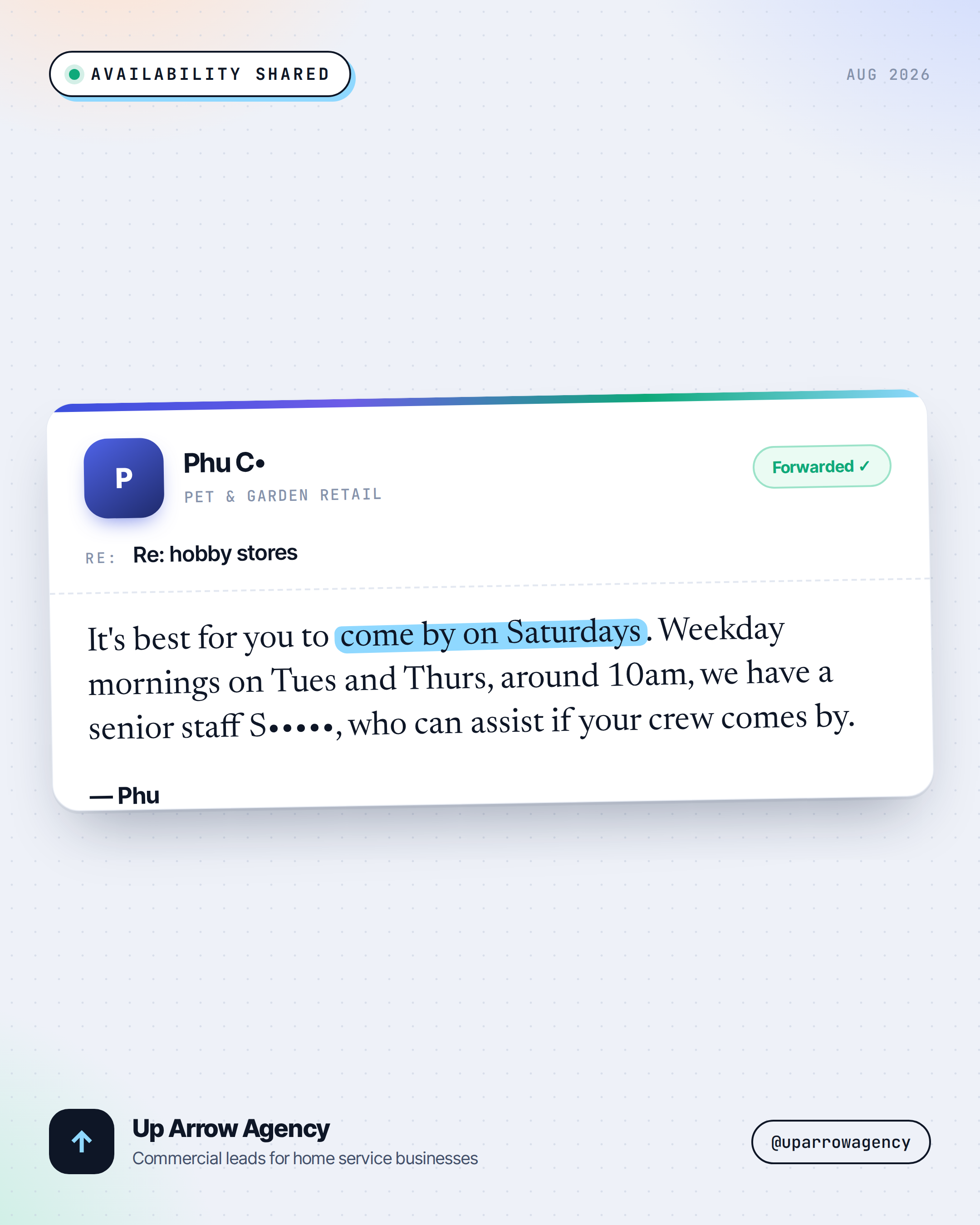
Thirteen of the 69 replies in our data — about 1 in 5 — asked for pricing or a quote before anything else. It's tempting to read that as "they only care about the number." That reading is wrong, and acting on it costs contracts.
A facilities manager at a multi-site office portfolio, for example, who emails back "what's your rate for a 10,000 sq. ft. office?" doesn't yet know enough about the vendor to judge whether any number is a good deal. Asking "how much?" is simply the easiest question available to someone who hasn't been given a reason to trust the sender yet. Firing back a flat quote in reply doesn't answer that — it anchors the entire relationship on price before any value has been shown, and it invites a round of email tag that rarely turns into signed work.
The better move is the one cold-calling scripts get backwards too: don't quote blind, offer the walkthrough. Something like — "Happy to put a number together. The most accurate way to do that is a quick 15-minute walk of the space so we're not guessing at square footage or scope. Does Thursday or Friday work?" That single reply does three things a bare price never can: it shows the sender takes the job seriously enough to see it in person, it removes the risk of a quote that's wrong in either direction, and it gets a real conversation on the calendar instead of a numbers negotiation by email.
The Walkthrough Is Where Contracts Actually Get Won
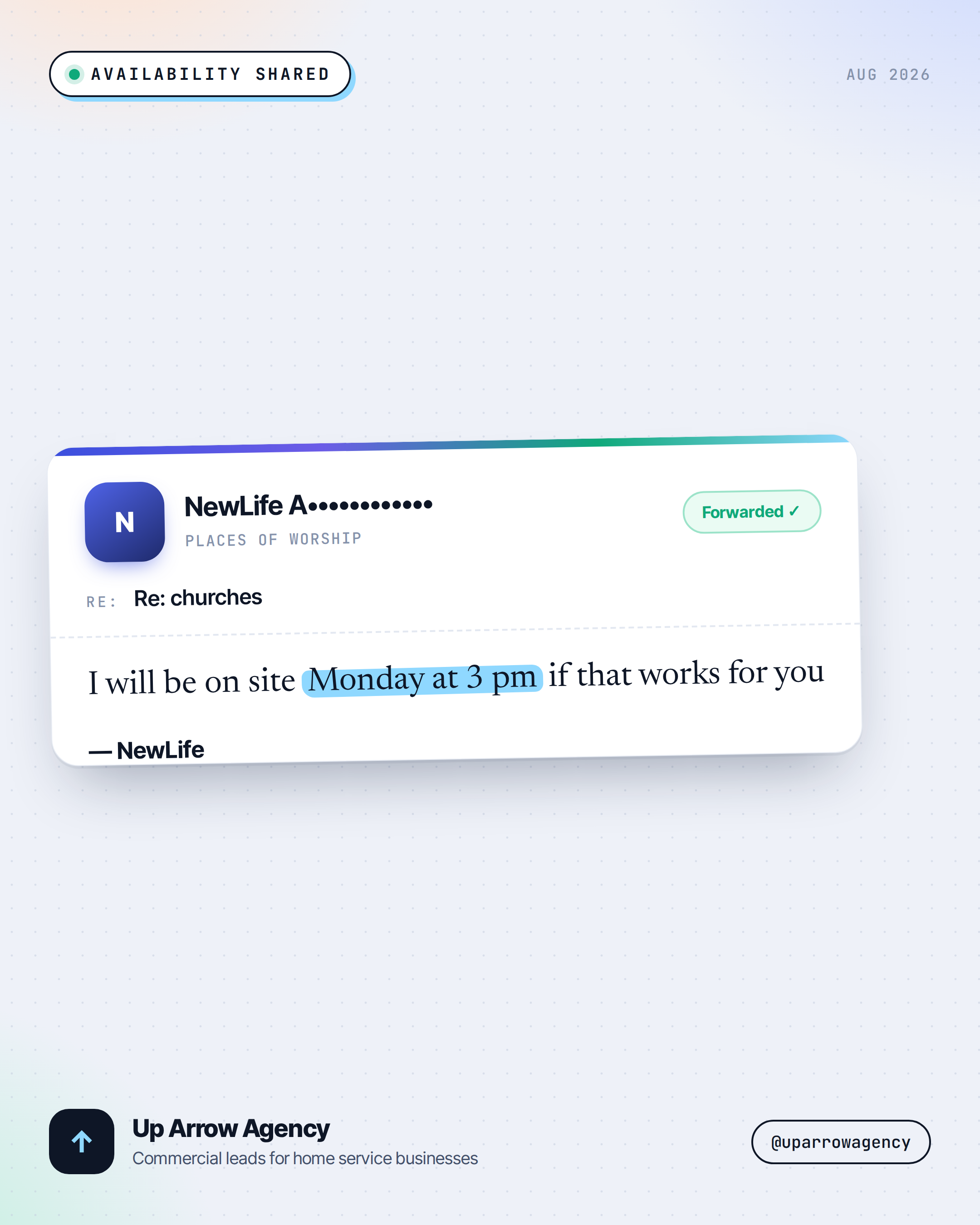
Facilities managers buy cleaning, carpet, and pressure-washing services from vendors they've met, not vendors who sent the lowest number. The reply — whether it's a forward, a price question, or a direct request for availability — only matters because of where it leads. In our data, just one reply out of 69 was an explicit request for a walkthrough on the first message. That's expected, not a problem: nobody invites a stranger to walk their building before they've had a reason to. Getting from "here's our pricing" to "come take a look" is the actual job of that first reply, not something that happens automatically.
When that handoff works, the numbers back it up. One client campaign generated 48 commercial leads in six weeks. Another turned a single campaign into $23,000 in commercial carpet-cleaning work. A different client went from 4 to 27 commercial leads in 30 days, and a single site visit turned into a $38,000-a-year recurring cleaning contract. None of that comes from winning on price. It comes from getting enough qualified conversations in front of the right person that some of them turn into a walkthrough, and some of those walkthroughs turn into signed work.
If you're building this pipeline for the first time, our guide on how to get commercial cleaning contracts walks through the full sequence from first contact to signed agreement.
When Cold Calling Still Has a Role
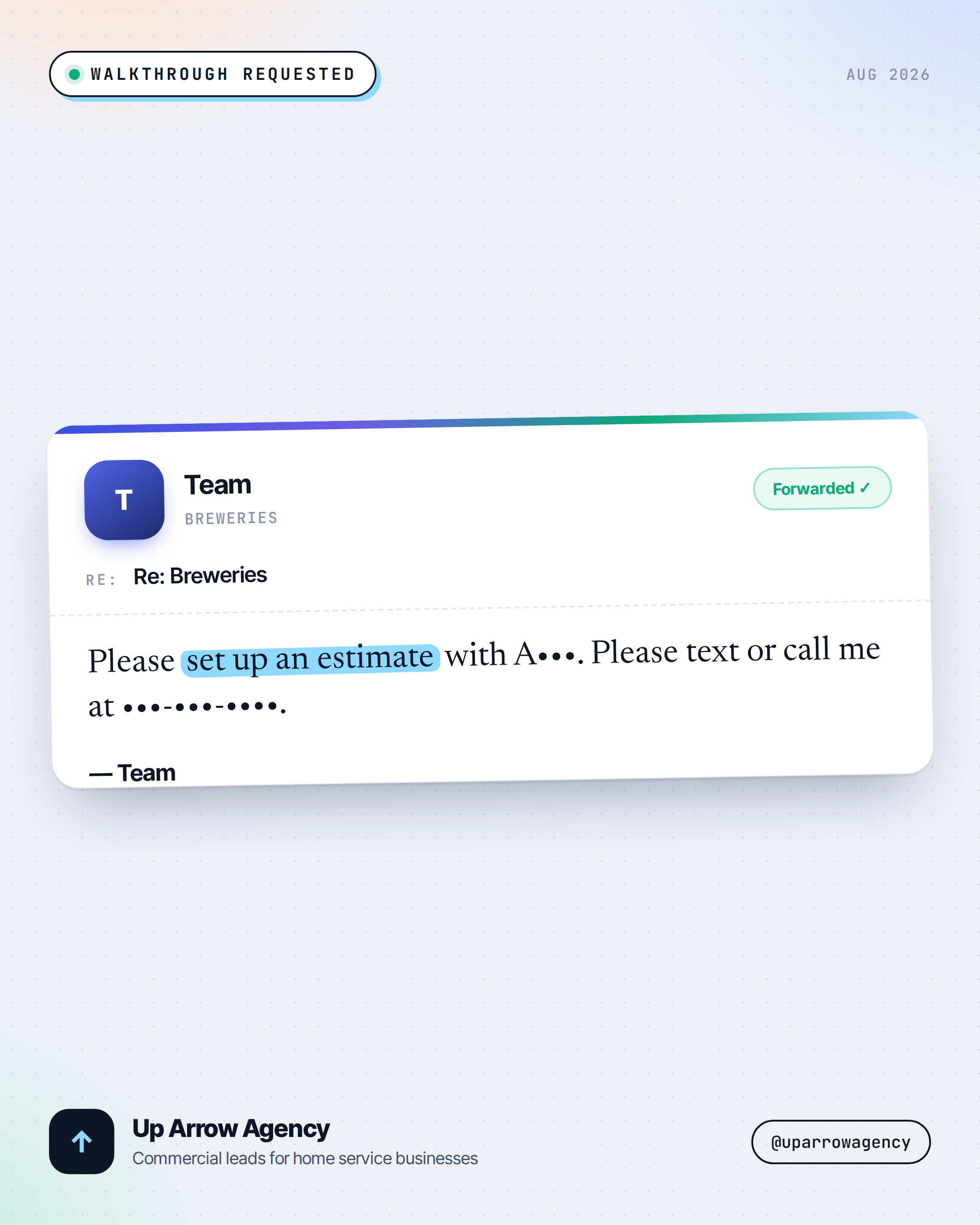
None of this means a phone should never ring. Once a prospect has already replied to an email — asked for pricing, offered availability, or said they're interested — a short call or text to lock in a walkthrough time is faster than another email round-trip. Calling also works for warm follow-up with an existing contact, or for smaller, faster-cycle local jobs where a same-day callback matters more than a documented paper trail.
What doesn't work well is cold calling as the first touch to a facilities or property manager who has never heard of your company. That's the exact moment a phone is competing with voicemail, a gatekeeper, and a caller-ID screen — and email isn't competing with any of that at all.
How to Put This to Work in Your Pipeline
- Lead with email, not a dial — let the prospect read and forward it on their own time.
- Treat every reply type — forward, price question, or "tell me more" — as the same signal: this person is willing to keep talking. Respond fast.
- Never quote a price in the first reply. Offer a specific walkthrough time instead.
- Make the walkthrough itself low-risk: free, no obligation, and framed around understanding their space before anyone talks numbers.
- Track reply type the way we did here — it shows you where your sequence and subject lines are working, and where prospects stall before the walkthrough ask.
Frequently asked questions
Does cold calling still work for cleaning companies?
What should I say when a prospect just asks how much I charge?
What response rate should I expect from cold email to facilities managers?
Does this hold true across different cleaning services, or just one niche?
Want these replies landing in your inbox?
We run the whole cold-email engine for commercial cleaning & pressure washing companies — targeting, inboxes, and booking — so you get decision-maker conversations without ads or cold calling.
Book a 30-minute callMore from the guides: How to get commercial cleaning contracts · Lead generation: DIY vs. done-for-you · All guides