
Key takeaways
- Cold email is worth it for cleaning companies when you measure it by qualified conversations entering your pipeline, not by how many people say yes on the first message.
- In a 21-day sample across cleaning-industry clients, campaigns generated 69 genuine high-intent replies: 65% were forwarded to a decision-maker and 19% asked for pricing, both buying signals, not proof that buyers only care about price.
- The highest-converting move after any reply, including a price question, is offering a free walkthrough. That's where trust gets built and a generic inquiry turns into a tailored, winnable proposal.
- Published results from cold email campaigns in this industry include $160K in commercial cleaning jobs closed, a $38K/year recurring contract from a single campaign, and 48 commercial leads generated in 6 weeks.
- Reply volume isn't uniform across service types. Carpet and upholstery cleaning out-produced pressure washing and commercial cleaning in this window, which is a targeting signal, not a verdict on the channel.
Is cold email worth it for cleaning companies? Based on three weeks of real campaign data across our commercial cleaning, carpet and upholstery, pressure washing, and janitorial clients, the answer is yes, but only if you're judging it by the right scoreboard. The scoreboard isn't 'did someone say yes to buying today.' It's how many decision-makers you got a real conversation started with, people who weren't shopping for a new cleaning vendor an hour before your email landed. Over a 21-day stretch, our clients' campaigns pulled in 69 genuine, high-intent inbound replies from property managers, facilities managers, and office managers. Almost none of those replies were 'yes, sign us up' on the spot. They were openings, and what you do with an opening decides whether cold email pays for itself or just generates noise in your inbox.
What 'Worth It' Really Means for a Cleaning Company
Commercial cleaning, janitorial, pressure washing, and carpet-cleaning contracts aren't bought off a single touch. A facilities or property manager running a multi-site portfolio gets pitched constantly, and most of it gets deleted unread. Cold email's job isn't to close a contract in one message. Its job is to get a real human with budget authority to respond, so an actual sales conversation can start. Judged against that bar, cold email is cheap: no ad spend to turn off and lose momentum, no referral network that takes years to build, no day spent driving a business park hoping someone's in the office.
Judged against the bar of 'will they sign after one email,' almost nothing clears it, cold email included. That distinction matters because it changes what you should actually track. A low reply-to-signed ratio doesn't mean cold email failed. A low reply-to-walkthrough ratio means your follow-up process failed. Those are different problems with different fixes, and mixing them up is the most common reason cleaning companies quit on cold email three weeks too early.
Is Cold Email Worth It for Cleaning Companies? What 69 Real Replies Show
Here's the breakdown from a recent 21-day window, aggregated across client campaigns. By vertical, carpet and upholstery cleaning accounted for the large majority of replies (59), with pressure washing (7) and commercial cleaning (3) behind it. That split is a targeting and offer-fit signal more than a verdict on the channel itself, more on that below.
By response type, the pattern is more useful than the raw reply count:
| Reply type | Count | Share of replies |
|---|---|---|
| Forwarded to decision-maker | 45 | 65% |
| Asked for pricing / a quote | 13 | 19% |
| Positive inbound reply | 5 | 7% |
| Offered a call or availability | 4 | 6% |
| Requested a walkthrough | 1 | 1% |
| Asked for more details | 1 | 1% |
What the Reply Breakdown Actually Means
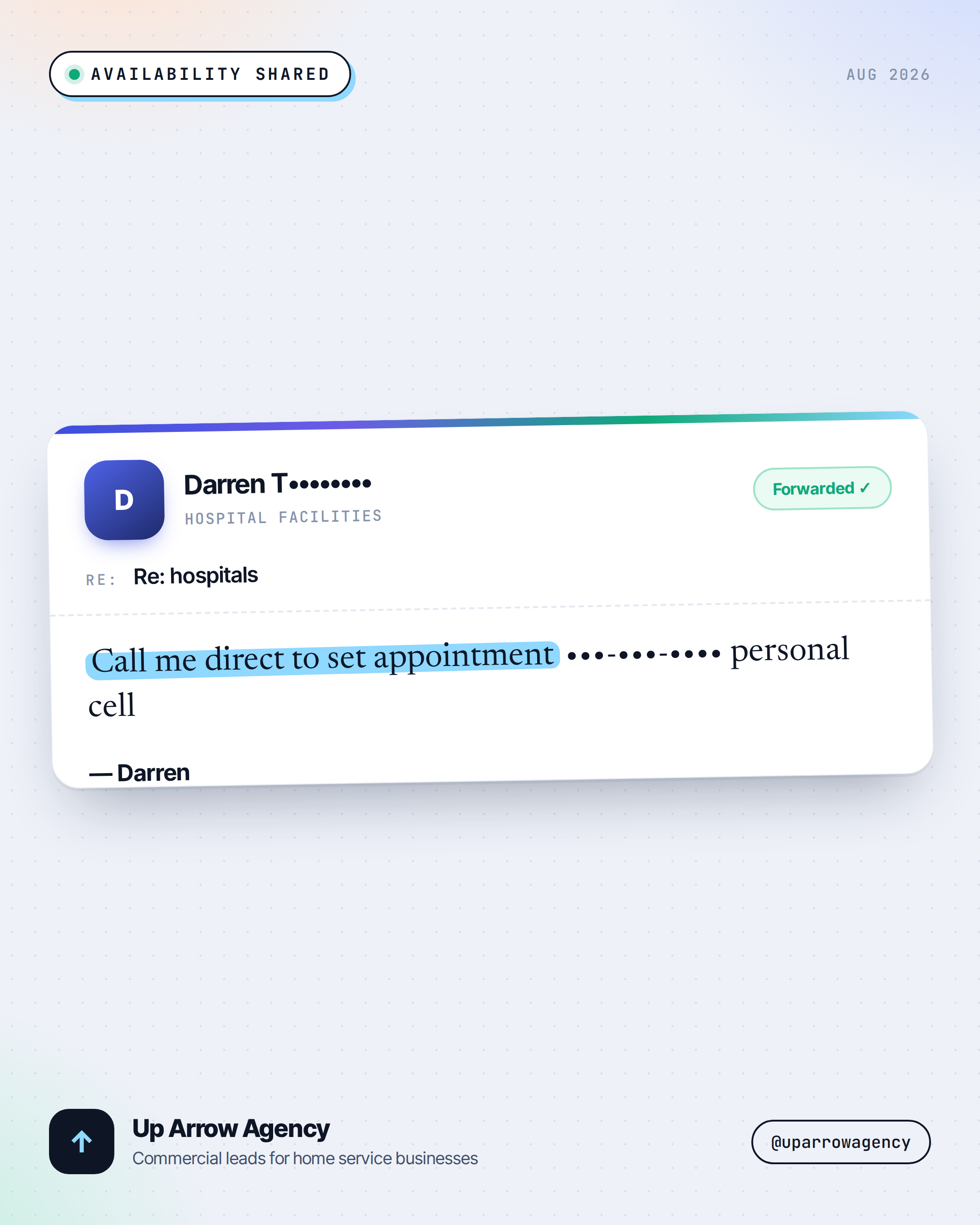
Two out of three replies were a gatekeeper or office administrator forwarding the email to whoever actually owns the cleaning budget. That's not a stall. That's the system doing its job. A facilities manager at a multi-site office portfolio, for example, almost never answers their own inbox cold; an assistant or operations coordinator screens it first. Getting forwarded means the email cleared the gatekeeper and landed in front of the right person, which is the entire point of the first message.
The second-largest bucket, just under one in five replies, asked about pricing. That's the number owners misread most often. See 'they just wanted a price' and it's tempting to conclude the campaign only attracts bargain hunters. That reads the data backwards. Early in a conversation, a facilities manager doesn't have enough information yet to judge what you're actually worth, so price is simply the fastest, easiest question available to ask. It's a buying signal wearing a budget question's clothes, not a verdict on what they care about.
Why a Price Question Isn't the Red Flag Most Owners Think It Is
The instinct when someone asks 'how much do you charge?' is to answer with a number. Resist it. Quoting a price over email, before you've seen the site, before you know square footage, floor type, foot traffic, or what's actually pushing them to look for a new vendor, puts you straight into a bidding war you didn't need to enter. You've given them nothing to judge you on except the number, so the number becomes the whole decision.
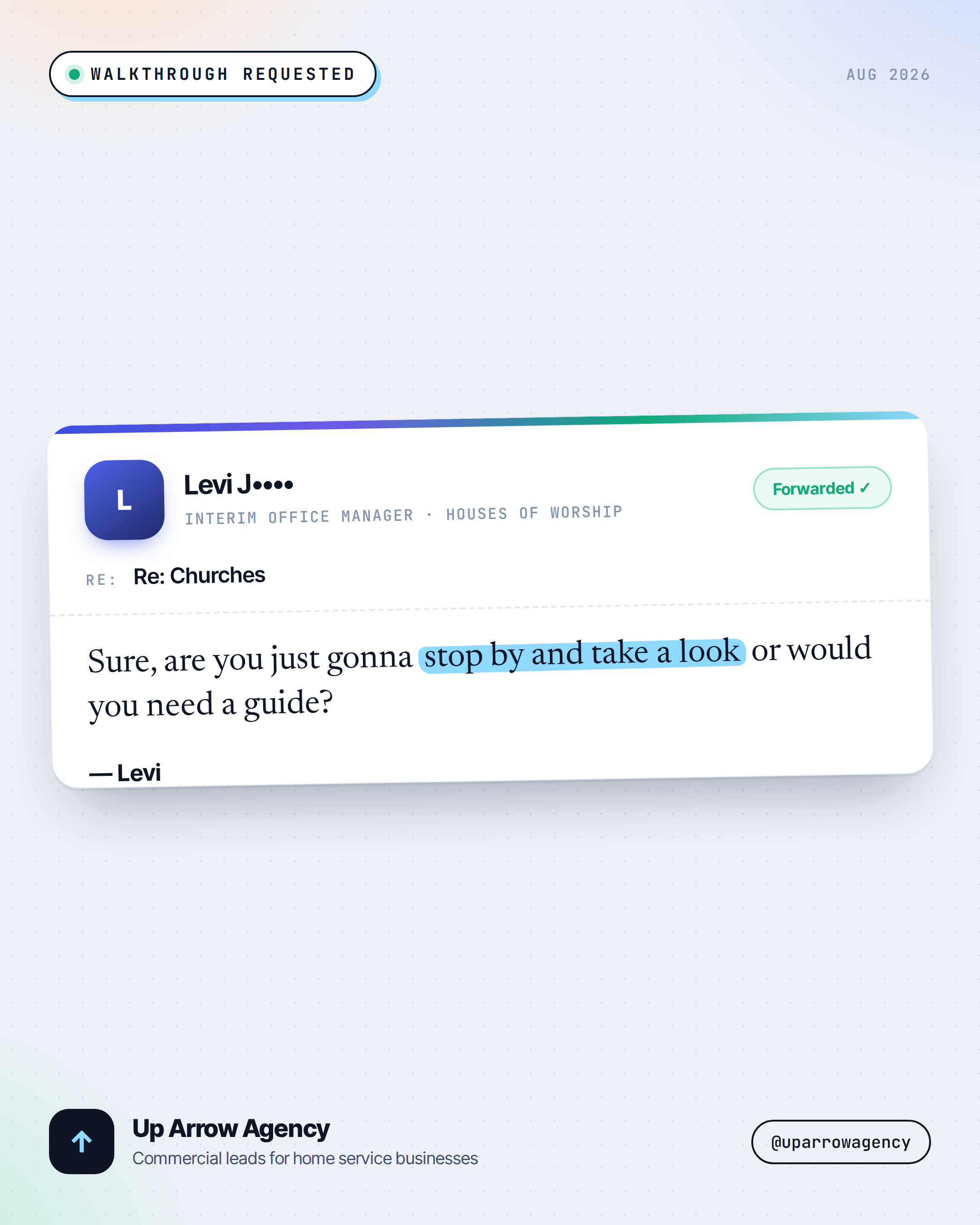
The move that actually converts in this industry is answering a price question with an invitation: a free walkthrough or site visit. That's not a stall tactic or a way to dodge giving a number. It's where the real selling happens. A walkthrough is where you learn what's actually going on, maybe the current vendor keeps missing spots, the lobby carpet is embarrassing them in front of clients, or the pressure-washing schedule has been whatever the last contractor felt like doing. It's where you can speak to their specific building instead of reciting a generic pitch, and where you take the risk off their plate by being a real person standing in their facility instead of a name in an inbox.
The Play: Reply, Then Walkthrough, Then Contract
Facilities and property managers are relationship buyers. They sign long-term contracts with vendors they've met, not automatically with whoever sent the lowest number. IFMA's own guidance on vetting suppliers puts it plainly: thorough screening, clear communication, and trust are what develop a lasting supplier relationship, with price sitting inside that relationship rather than replacing it. The sequence that wins is reply, walkthrough, tailored proposal, signed contract, in that order, every time. Jumping from 'they asked a price' straight to 'I sent a price' skips the only part of the process where trust actually gets built.
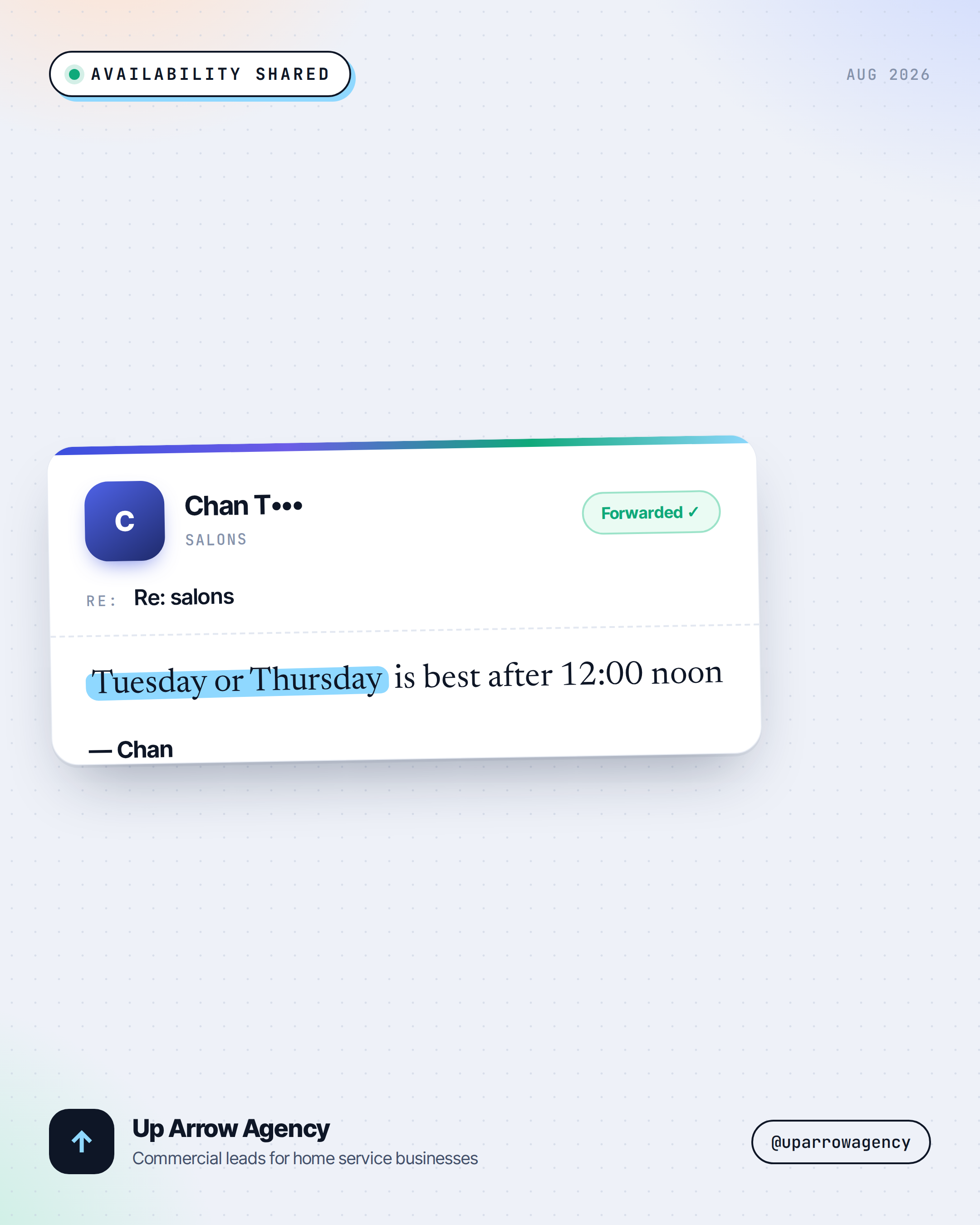
This is also why the single walkthrough request and the handful of call-availability replies in the table above matter more than their small count suggests. Every one of those is a prospect already inviting you into the high-value conversation. Treat that as a scheduling inconvenience and you'll run cold email for months and still conclude it doesn't work. Treat it as the entire point of the campaign, and it does.
What Closed Deals From Cold Email Actually Look Like
Reply data tells you whether the top of the funnel is healthy. Closed revenue tells you whether the process behind it actually works. Across campaigns run for cleaning-industry clients, that process has produced results like:
- 48 commercial leads generated in 6 weeks for one janitorial client
- $160,000 in commercial cleaning jobs closed from a single cold email program
- $23,000 in commercial carpet-cleaning jobs from one campaign
- A jump from 4 to 27 commercial leads in 30 days after a targeting fix
- A $38,000-a-year recurring cleaning contract signed from one campaign
- 12 commercial opportunities generated in 26 days for a pressure-washing client
None of those numbers happened because a prospect typed 'yes' on the first email. They happened because a reply turned into a walkthrough, the walkthrough turned into a tailored proposal, and the proposal turned into a signed, often recurring, contract. Cold email's actual output isn't signed business, it's qualified conversations. What you do with the conversation is a separate skill, and it's the one that decides whether cold email was worth running in the first place.
Where Cold Email Fits Among Your Other Lead Sources
Cold email isn't a replacement for referrals or a reputation built over years in your market. It's a way to generate pipeline without waiting for either to compound. Unlike paid ads, it doesn't disappear the moment you stop paying for clicks. Unlike cold calling or door-knocking, it reaches a facilities manager's inbox without needing them to pick up the phone or be standing at the front desk when you show up. If you're building a broader pipeline strategy, it's worth seeing how cold email fits alongside the rest of your commercial cleaning lead generation approach, and how those replies turn into signed work once the conversation starts.
Common Mistakes That Make Cold Email 'Not Worth It'
When a cleaning company runs cold email for a month and calls it a waste, the campaign usually has one of a few problems:
- Quoting blind. Sending a price the moment someone asks, before a walkthrough, trains every prospect to shop you against whatever lands in their inbox next.
- Treating a reply as the finish line. A forward or a pricing question is step one of a multi-step sale, not a dead end if it doesn't close in the same thread.
- Generic targeting. The vertical mix in the data above, carpet and upholstery cleaning far outpacing commercial cleaning and pressure washing in reply volume over this window, is a targeting and offer-fit signal, not a law of the industry. A list built around the wrong building type or the wrong title produces a quiet inbox no matter how good the copy is.
- No real follow-up system. Decision-makers don't always respond on the first forward. A second and third touch, spaced out and genuinely useful, is often what turns a forward into a booked walkthrough.
For the full mechanics of building a campaign that avoids these, list building, sequencing, and what to say after the first reply, our cold email for cleaning companies guide walks through the end-to-end process.
The Bottom Line
Cold email is worth it for cleaning companies that treat a reply as the start of a sales process, not the end of one. The data backs this up from both directions: 65% of replies in this 21-day sample were forwards clearing the path to a decision-maker, and 19% were pricing questions that are really requests for more information wearing a budget question's disguise. Neither is proof that cleaning buyers only care about speed or the lowest number. ISSA's own guidance on winning facility-services contracts points to the same pattern: ongoing contact and credibility with a prospect, not just a bid number, is what tips contract awards toward one vendor over another. Run the follow-through, book the walkthrough, build the trust, present a tailored offer, and cold email stops being a cost center and starts being the cheapest way you have to get in front of the people who sign your next contract.
Frequently asked questions
How many replies should a cleaning company expect from a cold email campaign?
Should I include pricing in my first cold email?
What's a realistic timeline from first reply to signed contract?
Does cold email work for every cleaning service type, or just some?
Want these replies landing in your inbox?
We run the whole cold-email engine for commercial cleaning & pressure washing companies — targeting, inboxes, and booking — so you get decision-maker conversations without ads or cold calling.
Book a 30-minute callMore from the guides: How to get commercial cleaning contracts · Lead generation: DIY vs. done-for-you · All guides