Key takeaways
- Commercial cleaning lead gen is priced three ways — flat retainer, pay-per-lead/appointment, or performance-based where you only pay for booked conversations — and the model matters more than any single number.
- In a recent 21-day window across our clients' campaigns, 69 genuine replies broke down as 45 forwards to a decision-maker, 13 pricing requests, and 11 other positive signals — a pricing question this early is a buying signal, not a price objection.
- Facilities and property managers buy from vendors they've met and trust; cold email's job is to get the conversation started, not to close the deal by quoting blind.
- Published campaign results in this space range from a $23K carpet-cleaning job out of one campaign to a $38K-a-year recurring contract — cost only makes sense measured against numbers like these.
- The cheapest quote rarely wins commercial cleaning contracts; both ISSA and IFMA point to trust and in-person vetting as the deciding factor, not price.
How much does commercial cleaning lead generation cost? There's no single market rate for it. Pricing runs on three different models — a flat monthly retainer, a pay-per-lead or pay-per-appointment fee, and a performance-based arrangement where the agency only gets paid when it books you a real conversation with a decision-maker — and which one fits you depends on how much risk you want to carry versus hand off to the vendor. The number on an invoice matters less than what a booked conversation with a facilities manager is worth once you show up and do the work to close it. Below: how each pricing model actually works, what drives cost up or down, and real reply data from a recent three-week stretch of our clients' commercial cleaning campaigns showing what these conversations look like before they ever turn into a signed contract.
How Commercial Cleaning Lead Generation Is Priced
Ask five agencies how much commercial cleaning lead generation costs and you'll get five different answers, because they aren't all selling the same thing. In practice, pricing falls into three structures.
Flat monthly retainer
You pay a fixed fee for a defined volume of outbound activity — emails sent, lists built, campaigns managed — regardless of how many replies or booked conversations come back that month. This shifts the volume risk onto you: if a given month underperforms, you've still paid the retainer. It suits companies that want a predictable line item and are willing to judge an agency over a full quarter rather than month to month.
Pay-per-lead or pay-per-appointment
You pay for each qualified reply or booked appointment delivered, not for the outbound activity behind it. This moves some risk onto the agency — no leads, no invoice — but it can tempt an agency to pad reply counts with weak signals that never turn into a booked conversation. Define "qualified" in the contract before you sign, or this model gets messy fast.
Performance-based, done-for-you
The agency runs the entire outbound motion — list building, copywriting, sending, replies — and gets paid based on results delivered, not activity logged. This is the model we run at Up Arrow: no paid ads, no cold calling, no door-knocking, just cold email that books conversations with property managers, facilities managers, and operations managers. It puts most of the risk on the agency's side, which is the point. It's supposed to make saying yes an easy decision, not a leap of faith.
What Actually Drives the Cost
Three things move the price more than the vendor you pick does.
Vertical. Not every commercial cleaning niche has the same reply volume sitting in a cold inbox. Across a recent 21-day stretch of our clients' campaigns, 69 genuine high-intent replies skewed heavily toward one vertical: 59 came from carpet & upholstery cleaning campaigns, 7 from pressure washing, and 3 from commercial cleaning generally. That split isn't about one buyer being easier to sell than another — it reflects list size, timing, and how saturated a given inbox already is with competing pitches. A thinner vertical usually needs a bigger list and more sends to produce the same number of conversations, which changes what a per-lead price has to cover.
Sales cycle length. Facilities and property management is a relationship business, not a transaction. A reply doesn't mean a close — it means a door opened. Budgets built around a 30-day payback period on commercial cleaning lead gen are usually budgets that end up disappointed.
Geography and market density. More commercial buildings and more competing vendors in a market means more outbound volume is needed to stand out, which raises the cost of hitting a given reply rate whether you're paying retainer, per-lead, or performance-based fees.
How Much Does Commercial Cleaning Lead Generation Cost?
Here's the honest answer: it costs whatever a vendor and pricing model you can actually evaluate land on — and the number by itself is close to meaningless without a denominator. A flat fee that produces zero qualified conversations in a month is expensive at any price. A performance-based fee tied to a $38,000 recurring contract is cheap no matter what it is, because you're measuring it against what it returned, not against what it cost to send an email.
That's the same logic a facilities manager applies to you. When a property manager asks "what's your price," that's rarely the whole decision — it's an opening question from someone who doesn't have enough information yet to know whether your price is a good deal. Apply the same standard in reverse: judge a lead-generation cost by the likely outcome and the risk you're carrying, not by the sticker price alone.
What 69 Real Replies Say About Pricing Conversations
Numbers settle this better than opinion. Over a recent 21-day window across our clients' cold email campaigns, we logged 69 genuine, high-intent inbound replies. Here's how they broke down by type:
| Reply type | Count | Share of total |
|---|---|---|
| Forwarded to the decision-maker | 45 | 65% |
| Asked for pricing / a quote | 13 | 19% |
| Positive inbound reply | 5 | 7% |
| Offered a call or availability | 4 | 6% |
| Requested a walkthrough | 1 | 1% |
| Asked for more details | 1 | 1% |
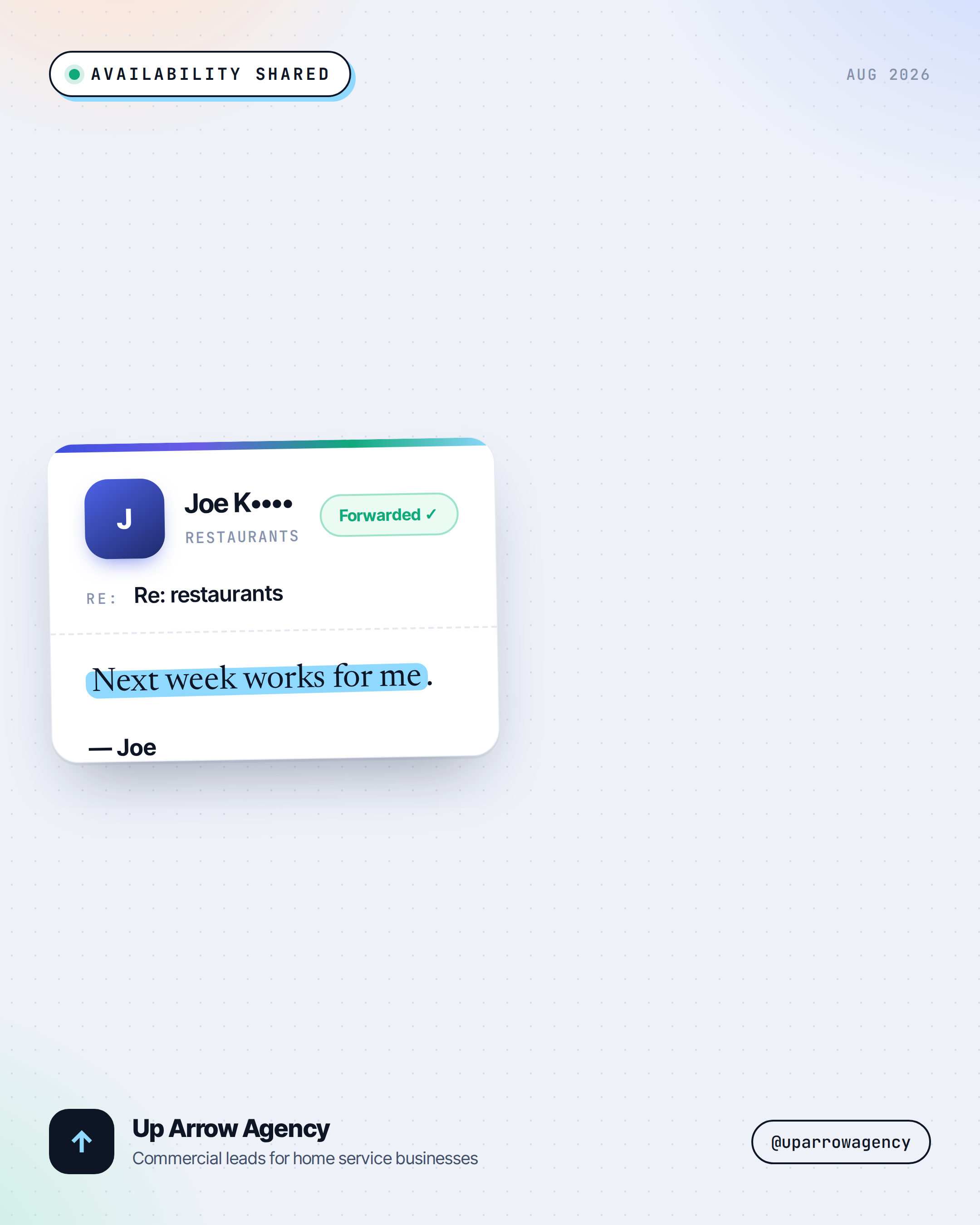
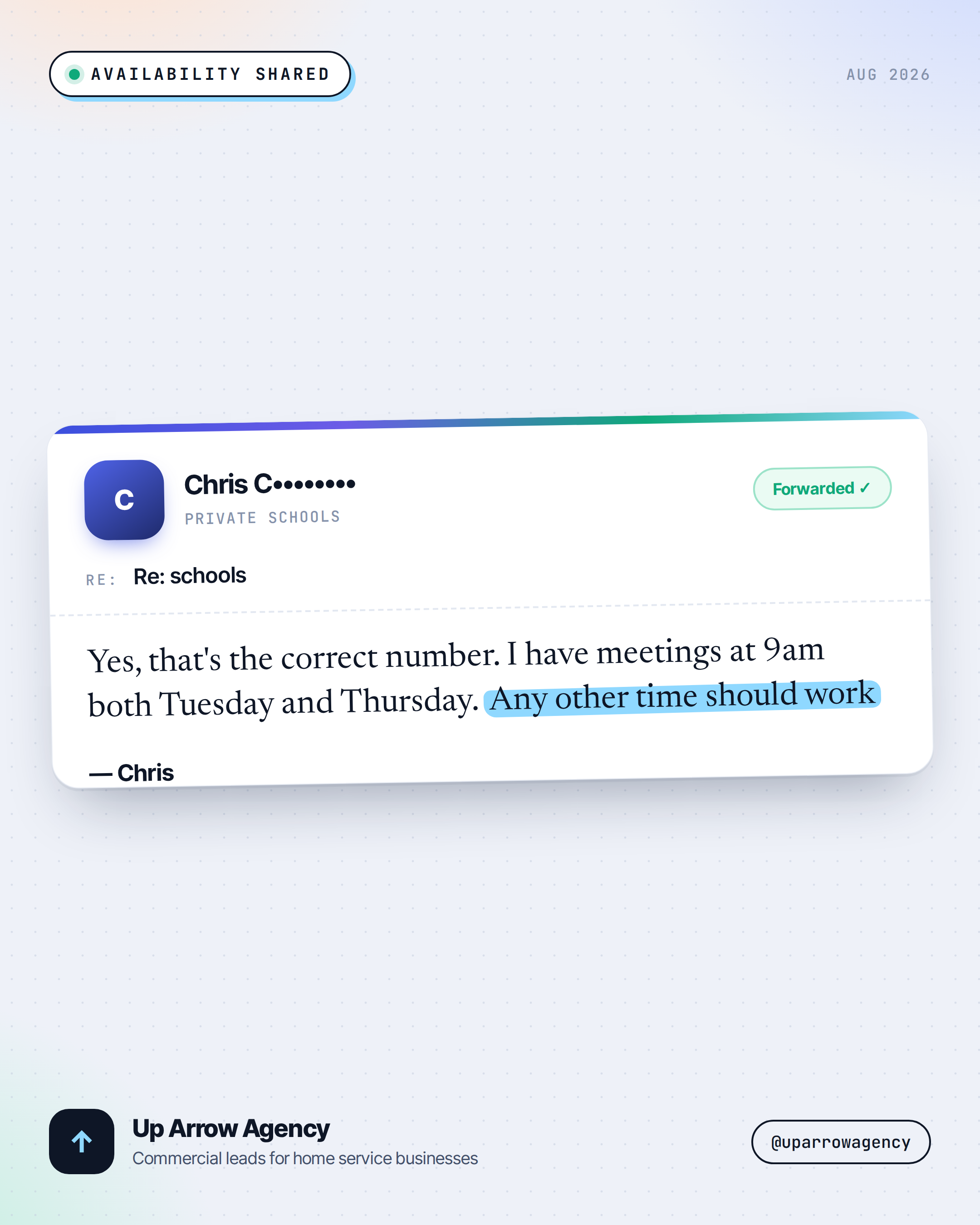
Two-thirds of replies were a gatekeeper or office manager forwarding the email up the chain — someone deciding you're worth passing along, which is itself a trust signal before anyone says a word in person. About one in five asked for pricing. That's the second most common reply, and it's worth sitting with: a pricing question this early isn't a buyer who only cares about the number. It's the easiest question to ask when you don't yet have enough information to care about anything else.
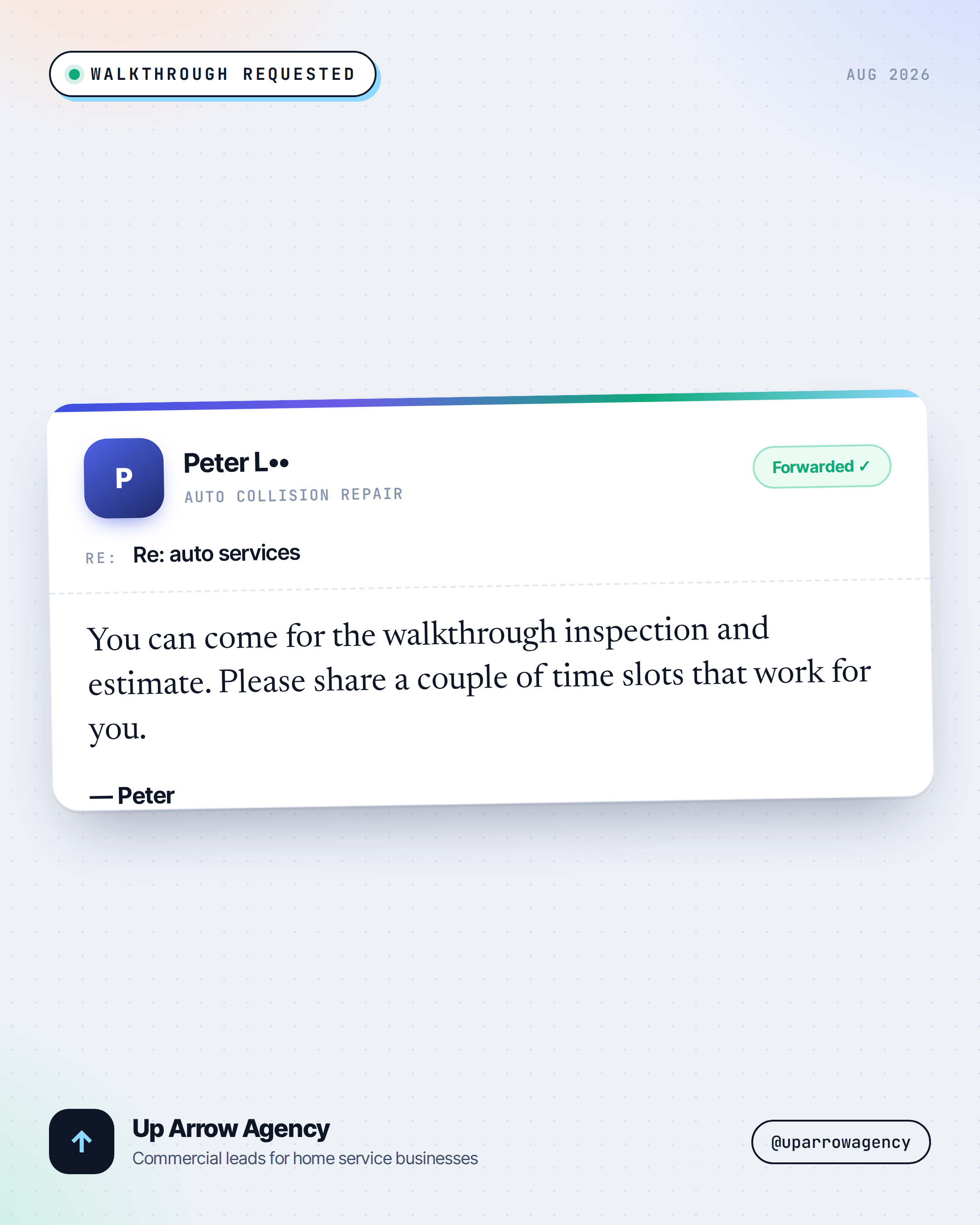
The move that converts isn't firing back a quote. A facilities manager overseeing a multi-site office portfolio, for example, might reply to a cold email asking only what the monthly rate would be for carpet cleaning across their locations. Quoting blind at that point anchors the whole relationship on a number before any trust exists. Offering a short walkthrough instead — a chance to see the space, understand what's actually needed, and show up as a real vendor instead of a line in an inbox — is what turns a pricing question into a booked site visit, and a site visit into a contract.
Only one reply out of 69 asked for a walkthrough outright. That's not a weak number — it's the one signal that doesn't need any work to convert. The other 13 pricing replies and 4 availability offers are where the actual job is: moving a buyer who's curious into a buyer who's met you.
Why the Cheapest Quote Rarely Wins the Contract
This isn't just internal experience talking. ISSA's guidance on winning commercial cleaning contracts points to the same mechanic: in-person visits give a vendor the chance to understand what a client actually needs and to build a personal connection, and that connection — not the lowest bid — is what moves a proposal from "under review" to signed. On the buyer's side, IFMA's best practices for vetting suppliers make the same point from the facilities-management chair: thorough screening, clear communication, and trust built over time are what develop a durable supplier relationship, not a single competitive price.
That's the whole argument for why cold email lead generation has to end in a conversation and a walkthrough, never a quote sent cold. You can win a $23,000 carpet-cleaning job or a $38,000-a-year recurring contract on the strength of a relationship a buyer trusts. You almost never win it by being a few hundred dollars cheaper than the incumbent.
What a Working Pipeline Actually Produces
Cost only means something next to results. Across recent commercial cleaning campaigns we've run, published outcomes include 48 commercial leads generated in six weeks, $160,000 in commercial cleaning jobs closed from cold email, a $23,000 commercial carpet-cleaning job from a single campaign, a jump from 4 to 27 commercial leads in 30 days, a $38,000-a-year recurring cleaning contract from one campaign, $18,000 in commercial cleaning leads from cold emails, and 12 commercial opportunities surfaced in 26 days. None of those numbers came from the cheapest possible outbound spend — they came from campaigns built to get a real person into a real building.
If you're earlier in the process and want the fuller playbook — list building, targeting, and how the follow-up sequence fits together — our guide to commercial cleaning lead generation walks through the full system. If cold email specifically is the piece you're trying to get right, cold email for cleaning companies covers the mechanics of the messages themselves.
Frequently asked questions
Is commercial cleaning lead generation worth it if I already get referrals?
How long does it take to see results from commercial cleaning lead generation?
Should I quote pricing directly when a prospect asks in a cold email reply?
Does commercial cleaning lead generation cost more for carpet and upholstery than for janitorial work?
Want these replies landing in your inbox?
We run the whole cold-email engine for commercial cleaning & pressure washing companies — targeting, inboxes, and booking — so you get decision-maker conversations without ads or cold calling.
Book a 30-minute callMore from the guides: How to get commercial cleaning contracts · Lead generation: DIY vs. done-for-you · All guides