
Key takeaways
- Most cleaning companies should outsource the cold email machinery (domains, deliverability, lists, copy testing) and keep the part only the owner can do: the walkthrough and the relationship.
- In-house works when you already have someone who will spend part of every week on deliverability and list building. A salesperson alone doesn't cover it.
- Cold email is mostly an infrastructure problem before it is a copywriting problem. Google and Yahoo both enforce sender rules that punish careless setups.
- Whichever way you go, the replies are only worth something if someone answers fast and steers the conversation toward a free site walkthrough.
- Judge a provider on booked conversations with decision-makers and on how risk is shared, not on how many emails they send.
Should cleaning companies outsource cold email? In most cases, yes, for the machinery: sending domains, inbox setup, list building, copy testing and reply triage. Keep the part that wins contracts in-house: the walkthrough, the conversation with the facilities manager, and the proposal. Running the whole thing yourself makes sense only if you have a person who will treat it as a real job, not a side task.
What cold email actually asks of you
Owners usually picture cold email as writing a good message. That's maybe a fifth of the work. The rest is plumbing and discipline.
- Infrastructure. Separate sending domains, mailboxes warmed up gradually, and correct authentication records on each one.
- Lists. Finding property managers, facilities managers and office managers in your service area, verifying the addresses, and removing anyone who shouldn't be contacted.
- Copy and testing. Short emails written for a busy person, several variants, and honest tracking of which ones produce real replies.
- Reply handling. Sorting genuine interest from out-of-office messages and bounces, then answering within hours.
Each piece is learnable. The trouble is that all four must work at the same time, every week, or the channel quietly stops producing.
Why deliverability is the part that sinks DIY efforts
Mailbox providers have tightened the rules. Google's email sender guidelines require bulk senders to authenticate with SPF and DKIM, publish a DMARC policy, keep spam complaints under 0.30%, and support one-click unsubscribe. Yahoo's sender best practices set a parallel standard, including a complaint rate under 0.3%. Those formal thresholds apply to high-volume senders, but the same signals decide whether a small cleaning company's emails land in an inbox or a spam folder.
I've watched owners send their first 200 emails from their main business domain, get a few complaints, and damage the address they use for invoices and existing clients. Nothing about that is a copywriting problem. It's a setup problem, and it's the main reason a professional operator earns their keep here.
When running it in-house makes sense
In-house is a reasonable call in a few situations:
- You have an office manager or sales coordinator with real hours to spare each week, not leftover minutes.
- You're comfortable learning email authentication and are willing to monitor it continuously.
- You want to start small, testing one niche in one metro, and the cost of a slow start is low.
- You'd rather own every list and every template outright.
The honest downside is time to competence. Your first two months are mostly learning, and the learning happens on live prospects. Burned domains and half-tested copy are part of that tuition.
When outsourcing is the better call
Outsourcing wins when the owner's time is the scarcest resource, which for most cleaning companies it is. An owner who is also the estimator, the account manager and the person covering a missed shift can't also babysit mailbox health.
It also wins on speed to a result. Published outcomes from campaigns we've run include 48 commercial leads in 6 weeks, 12 commercial opportunities in 26 days, and one client going from 4 to 27 commercial leads in 30 days. Another campaign produced a $38K/year recurring cleaning contract. Those results come from a tested system, not a lucky first draft.
The buyer is also specific. The Building Service Contractors Association International exists because building service contractors sell to building owners and facility managers, a relationship-driven market. That's the person your emails need to reach, which is why list quality matters more than volume. Our guide to cold email for cleaning companies covers who to target and how to word the first message.
The part you should never outsource
Here's where I'd push back on a lot of agency pitches, including the lazy version of ours. The email's job is to start a conversation. It doesn't close anything.
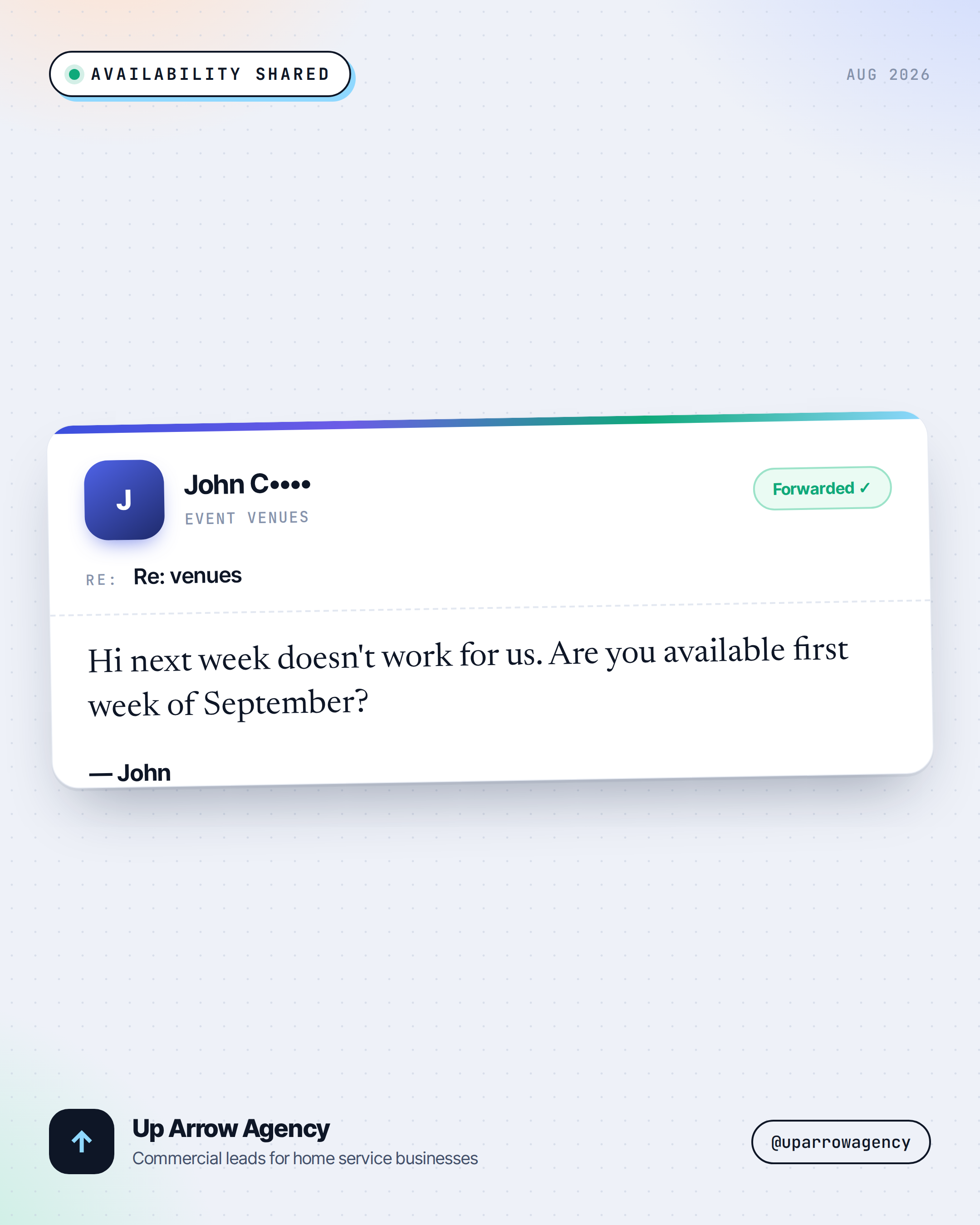
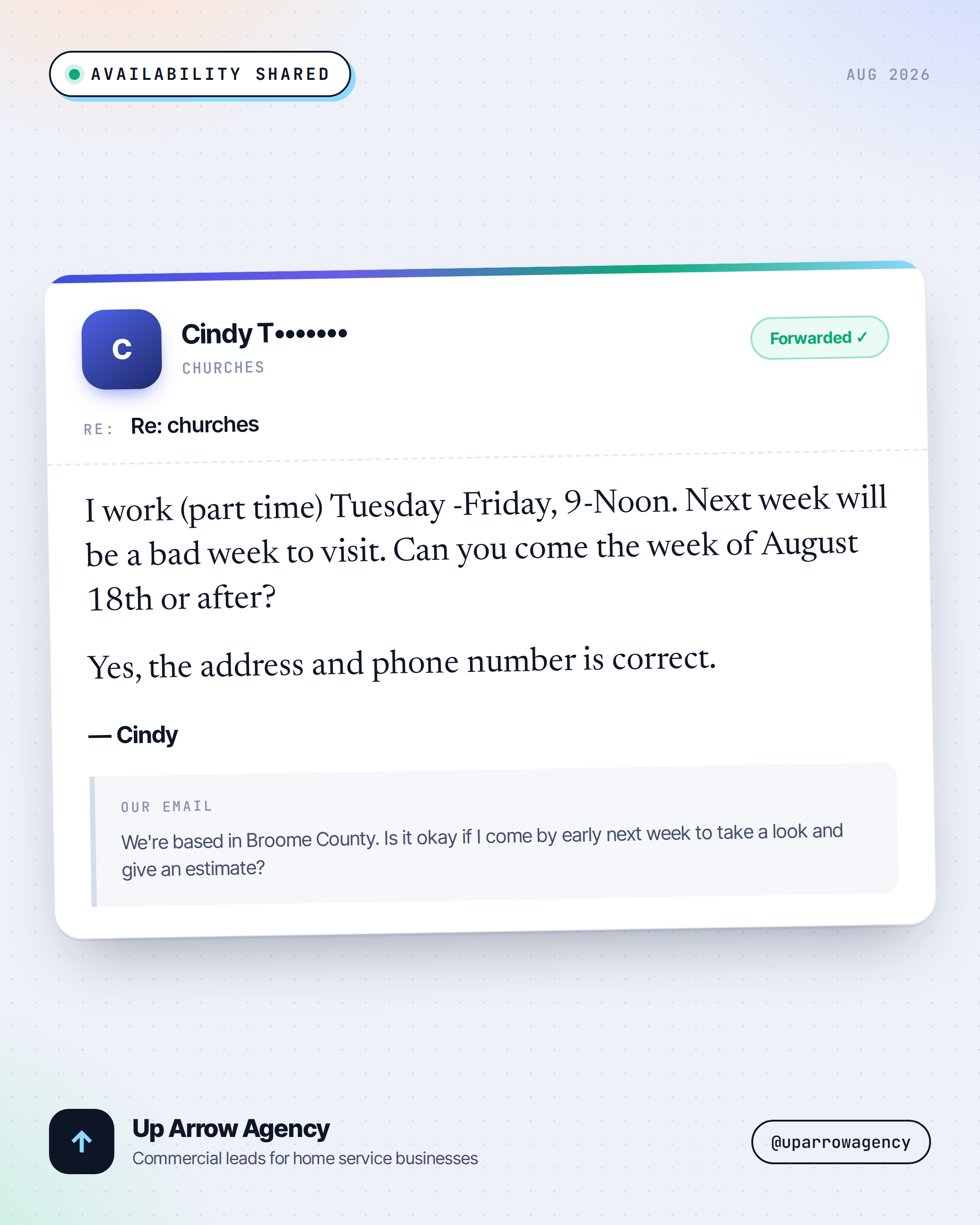
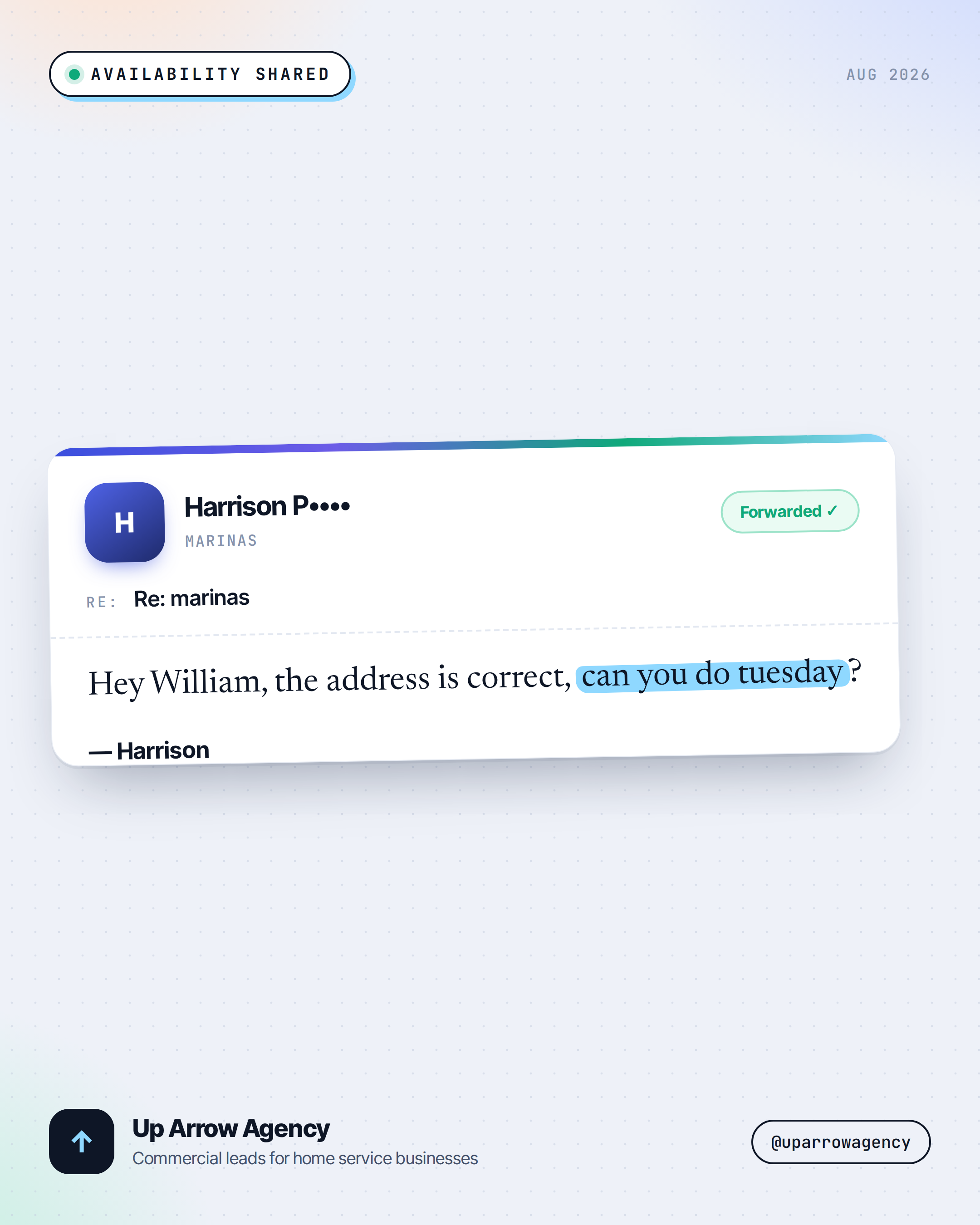
Looking across commercial cleaning campaigns from April 2026 to November 2026, about half of the 2,340 genuine inbound replies (1,194, or 51%) were forwards to the person who actually makes the decision. Another 1,035 replies asked about pricing. Neither is the end of the sale. A forward is an invitation to earn trust with a second person. A pricing question is the easiest question to ask when someone doesn't yet know what you offer or how you work.
So the right response to either is not a number. It's an offer to walk the building. A facilities manager at a multi-site office portfolio, for example, can't judge a cleaning vendor from an email. They want to see that you've looked at their floors, their foot traffic, their after-hours access. The walkthrough is where you learn what the problem really is, show you can handle it, and take the risk off their plate. Quote blind and you've turned a relationship into a price comparison.
That conversation belongs to you or your best estimator. A good outsourced partner gets you to it faster and fills your calendar. It shouldn't try to run it for you.
A simple way to decide
Ask yourself three questions
- Who owns it every week? If the answer is "I'll fit it in," outsource.
- How fast do I need conversations? If you need them this quarter, a running system beats a build-from-scratch project.
- Who will answer replies the same day? This one is yours regardless. Plan for it before the first email goes out.
What to look for in a provider
- They explain their sending setup plainly, with separate domains and gradual ramp-up, and don't dodge the question.
- They target decision-makers (property managers, facilities managers, office and operations managers) instead of generic lists.
- Pricing ties to results. Performance-based models put some of the risk on them, not on you.
- They hand you booked conversations, and you take it from there. See our breakdown of how to get commercial cleaning contracts for what to do after the reply.
The bottom line
If you have a dedicated person and patience, building it in-house is a fair project. If you're an owner-operator with a full schedule, hand off the machinery, keep the walkthroughs, and measure the arrangement by how many real conversations with decision-makers land on your calendar.
Frequently asked questions
Should cleaning companies outsource cold email or do it themselves?
What are the biggest risks of running cold email in-house?
Does outsourcing cold email replace my sales process?
How do I judge a cold email agency for a cleaning business?
Want these replies landing in your inbox?
We run the whole cold-email engine for commercial cleaning & pressure washing companies — targeting, inboxes, and booking — so you get decision-maker conversations without ads or cold calling.
Book a 30-minute callMore from the guides: How to get commercial cleaning contracts · Lead generation: DIY vs. done-for-you · All guides