
Key takeaways
- The best commercial cleaning cold email subject lines are 2 to 4 words and read like a note from a colleague, not a promotion.
- The subject line's only job is to get the open. The offer and the walkthrough invitation belong in the body.
- Personalizing with something real (a property type, a site count, a building category) beat generic lines in Belkins' 2024 data, 46% opens against 35%.
- Avoid price, discount, and 'free quote' language in the subject. It sets up a price comparison and can hurt deliverability.
- Test one variable at a time, and judge a subject line by replies and booked walkthroughs, not opens alone.
The commercial cleaning cold email subject lines that work best are short (two to four words), specific to the recipient's building or role, and written to sound like an internal message, not a sales pitch. Something like "after-hours cleaning" or "your office portfolio" will usually beat "Save 20% on commercial cleaning services!". The subject line gets the open. Everything else, including the reason to meet, has to happen inside the email.
We write and test these for cleaning companies that want conversations with property managers, facilities managers, and office managers. Here is what holds up, and what to stop doing.
What a subject line actually has to do
A facilities manager scanning an inbox is not looking for a cleaning vendor. They are clearing a pile, often on a phone. Your subject line has one job: look like something worth five seconds.
That is a narrower job than most people give it. It does not need to explain your service, state a benefit, or close anything. If you try to sell in the subject line, you get a message that looks like marketing, and marketing gets deleted.
The goal downstream is not a click. It is a reply that leads to a walkthrough, where you see the building, hear what the manager is dealing with, and start earning trust. If you want the full system around that, our guide to cold email for cleaning companies covers it end to end. This post stays on the first line they see.
Keep commercial cleaning cold email subject lines short
Belkins analyzed roughly 5.5 million cold emails it sent for clients in 2024. In its B2B cold email subject line study, lines of two to four words had the highest open rate, at 46%. One-word lines opened at 38%, and lines past seven words fell to 39% and lower, dropping further as they got longer. Belkins ties part of this to mobile truncation, which cuts off long lines somewhere around 35 to 50 characters.
That is one vendor's dataset across mixed B2B industries, not a cleaning-specific benchmark, so treat it as a direction, not a law. Short lines that name a topic the reader already deals with are a sensible default.
Patterns worth testing
- Topic-first, no verbs: "after-hours cleaning", "janitorial coverage", "floor care schedule"
- Role or property type: "for your facilities team", "multi-tenant office cleaning"
- Plain question: "who handles cleaning?", "current cleaning vendor?"
- Light personalization: the property type, a building category, or the number of sites, if you actually know it
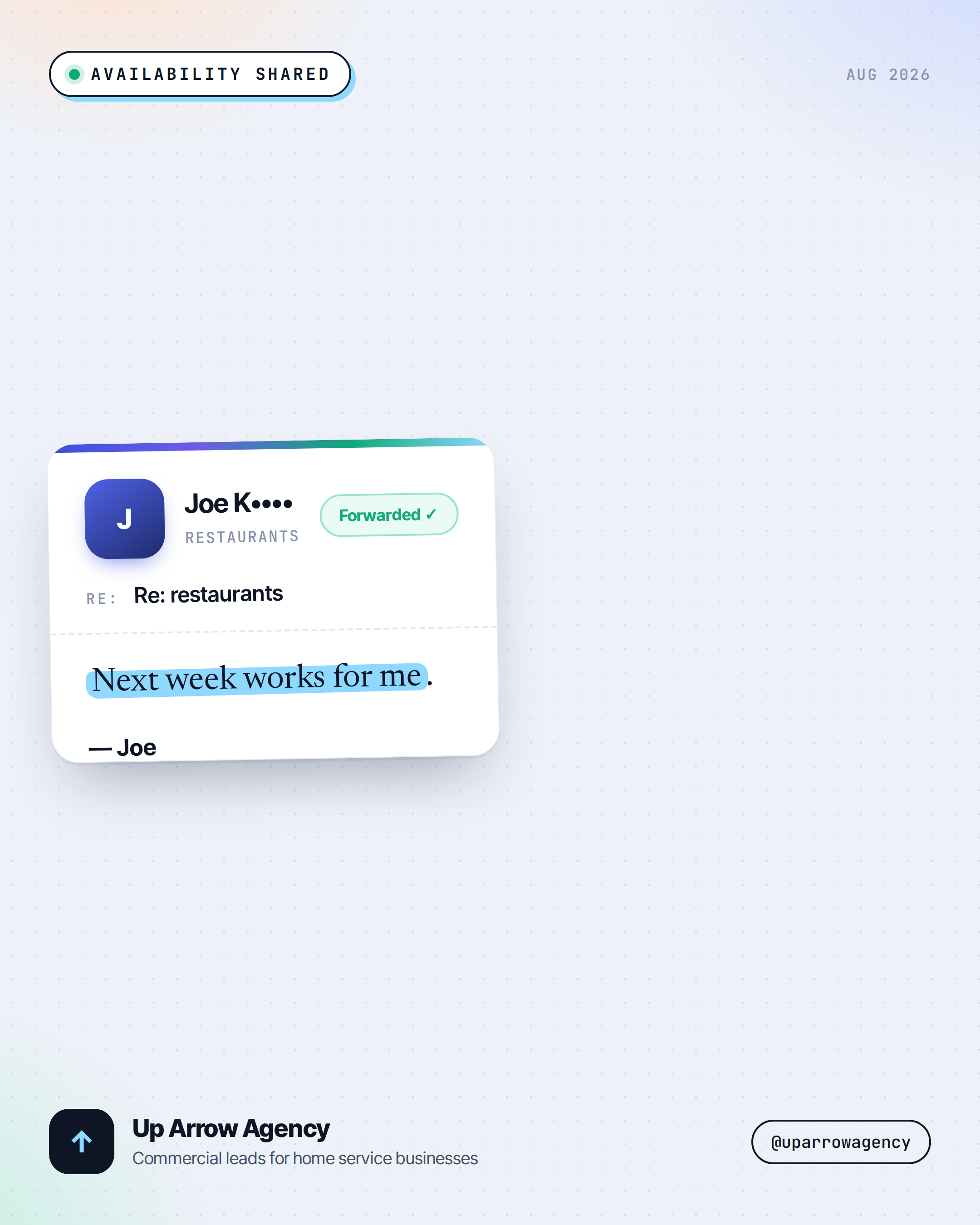
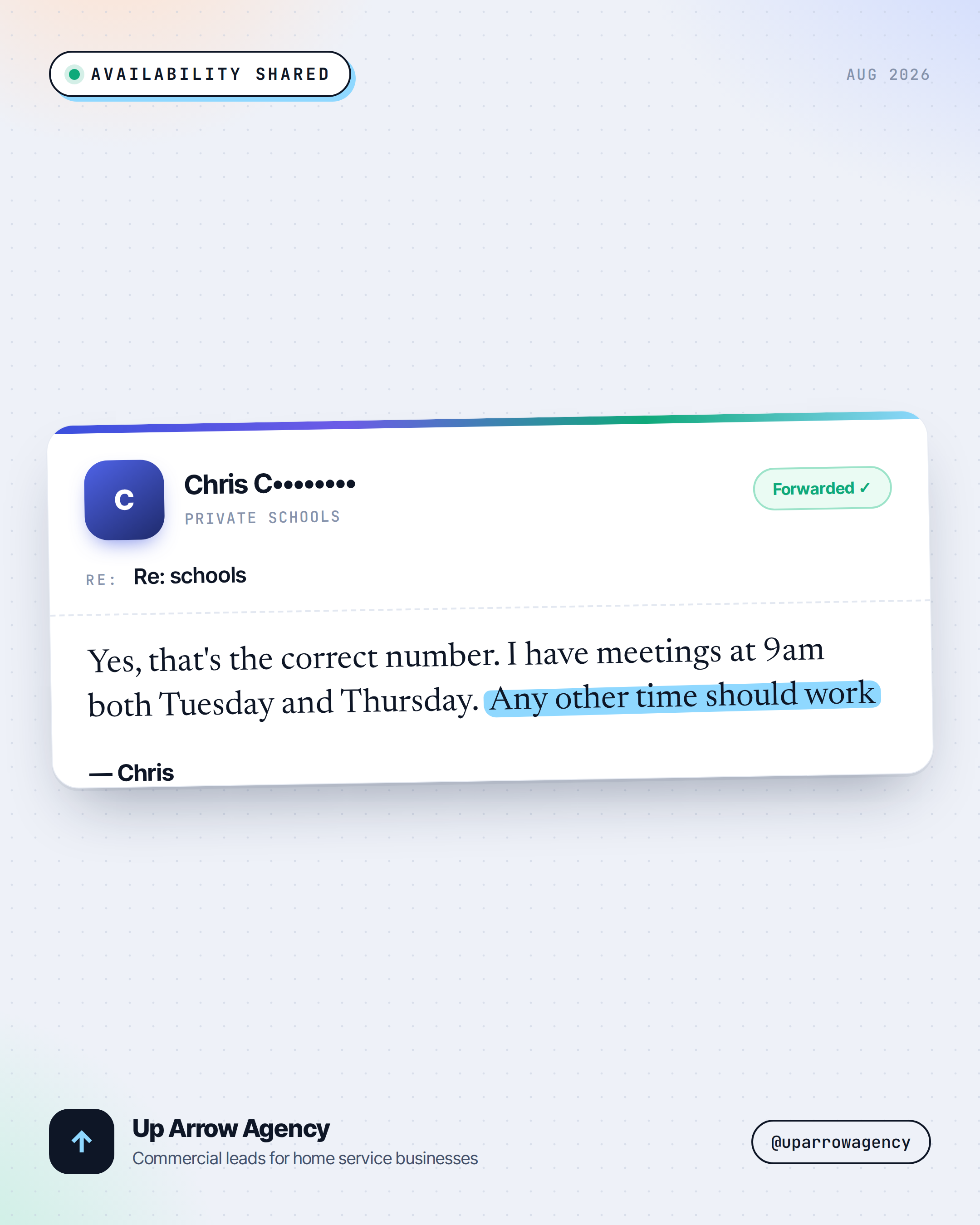
The "who handles cleaning?" style works as a routing question. The person who opens it may not be the decision-maker, and that is fine. Across commercial cleaning campaigns we ran from April to November 2026, 1,194 of 2,340 genuine replies were forwards to someone else internally. A subject line that reads like a question for the right person makes that forward easy.
Personalize with something true
The same Belkins study found personalized subject lines (name, company, location, or a relevant event) opened at 46% against 35% without, and reply rates rose from 3% to 7%. Again, that is their data across their clients, but the logic is simple: a line that looks written for one reader gets read.
The catch is that fake personalization is worse than none. "Quick question for [First Name]" is a mail-merge tell that every manager has seen hundreds of times. Real personalization is specific and verifiable:
- The type of property they manage (medical office, multi-tenant office, warehouse, school facility)
- A site count or portfolio size you found in public listings
- A recent change, such as a new building opening or a leasing announcement
A composite example: a property manager overseeing several office buildings might get "cleaning across your office sites". It is short, relevant, and clearly not sent to a thousand unrelated businesses.
Subject lines to cut
Price and discount language
"Free quote", "affordable rates", and "% off" invite a one-line reply asking for a number. A price question is a normal first question and a buying signal: 1,035 of those 2,340 replies asked about pricing up front. But you don't want the subject line to set the whole conversation up as a price comparison. The better response to a price question is an invitation to walk the space together, so the proposal reflects the real building and the manager sees who they would be working with.
Hype and urgency
"Limited time", "act now", all caps, and stacked punctuation look like bulk mail to people and to filters. Google's email sender guidelines expect reported spam rates to stay under 0.3%, with a stricter target of 0.10% in Postmaster Tools. Google does not publish a trigger-word list, but a subject line that makes recipients hit "report spam" costs you far more than a weak open rate.
Company-first lines
A subject line that is just your business name plus "Professional Commercial Cleaning" tells the reader nothing about why they should care. Lead with their situation, not your name.
Fake threading
"Re:" or "Fwd:" on a first email might lift opens briefly, but it is deceptive, and the trust cost shows up the moment they open it. A facilities manager you trick on line one is not going to agree to a walkthrough.
Subject lines for the follow-up
The follow-up should be even shorter. Replying in the same thread with the same subject often works well, since it reads as a continuation of the first note. When you do change it, make it feel like a nudge: "still handling cleaning in-house?" or "one more thing on cleaning".
Don't spend long on this one. Follow-ups succeed on timing and a clear, low-effort next step, usually a short on-site walkthrough, not on a clever line.
How to test without fooling yourself
Opens are a noisy metric. Privacy features in mail clients inflate them, and a high-open subject line can still get zero replies if it set the wrong expectation. A sound testing routine:
- Change only the subject line between variants. Same body, same sending window, same list quality.
- Send enough per variant to see a pattern, not a handful. Small batches mislead.
- Judge by replies first, then booked walkthroughs. A subject line with fewer opens but more conversations is the winner.
- Keep the winner and test one new challenger against it each round.
Subject lines are one lever among list quality, copy, and follow-up. Published client results such as going from 4 to 27 commercial leads in 30 days came from the whole system working together. Our guide to commercial cleaning lead generation covers the rest.
A subject line cannot fix a weak offer
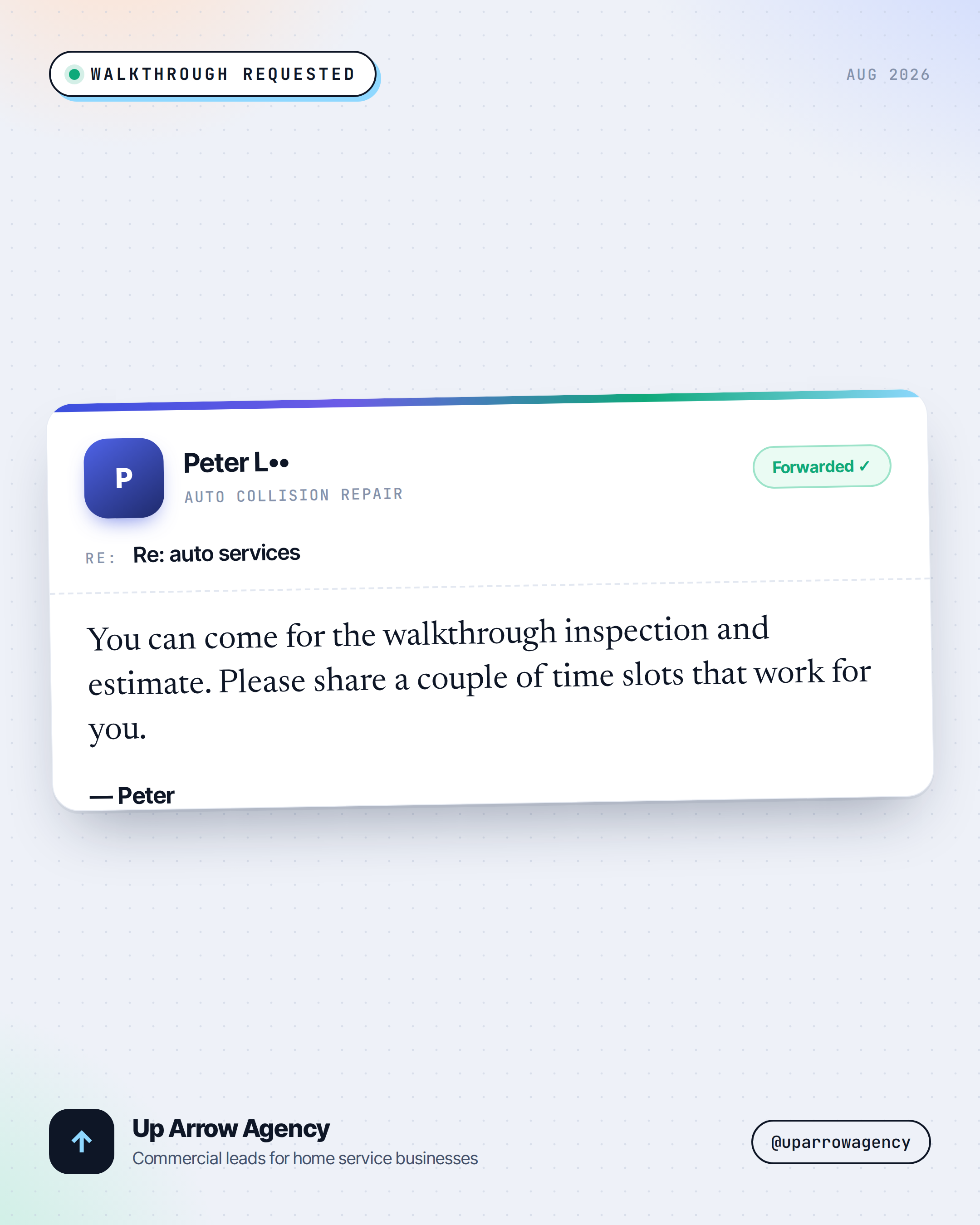
A good subject line gets your email opened. It will not rescue an email that asks for too much, talks only about you, or makes the next step unclear. Decision-makers buy from vendors they have met and trust, so the email should lower the effort and risk of saying yes: a no-cost walkthrough, a clear time, and a short explanation of who you are. If you hold credentials such as ISSA's CIMS, which ISSA describes as a way for contractors to stand out and raise service quality, mention it in the body as proof, not in the subject line.
For the bigger picture on winning accounts once the conversation starts, see how to get commercial cleaning contracts.
The short version
Write the subject line like a note from a colleague. Keep it to a few words. Make it about their building or their role, not your company. Test it, but measure replies and booked walkthroughs. Then put your effort into what happens after the open, because that is where contracts are won.
Frequently asked questions
How long should a commercial cleaning cold email subject line be?
Should I put pricing or a discount in the subject line?
Do personalized subject lines work for facilities managers?
What matters more, open rate or reply rate?
Want these replies landing in your inbox?
We run the whole cold-email engine for commercial cleaning & pressure washing companies — targeting, inboxes, and booking — so you get decision-maker conversations without ads or cold calling.
Book a 30-minute callMore from the guides: How to get commercial cleaning contracts · Lead generation: DIY vs. done-for-you · All guides