
Key takeaways
- You win commercial floor care contracts by getting a decision-maker to walk the floors with you. A blind quote starts a price comparison, and a walkthrough starts a relationship.
- A price question is a normal first reply and a buying signal. In our floor care replies, 38 of 42 opened that way, so treat it as an invitation to book the walkthrough.
- Buyers hire floor care vendors they have met and trust. The walkthrough is where you show you understand their floors, their schedule, and their risk.
- Sell a program, not a one-off strip. Recurring maintenance on a set schedule is where the margin and the contract length are.
- Cold email reaches facilities and property managers who never searched for you, and it works without ads, referrals or door-knocking.
The way to win commercial floor care contracts is to get in front of the person who owns the building's floors and walk them with that person before you put a number on paper. Strip-and-wax, burnishing and recurring floor maintenance are sold on trust and proof. The company that shows up, understands the space and takes the risk off the manager's plate usually wins, and it rarely has to be the cheapest.
This guide covers where the buyers are, how to start the conversation, what happens in the walkthrough, and how to turn a one-time strip into a recurring contract. If you want the broader picture first, start with our guide on how to get commercial cleaning contracts.
Who actually buys commercial floor care contracts
Floor care is rarely bought by a CEO. The buyer is usually a facilities manager, a property manager, or an operations or office manager who inherited the floors along with everything else in the building. They are busy, they have been burned by vendors who disappeared, and they are not hunting for a new floor care company on a Tuesday morning.
That matters for how you find them. Most of them never type "commercial floor care contracts" into a search bar. They think about floors when a lobby looks dull, an inspection is coming, or the current vendor drops the ball. The reliable way to reach them before that moment is direct outreach to the right title at the right type of building: office portfolios, medical suites, schools, retail centers, and any site with a lot of hard flooring.
Why a price question is a good sign
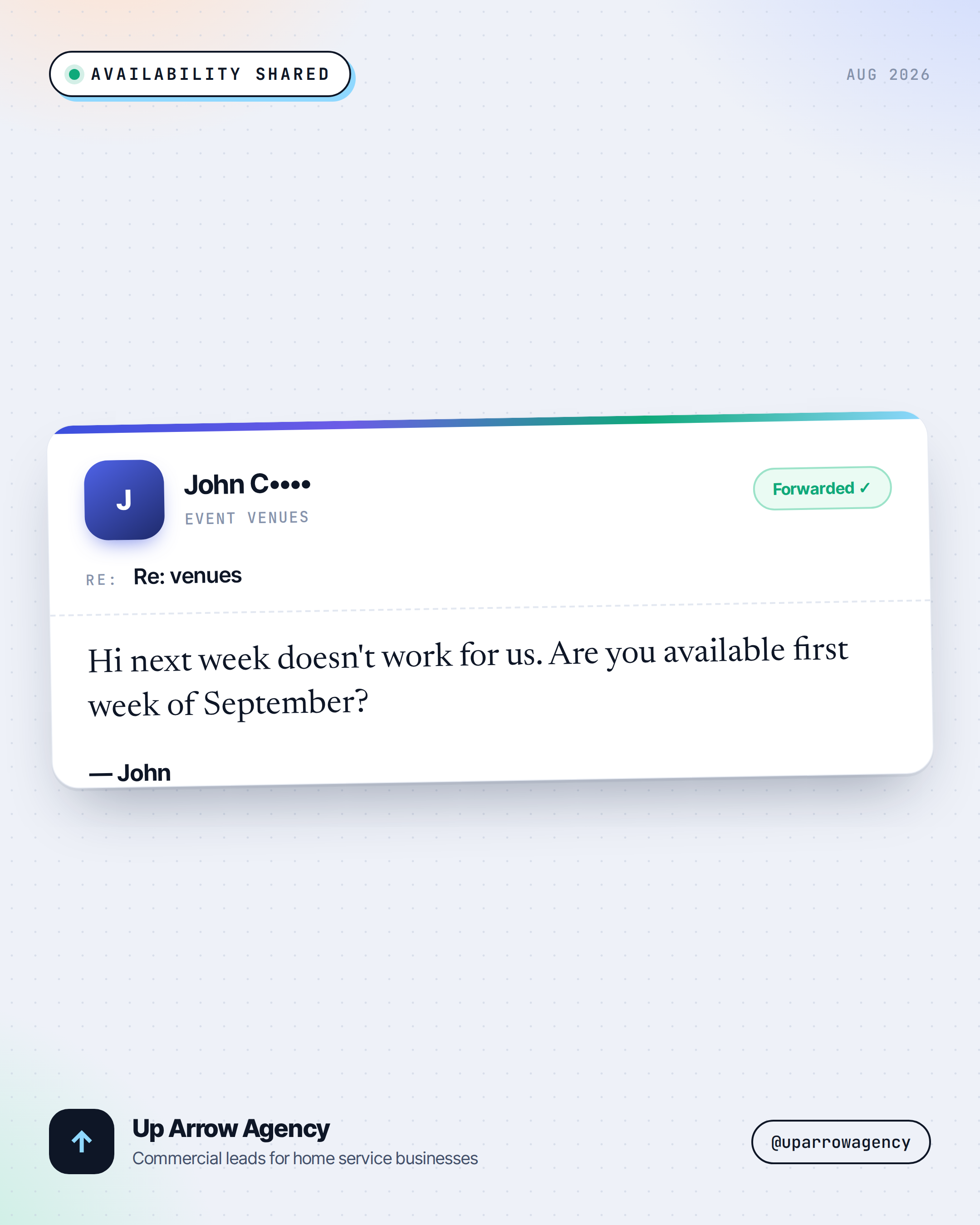
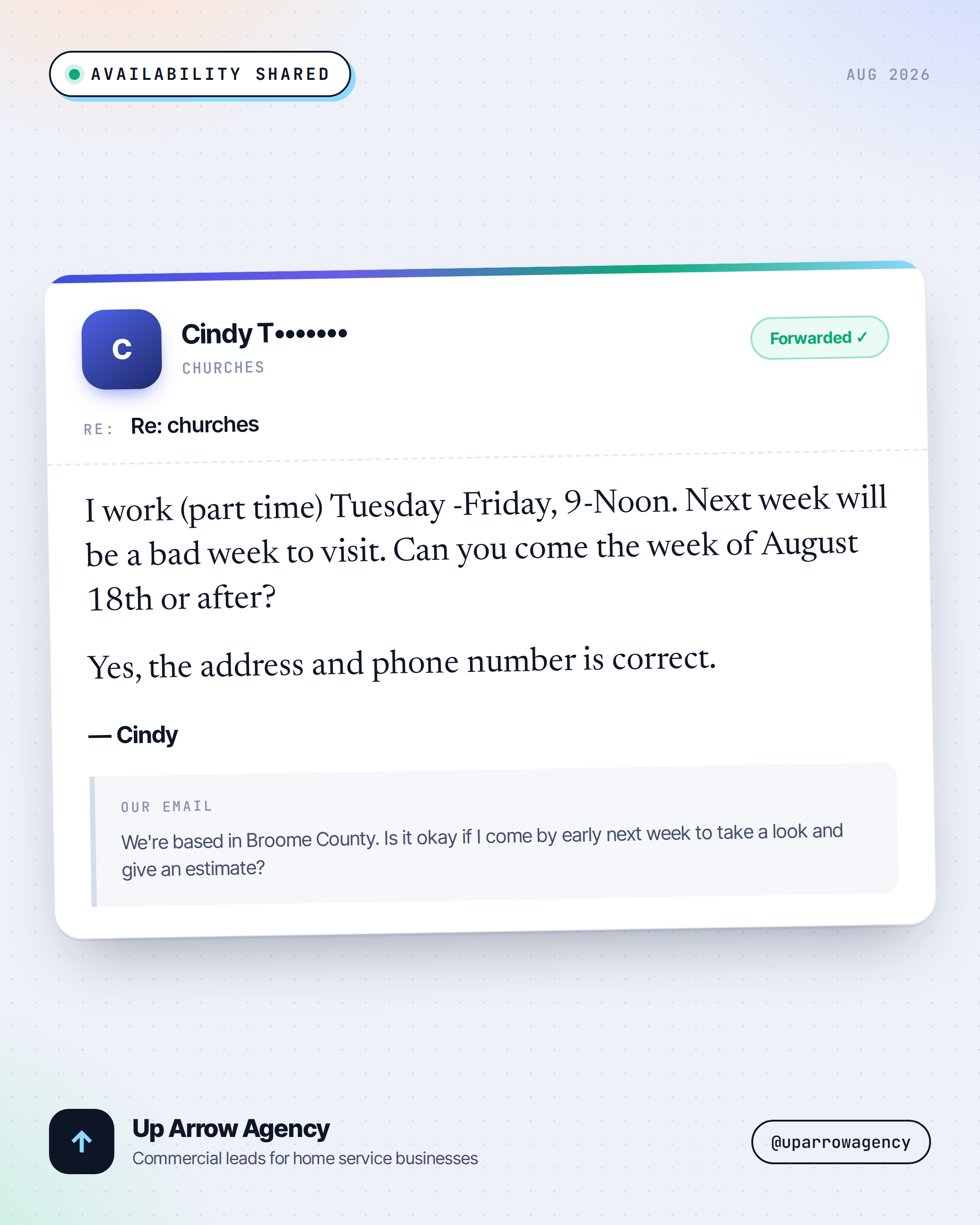
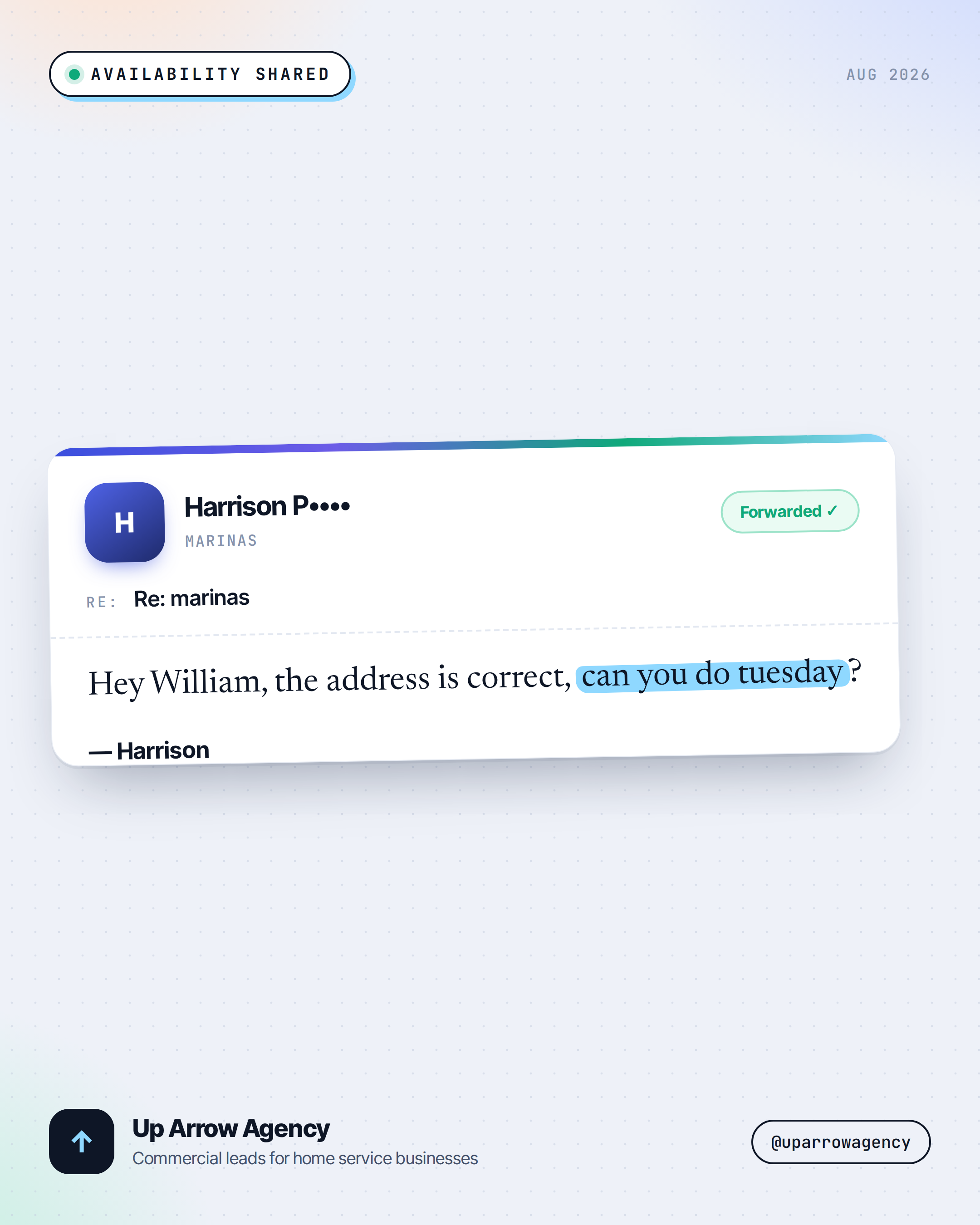
When you send a cold email about floor care, the first reply is very often a question about cost. Across our clients' floor care campaigns from April 2026 to November 2026, 38 of 42 genuine replies opened with a price or quote question. Nineteen were forwarded to someone else who makes the call.
It is tempting to read that as "these buyers only want a number." We read it the other way. A manager who asks "how much?" has no context yet, and cost is the easiest question to ask about an unfamiliar vendor. They are interested enough to reply, and that is the buying signal.
The mistake is to answer with a blind quote. A number sent without seeing the floors is a guess, and the buyer will set it next to three other guesses. You have turned your service into a commodity before you ever met the person. The better move is to answer warmly, say that you price floor work after seeing the floors because every surface and traffic pattern is different, and offer a free walkthrough. Only five of the 42 replies asked for a walkthrough on their own. The rest had to be invited, and that invitation is your job.
Run the walkthrough like a sales meeting
The walkthrough is where commercial floor care contracts are actually won. The trade side agrees: the Building Service Contractors Association International describes the site walk as the place to build rapport and learn what the client needs, including why they are bidding the work out and what they dislike about their current provider. A Cleaning & Maintenance Management piece on handling the walkthrough makes a similar point: it is an early chance to win the account, so build the proposal around what the prospect actually needs.
Ask before you measure
Start with questions, not a tape measure. What does the floor look like when you are happy with it? What happened the last time it was stripped? Are there complaints from tenants, or an upcoming event or inspection? You are building the picture of the outcome the manager wants, and often it is simple: floors that look cared for and a vendor they never have to chase.
Read the floor
Then do the technical work. Note the floor types, the finish that is already down, where the soil builds up, and which areas see the most foot traffic. A facility manager's guide to floor care frames the same inputs from the buyer's side: building size, layout, floor types and soil patterns should shape the program. When you speak to those things, the manager can tell you have done this before.
Take the risk off their plate
Most managers worry about the same few things: noise and fumes during business hours, slick floors, a crew that does not show, and a finish that peels in two months. Address each one out loud. Offer to work after hours, put down wet-floor signage, and test a small area first. If you stand behind the result, say it plainly. Reducing the buyer's risk is worth more in that room than shaving a few cents off a square-foot rate.
Sell a program, not a single strip
A one-time strip-and-wax pays once. A maintenance program, with scheduled burnishing, auto-scrubbing and periodic recoating, pays every month and keeps you in the building. During the walkthrough, explain that the strip resets the floor and the program keeps it looking that way, so the manager is not paying for the same rescue job every year.
Put the program in the proposal as a clear scope: areas, frequency, and what is included. Offer a tailored option rather than a menu of prices. This is also where you can mention that you can handle adjacent work such as carpet and upholstery, which makes you easier to keep.
How cold email fills the walkthrough calendar
None of this works if nobody is in front of you. Cold email is the most direct way to reach facilities and property managers who have no reason to find you on their own, and you do not need ads, referrals or door-knocking to do it. Our clients' published results give a sense of what is possible: a campaign that produced 48 commercial leads in 6 weeks, another that took one company from 4 to 27 commercial leads in 30 days, and a single campaign that landed a $38K/year recurring cleaning contract. One client closed $23K in commercial carpet-cleaning jobs from one campaign.
Keep the first email short and about the outcome the manager cares about. The goal of the email is a reply, and the goal of the reply is a walkthrough. Our guide to cold email for cleaning companies covers the structure in detail.
A composite example
Picture a facilities manager at a multi-site office portfolio. They reply to a cold email with one line asking for rough pricing, and they forward it to a colleague. A vendor who sends back a per-square-foot figure joins a pile of similar numbers. A vendor who says "floor pricing depends on what's down and how it's used, can I walk one site this week?" gets a visit. On that visit they learn the lobby finish is failing and the complaints come from tenants, and they leave with a plan for the strip and a monthly maintenance schedule. That second vendor is now the one with the relationship.
Where to go from here
Reply, book the walkthrough, meet the decision-maker, build trust, and present a tailored program with the risk on you. Do that consistently and the recurring contract follows. If you want the full playbook for sourcing buyers, read our overview of commercial cleaning lead generation.
Frequently asked questions
How do you find commercial floor care contracts?
Should I send a price when a prospect asks for a quote?
What should I check during a floor care walkthrough?
Is strip and wax better sold as one job or a recurring program?
Want these replies landing in your inbox?
We run the whole cold-email engine for commercial cleaning & pressure washing companies — targeting, inboxes, and booking — so you get decision-maker conversations without ads or cold calling.
Book a 30-minute callMore from the guides: How to get commercial cleaning contracts · Lead generation: DIY vs. done-for-you · All guides