
Key takeaways
- Businesses rarely switch cleaning companies over price alone. The usual trigger is a gradual loss of confidence: missed spots, turnover, slow responses, or a manager nobody can reach.
- The switch is a process, not an event. It often starts with an informal check on alternatives long before the contract is up.
- The person who first replies is often not the person who decides. Expect a forward to a facilities or operations manager.
- A price question is a normal opening, and it is a buying signal. The best answer is an offer to walk the site, because that is where value and trust get built.
- A new vendor wins by lowering the buyer's risk: a clear scope, a visible transition plan, and a person they've met.
Here is how businesses switch cleaning companies in practice. Someone inside the building gets tired of explaining the same problem to the current vendor. They start quietly looking at alternatives, usually weeks or months before any contract date. They take a few conversations, and they pick the vendor who makes the change feel least risky. Price comes up, but it is rarely the reason the process started.
If you run a commercial cleaning company, this matters a lot. Most buildings you want already have a cleaner. Winning one means understanding why a happy-enough incumbent gets replaced, and what a buyer needs to see before they'll take the risk of change.
Why businesses switch cleaning companies
Facilities managers don't switch because the carpets were cleaned on Tuesday instead of Monday. They switch when small problems pile up and stop getting fixed. The patterns we see most often:
- Inconsistency. The crew that did great work in month one has rotated out, and nobody told the client.
- Communication gaps. A complaint goes to an account manager who doesn't reply, or a supervisor who changed jobs.
- Scope drift. The building changed (a new tenant, more foot traffic, a renovated floor) but the cleaning scope didn't.
- Growth the vendor can't match. The company added a second or third site and needs one vendor who can cover them all.
- A new decision-maker. A new facilities or operations manager often wants to bring in vendors they know and trust.
Notice that most of these are about confidence. The buyer stops believing the current vendor will fix things. That is the opening for anyone else.
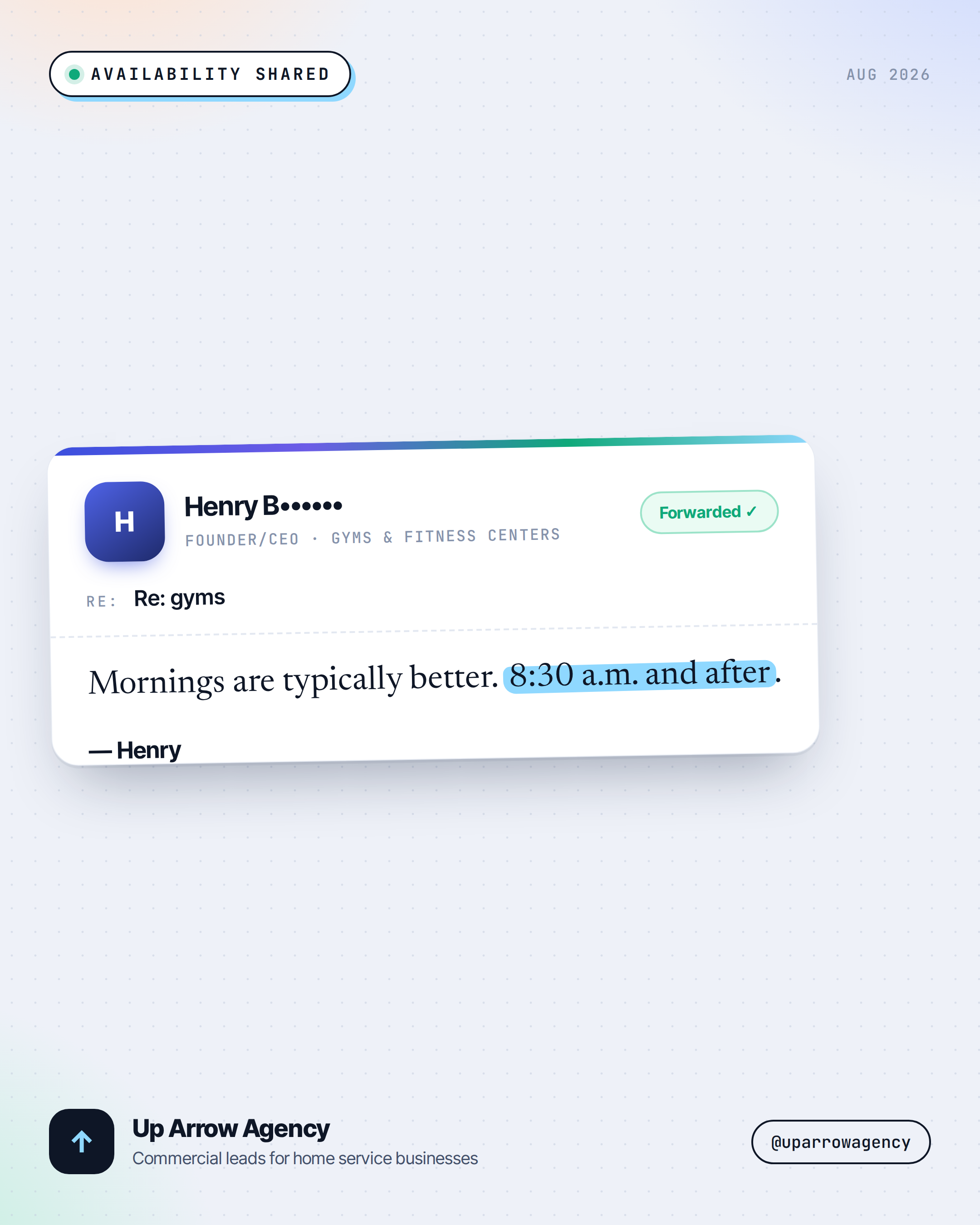
The process behind a switch
1. A quiet look at options
Nobody announces they're switching. A manager starts answering outreach they would have ignored last quarter, or asks a peer who they use. This is why timing in cold outreach is mostly luck and persistence. You can't see who is unhappy, but a steady presence puts you in front of them when they are.
2. Defining the scope
Before any bid is worth comparing, the buyer needs a written scope. Facility-management guidance on outsourcing cleaning services, adapted from BOMI International course material, treats the scope of work as the core of the contract. It should cover areas, cleaning frequency, methods, equipment, and record-keeping. The same piece cautions against letting bidders assess the property and price the work from their own assumptions. In plain terms: the buyer needs to understand their own building before quotes can be compared fairly.
This is also why a blind quote tends to go nowhere. A number sent without seeing the site is a guess against a scope nobody has defined.
3. Checking credibility
Buyers look for proof that a vendor runs a real operation. ISSA's CIMS certification is one signal: it is a management framework for quality and customer satisfaction, and certified organizations must reapply every two years. Trade bodies like BSCAI also publish buyer-facing resources, including a scope-of-work guide for cleaning and disinfecting. Not every buyer asks for these, but a vendor who can speak to them reads as lower risk.
4. Meeting the vendor
This is the step that decides most of these. Facilities managers are people. They buy from vendors they've met, walked a building with, and felt they could call when something went wrong. The in-person walkthrough is where that happens.
What switching conversations look like from our side
At Up Arrow Agency we run cold email for cleaning companies, so we see the first reply a prospect sends when a stranger offers to help with cleaning. Across 15 genuine replies from prospects who already had a cleaner (June 2026 to November 2026), the responses looked like this. A single reply can land in more than one row.
| Reply type | Count (of 15) |
|---|---|
| Asked about pricing or a quote | 9 |
| Forwarded to the decision-maker | 8 |
| Offered a call or availability | 5 |
| Asked for a walkthrough or site visit | 4 |
It's a small sample, so treat it as a pattern and not a benchmark. Two things stand out. First, most people who already have a cleaner still asked about price. That doesn't mean they only care about price. It means "how much?" is the easiest first question to ask a stranger, and it tells you they're open to a change. Second, more than half were forwarded to someone else. The first person to reply is often a gatekeeper or a colleague passing the message along, so your follow-up has to work for a reader who has never seen your first email.
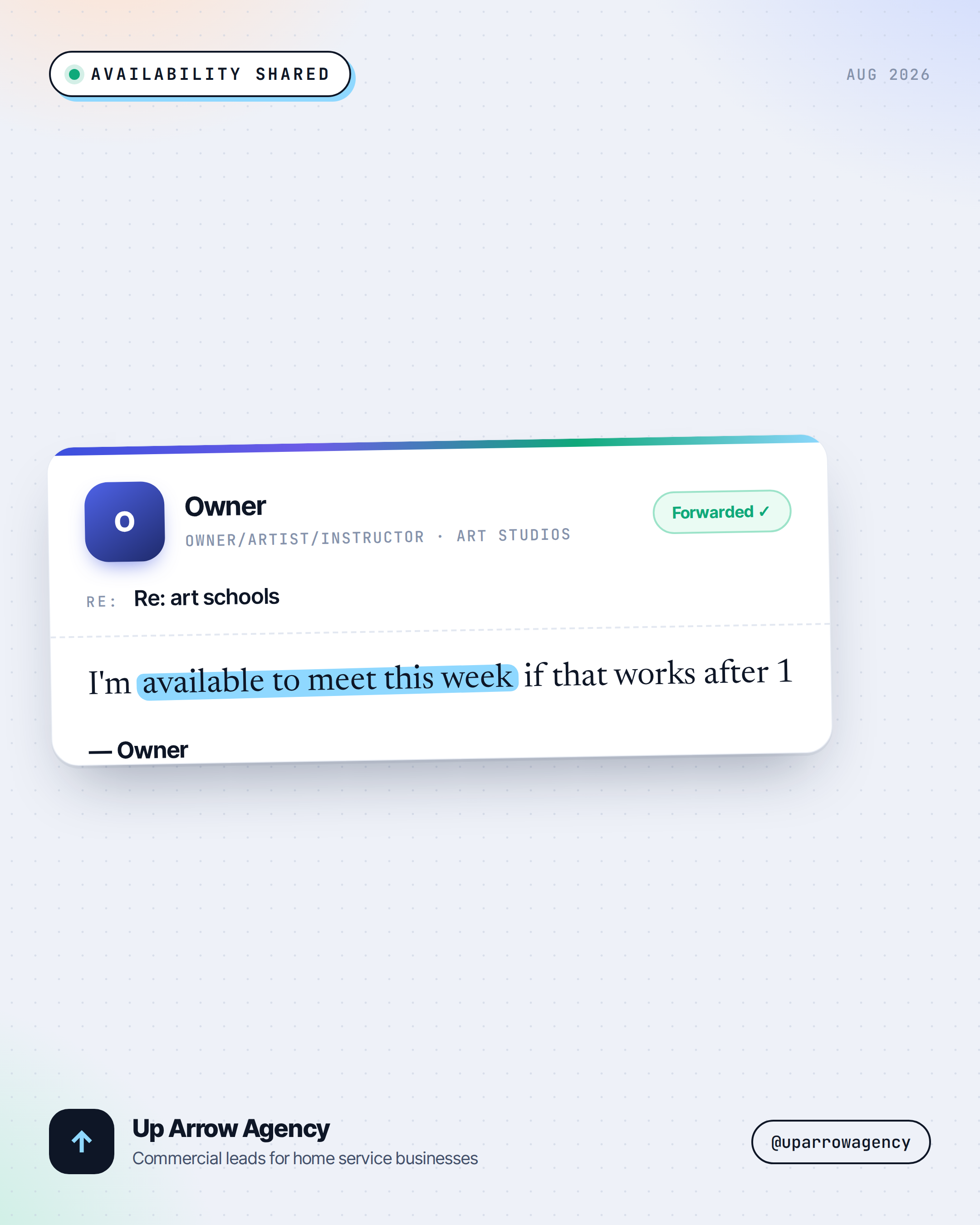
How a cleaning company should respond
When a prospect with an existing cleaner asks what you charge, resist the urge to send a number. A figure with no context gets compared against whatever the incumbent charges, and you're now in a price contest on someone else's terms. Offer a free walkthrough instead, and say why: you want to see the space, the traffic patterns, and what the current vendor is missing, so your proposal fits the building.
That walkthrough does three jobs:
- It shows you understand their building, which builds belief that you can deliver.
- It surfaces the real complaints about the current vendor, which are almost never about price.
- It lets you propose a transition plan that takes the risk off the buyer's plate.
The last point is the one most vendors skip. Switching has a cost to the buyer: their time, the chance of a messy first month, and the awkward conversation with the current vendor. If you make that part easy (a named point of contact, a clear start plan, a first-month check-in), saying yes gets a lot easier. Our guide to winning commercial cleaning contracts goes through the full path from first reply to signed agreement.
Getting in front of buyers before they've decided to switch
Since the switch starts quietly, the vendor who is already in the inbox when frustration hits has the advantage. That is the case for consistent outbound. Our clients have booked from 4 to 27 commercial leads in 30 days and built a $38K/year recurring cleaning contract from a single campaign, with no ads, referrals, cold calling, or door-knocking. If you want the mechanics, start with cold email for cleaning companies.
None of it works without the follow-through. The email gets a reply. The walkthrough builds trust. The tailored offer, with the risk reversed, wins the recurring contract. Skip the middle and you are back to competing on a number.
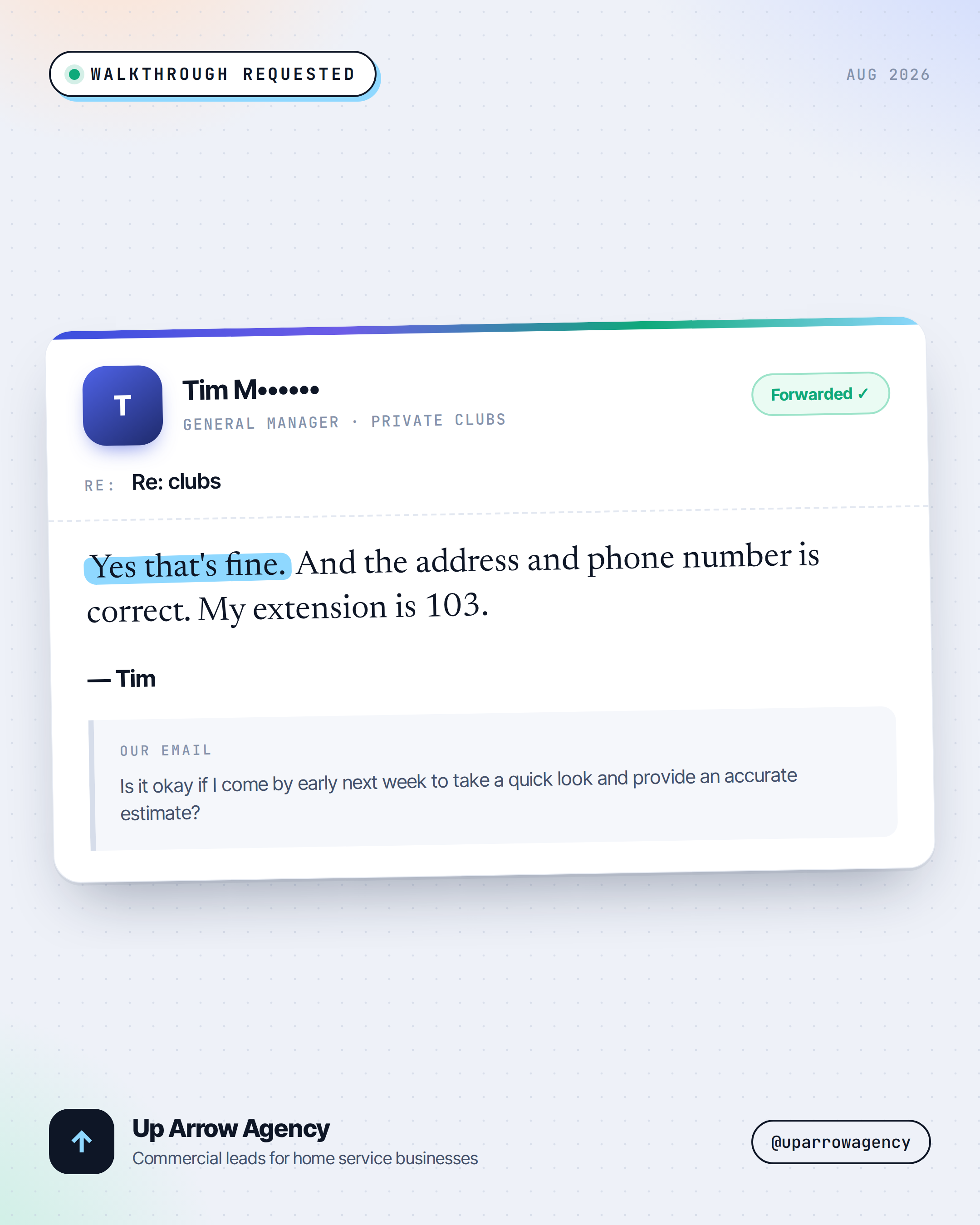
What to do this week
- Write down the three most common reasons clients leave your competitors, and build your walkthrough around finding them.
- Prepare a one-page transition plan you can hand to a buyer who is nervous about change.
- Decide your standard reply to a pricing question, and make it an offer to walk the site.
Frequently asked questions
How do businesses switch cleaning companies?
Why do businesses switch cleaning companies?
Should a cleaning company send a quote when a prospect asks about price?
How can a cleaning company win a client who already has a cleaner?
Want these replies landing in your inbox?
We run the whole cold-email engine for commercial cleaning & pressure washing companies — targeting, inboxes, and booking — so you get decision-maker conversations without ads or cold calling.
Book a 30-minute callMore from the guides: How to get commercial cleaning contracts · Lead generation: DIY vs. done-for-you · All guides