
Key takeaways
- Restaurant cleaning contracts are won by getting in front of the owner, GM or operations lead and walking the kitchen and dining room with them. A quote sent cold rarely wins one.
- Food-service buyers carry health-inspection and fire-code risk, so a written scope and proof you've done this before count for more than a low number.
- Interest often arrives as a forward or a pricing question. Treat both as an invitation to book a walkthrough.
- Sell the outcome (inspection-ready, consistent, no chasing) and take the risk off their plate with a free walkthrough and a clear scope.
- Multi-unit operators are the best accounts. One good walkthrough can turn into several locations.
To win restaurant cleaning contracts, find the person who actually owns the kitchen problem (the owner, general manager or a multi-unit operations lead), reach them directly, and book a walkthrough of the space before you talk numbers. Restaurants buy on trust and on risk. A vendor who has stood in the kitchen with them and written a scope that fits is the vendor who gets the recurring contract.
This guide covers who decides, what they need to see, how to get a first conversation without ads or referrals, and how to run it so it ends in a signed agreement. It sits inside our broader guide on how to get commercial cleaning contracts, and the restaurant specifics are below.
Why restaurant cleaning contracts are different from office work
An office cleaner is judged on whether the trash is out and the floors look good. A restaurant cleaner is judged against a health inspector's checklist, a fire marshal's grease rules and a dining room full of guests who notice everything.
That raises the stakes for the buyer. The CDC notes that more than half of U.S. foodborne outbreaks are associated with restaurants, and that restaurant practices and policies can raise or lower the risk. A related CDC report on outbreaks at retail food establishments points to earlier research finding that establishments with cleaning policies had smaller outbreaks. Owners know this, even when they don't quote the numbers. A bad cleaning vendor is a liability they can feel.
One line to keep straight: you are not replacing the restaurant's own food-safety routines. You are the dependable outside layer, covering the deep work their staff can't fit into a shift. Say that plainly and you sound like someone who understands the business.
Who actually signs a restaurant cleaning contract
It depends on the size of the operation, and getting this wrong is the most common reason outreach goes nowhere.
Independent and small-group restaurants
The owner or general manager decides, often within a day or two. They're busy in service hours, so the first conversation usually happens mid-afternoon or by email. They want to know you'll show up, do it right and not create a problem.
Multi-unit and franchise operators
An operations director, regional manager or facilities lead handles vendors. They care about consistency across locations and about one point of contact. These are the best accounts in food service, because a good result at one site can become several.
Food courts, hotels, and institutional kitchens
Here the buyer is often a property or facilities manager who controls the shared spaces. The approach is closer to selling to any commercial building, which we cover in our guide on how to get janitorial contracts.
What a restaurant buyer needs to see before they say yes
- A scope in writing. What gets cleaned, how often, and what doesn't. Restaurants have been burned by vague promises.
- Proof you've worked in kitchens. Photos of finished work, a short list of the kinds of food-service sites you serve, and the right insurance on file.
- Documentation. Service logs or sign-offs they can show an inspector. If you offer hood or exhaust cleaning, know that fire codes set cleaning intervals that vary by cooking volume and by jurisdiction, and that service tags and records are part of the job. Check the local rules before you quote anything.
- A third-party signal, if you have one. Programs such as ISSA's CIMS certification exist to show a cleaning organization meets a recognized standard. It's not required to win work, but it can help with larger operators.
- Low effort and low risk to start. A free walkthrough and a clean, done-for-you start remove most of the reasons to put the decision off.
How to get in front of restaurant decision-makers
Referrals are slow and unpredictable, and most restaurant owners don't browse vendor directories. What works is direct outreach to the right person with a plain offer.
Cold email is the channel we use for this, because you can reach owners and operations leads at scale, and they can answer on their own schedule between services. We've seen it work across commercial cleaning: cold email for cleaning companies has produced results like 48 commercial leads in 6 weeks and $160K in commercial cleaning jobs closed for clients. Restaurants are one segment of that. The mechanics are the same: short message, a clear offer, one easy next step.
For the full picture on the channel, see our guide to commercial cleaning lead generation.
What replies from restaurant prospects look like
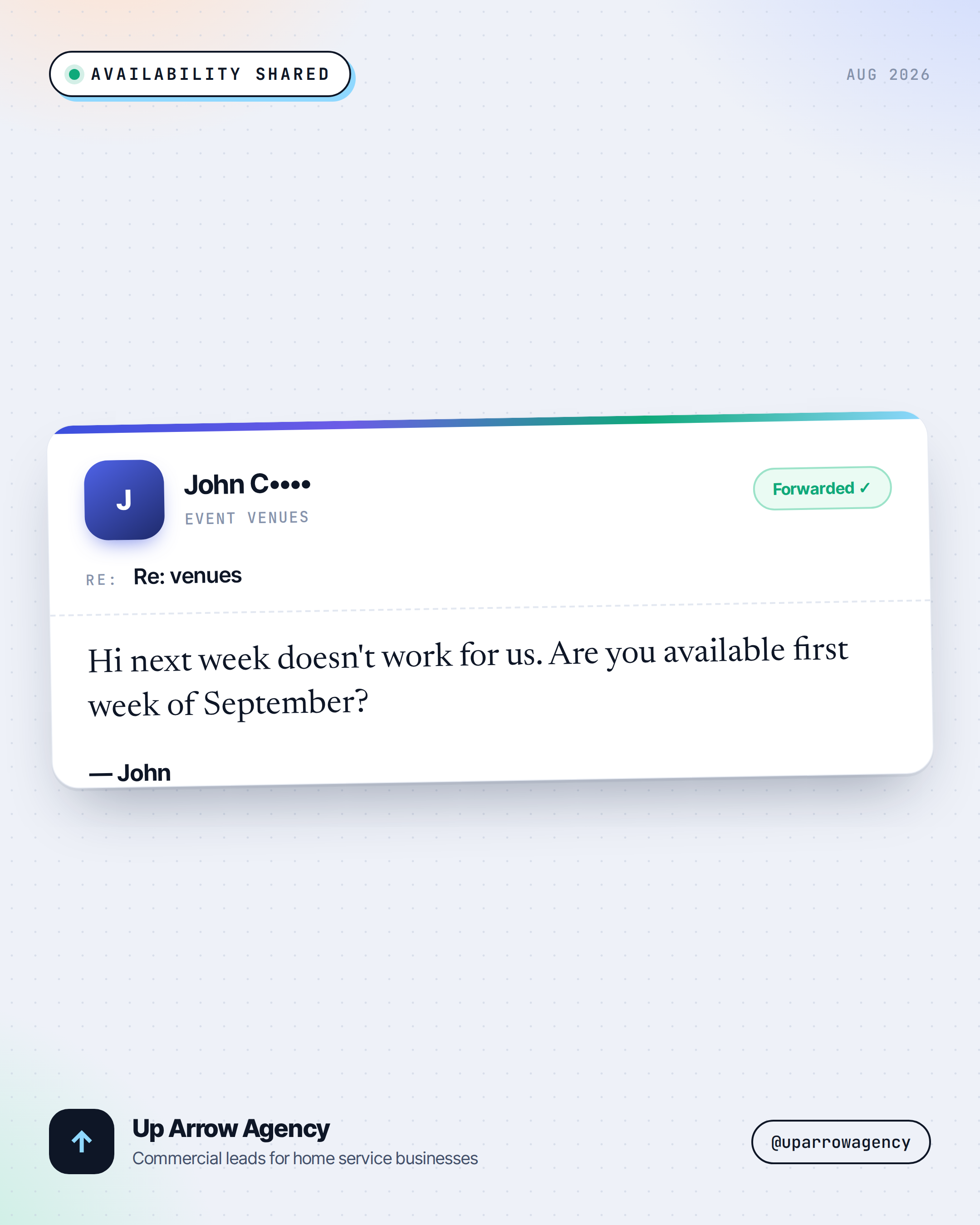
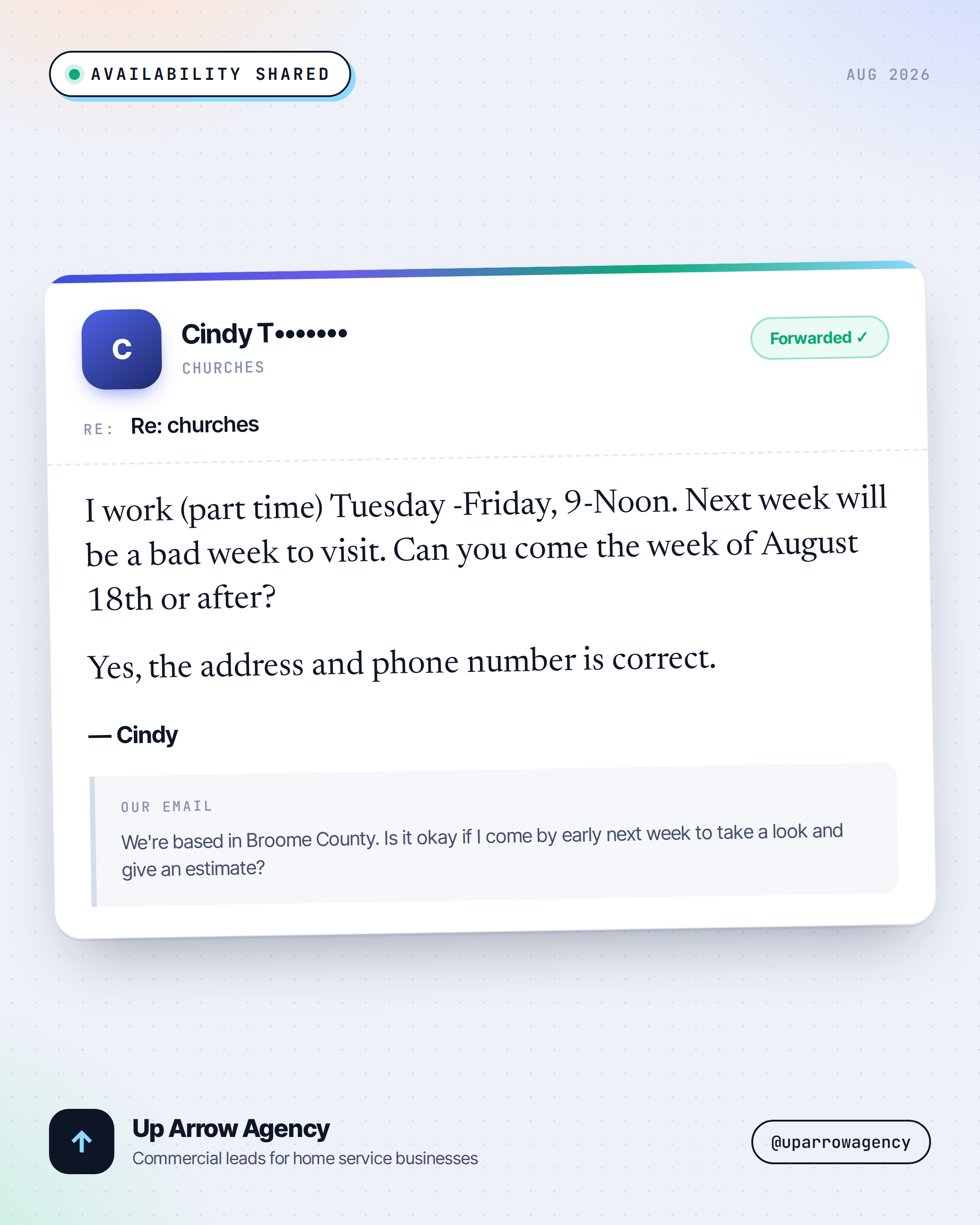
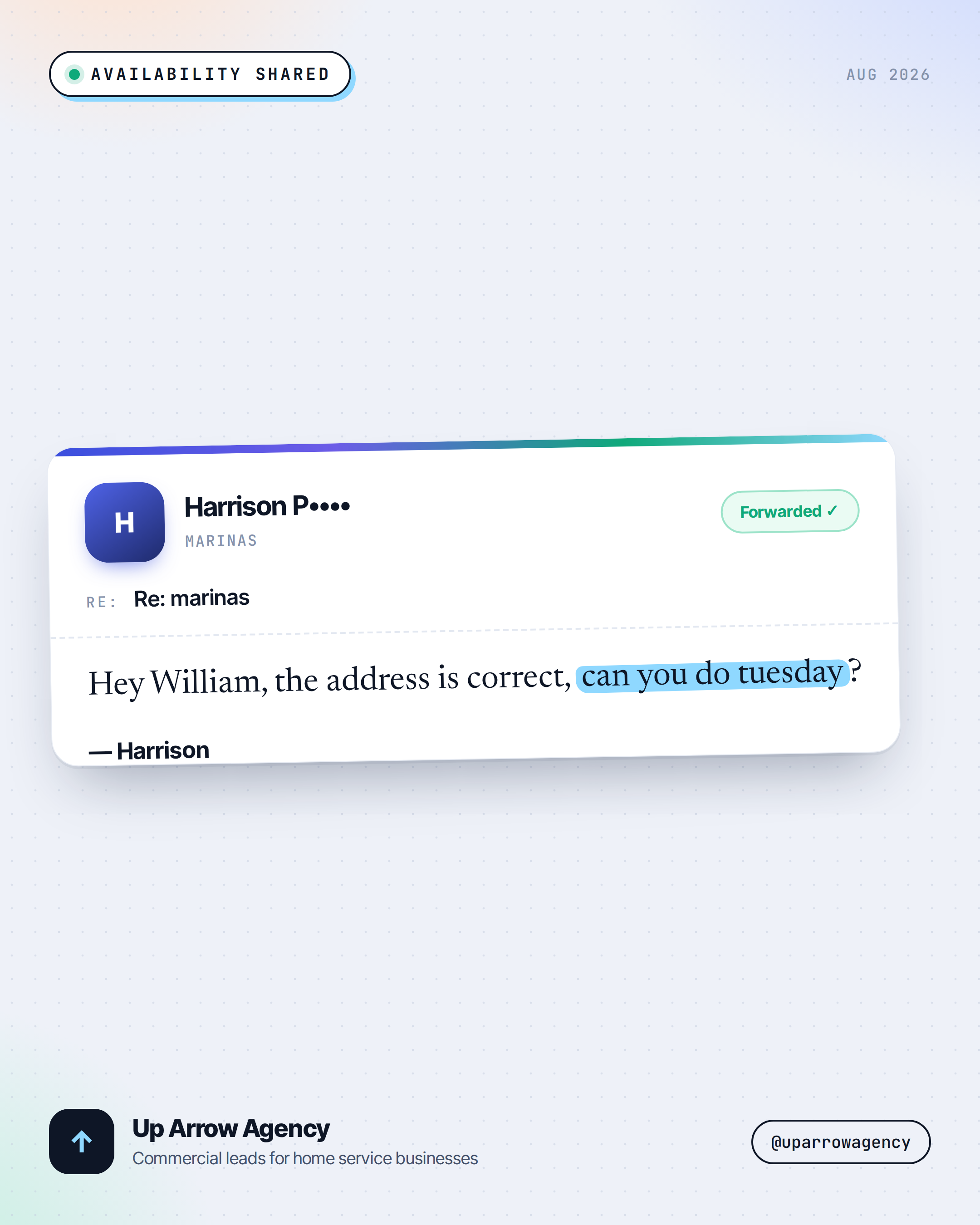
Here is a pattern worth knowing before you send a single message. Among 305 genuine inbound replies from restaurant and food-service prospects between April 2026 and November 2026, 135 were forwards to the decision-maker. Another 117 asked about pricing or a quote, 48 offered a call or availability, and 29 asked for a walkthrough or site visit.
Read that the right way. A forward means someone with limited authority thought the offer was worth passing up the chain. A pricing question is the easiest thing to ask when you don't know a vendor yet. Neither means the buyer only cares about the number. Both are invitations to start the real conversation.
Answer a pricing question by booking the walkthrough
When a restaurant replies asking what it costs, the instinct is to send a number. Resist it. A price with no context turns you into a line item next to every other quote, and a restaurant's cost depends on things you can't see from an email: kitchen size, cooking volume, floor and drain condition, how much deep cleaning has been skipped.
Instead, say something like: pricing depends on the space, so the easiest way to give an accurate number is a short walkthrough. Offer two times. It's a normal, helpful answer, and most owners take it that way.
The walkthrough is where the sale actually happens. You learn what keeps them up at night (a failed inspection, a vendor who no-showed, grease buildup they've been ignoring). You show you know kitchens. You meet the person who will see your work every week. Then you present a tailored scope and price that fits what you saw, with the risk on your side: a defined start, a clear scope, and a way out if it isn't right.
What to do on the walkthrough
- Ask what their last inspection or vendor experience looked like before you talk about what you do.
- Walk the kitchen, back of house, restrooms and dining area, and take notes on what you see.
- Point out one or two things they haven't asked about. That's how you show you know the work.
- Agree on a next step before you leave: when the written scope arrives and when you'll talk again.
From first service to recurring contract
The first month decides whether the contract renews. Do the first clean to a standard they notice, send the service record, and check in at the end of week one. Then ask about the other locations or the neighboring operation.
That's how a single campaign turns into long-term revenue. One of our clients landed a $38K/year recurring cleaning contract from a single campaign, and the pattern behind it is the same as here: reply, walkthrough, trust, scope, contract.
If your business also serves outdoor and exterior work at restaurants, such as patios and parking areas, the same approach carries over, as covered in our guide on how to get pressure washing contracts.
A short action plan
- Pick one segment: independents, a local group, or multi-unit operators.
- Write a one-page scope and assemble photos, insurance and references.
- Reach the owner, GM or operations lead directly with a short, specific offer.
- Answer every pricing question by offering a walkthrough.
- Present a tailored scope with a low-risk start, then earn the recurring contract in month one.
Frequently asked questions
Who makes the decision on restaurant cleaning contracts?
Should I send a price when a restaurant asks for a quote?
How do I find restaurants that need a commercial cleaner?
Do I need special certifications to win restaurant cleaning contracts?
Want these replies landing in your inbox?
We run the whole cold-email engine for commercial cleaning & pressure washing companies — targeting, inboxes, and booking — so you get decision-maker conversations without ads or cold calling.
Book a 30-minute callMore from the guides: How to get commercial cleaning contracts · Lead generation: DIY vs. done-for-you · All guides