
Key takeaways
- Commercial carpet cleaning contracts are won by getting in front of the person who owns the floors: a property manager, facilities manager, or office manager. Not by posting more ads.
- A request for a quote is a buying signal, not a verdict on price. The best response is an offer to walk the building, because that visit is where you learn the situation and earn trust.
- Show your process, not just your equipment. Cite a recognized standard like ANSI/IICRC S100, and be ready to explain how you inspect your own work.
- Carpet work is easiest to sell as a recurring program (scheduled deep cleans plus spot response), because that is how a building actually uses it.
- Cold email works for this because the buyer is a known job title at a known type of building. Reach the right person with a short message and an easy next step.
The way to win commercial carpet cleaning contracts is to get a conversation with the person who is responsible for the building's floors, then turn that conversation into an on-site walkthrough where you show you understand the space and can take the work off their plate. Equipment and a low number do not win these accounts. Trust does, and trust gets built in person, with the person who has to answer for the carpet if it goes badly.
That sounds obvious, and most carpet cleaners still don't do it. They wait for jobs to come in, bid against two or three other vendors on a spec sheet, and wonder why the work stays one-off. Here is the longer version.
Who actually signs commercial carpet cleaning contracts
It is rarely the owner of the building. In practice you are dealing with one of three people:
- Property managers running office buildings or multi-tenant properties, who handle common areas, lobbies, and corridors.
- Facilities managers at larger offices, medical-adjacent sites, schools, and corporate campuses, who tend to own a vendor list and a budget line.
- Office or operations managers at smaller companies, who often handle cleaning because nobody else will.
Each has a different pressure. The property manager is thinking about tenant complaints and lease turnover. The facilities manager is thinking about audits, scope, and a vendor who doesn't create new problems. The office manager just wants it handled without a project. A good first message names the problem that fits their seat. It does not pitch carpet in the abstract.
What a facilities manager is really evaluating
Facilities management guidance on outsourcing cleaning is blunt that the scope of work is the heart of the specification, and that managers who let bidders define the job end up dependent on the bidders' own assessment (see FMLink's guide to outsourcing cleaning services, adapted from BOMI International course material). It also recommends checking the experience of the crew supervisor and running inspections, some of them unannounced.
Read that from the buyer's chair. They are trying to avoid being surprised. So the vendor who wins is the one who makes the job feel predictable: a clear scope, a named person in charge, a way to check the work. That is a trust problem, and you solve it by being someone they have met and who has already thought about their building.
Show a process they can recognize
Carpet has a published professional benchmark. The ANSI/IICRC S100 standard covers professional maintenance and cleaning of commercial and residential textile floor coverings. A trade announcement of the 2021 edition lists soil management and pre- and post-cleaning inspections among its components (FMLink coverage of S100). You do not need to recite a standard at a buyer. But being able to say "we inspect before and after, and here is how" is the kind of specific answer that separates a professional from a guy with a machine.
The Carpet and Rug Institute also frames cleaning as part of protecting carpet life, recommending regular vacuuming plus professional deep cleaning on a schedule (CRI cleaning and maintenance guidance). Treat that as a trade body's general advice, not a contract rule, but it supports the recurring-program pitch below.
Sell a recurring carpet program, not a one-off job
A single deep clean is easy to buy and easy to forget. A program is harder to replace. A typical structure for an office or multi-site property might include scheduled deep cleans by zone, high-traffic corridor maintenance between them, and a response option for spills and stains. Spot treatment and emergency response are part of why a manager keeps you on after the first visit.
This is also where the bigger contracts come from. A client of ours closed a $38K/year recurring cleaning contract from a single campaign, and another saw $23K in commercial carpet-cleaning jobs from one campaign. Neither came from a lower price. They came from reaching the right buyer, getting the conversation, and then showing up well.
How to get commercial carpet cleaning contracts without ads or referrals
Referrals are great and you cannot schedule them. Ads pull in a lot of residential traffic that is no use to you. Cold email suits this work because the buyer is a known job title at a known type of building, so you can reach them directly with a short, specific message.
The pattern that works, in order:
- Build a tight list. Property managers, facilities managers, and office managers at buildings with real carpeted square footage, in the area you can serve.
- Write a short first email. One problem, one offer, one easy next step. No attachments, no brochure. For the full approach, see our guide to cold email for cleaning companies.
- Reply fast and warmly. The first reply is the opening of a relationship, not the close of a transaction.
- Offer a walkthrough. Always. More on this below.
- Follow up on the visit. A tailored proposal after the walkthrough lands very differently from a number sent cold.
For the wider playbook on winning this kind of work, start with our pillar guide on how to get commercial cleaning contracts.
What carpet prospects actually say back
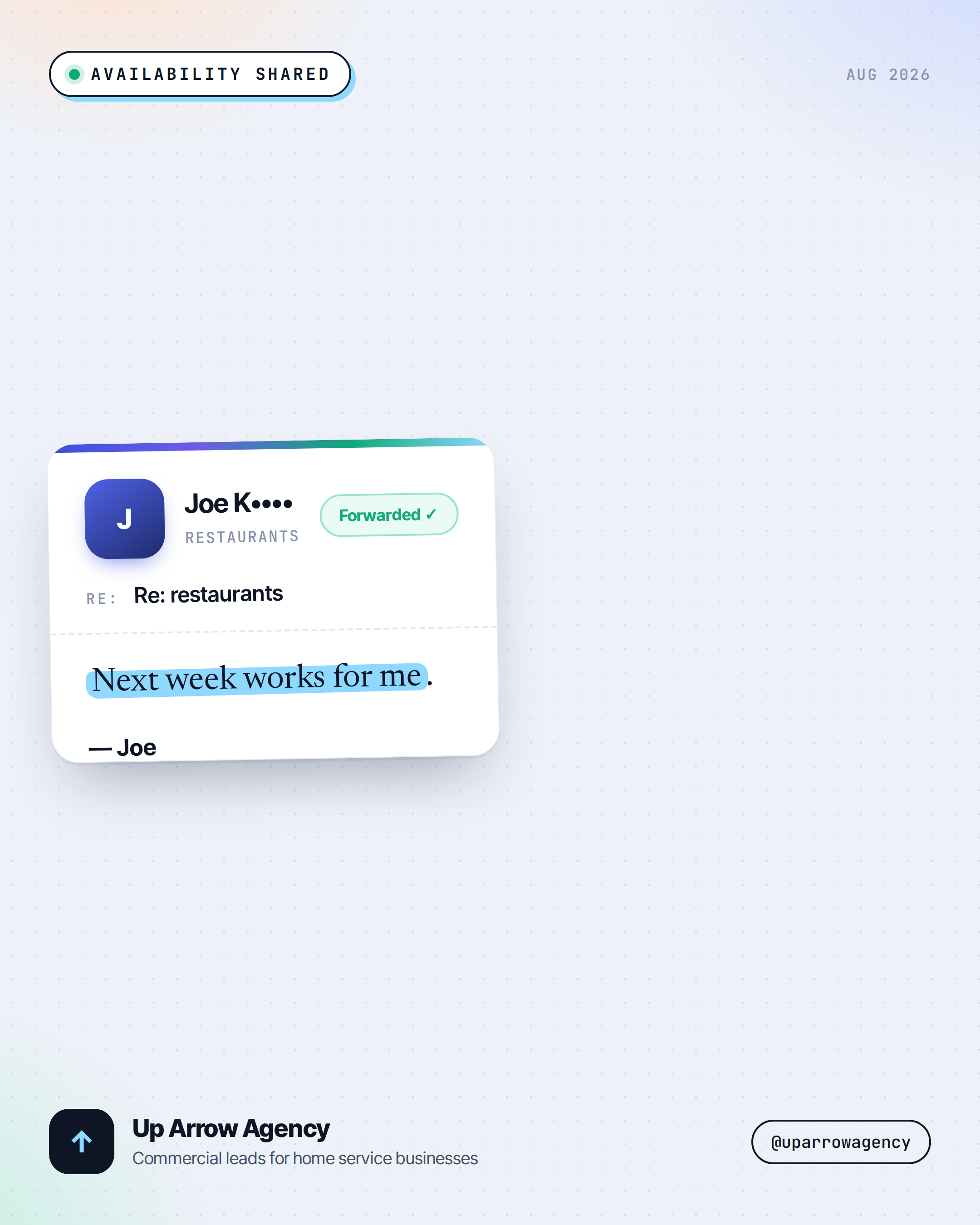
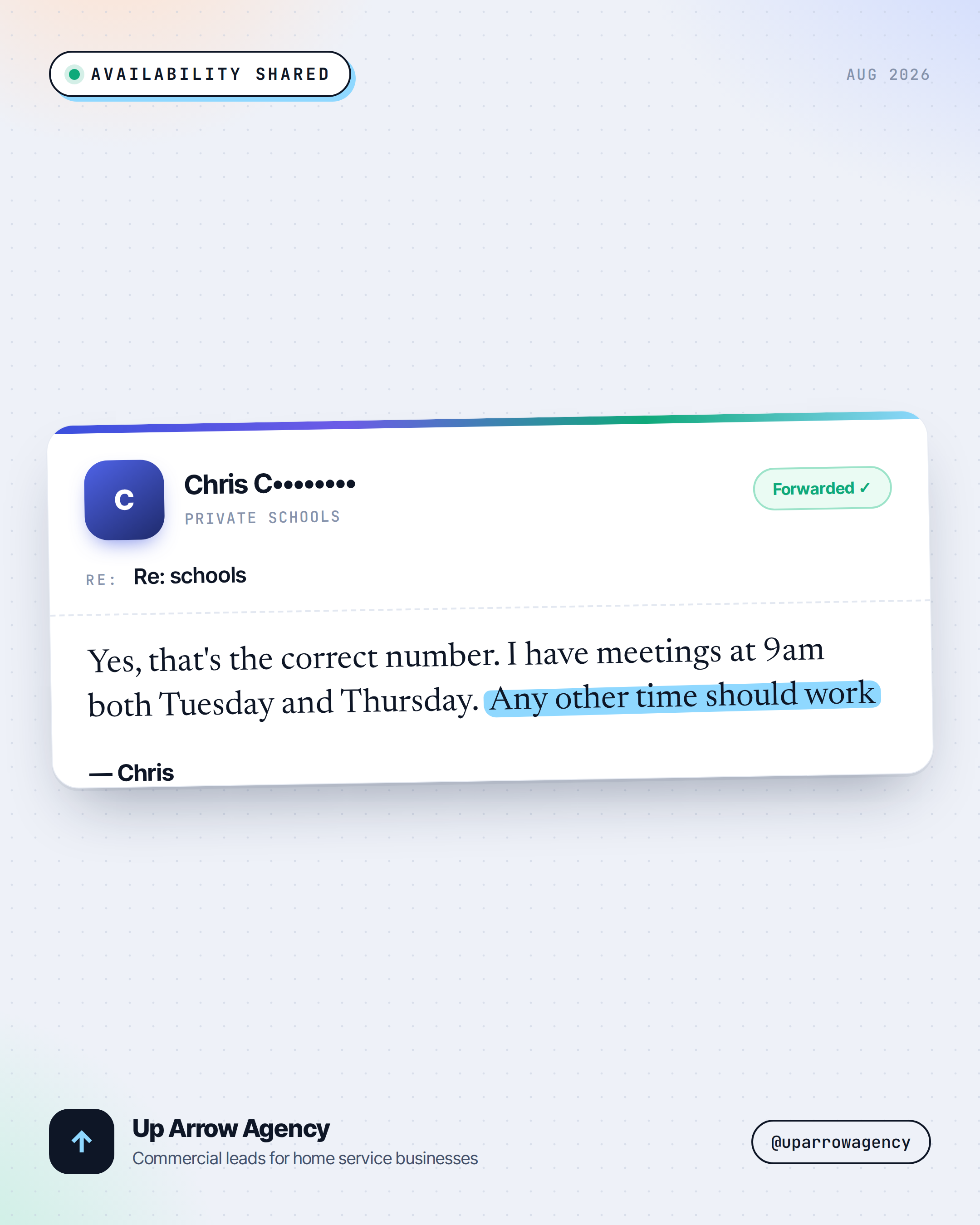
We looked at 259 genuine inbound replies from carpet and upholstery prospects between April 2026 and November 2026. A single reply can fall into more than one bucket, so these counts overlap:
| Reply type | Count |
|---|---|
| Asked about pricing or a quote | 221 |
| Forwarded to the decision-maker | 92 |
| Offered a call or availability | 57 |
| Asked for a walkthrough or site visit | 17 |
Most replies ask about price. It would be easy to read that as "these buyers just want a number." We read it differently. "How much?" is the easiest first question to ask when you don't yet know the vendor. It is an invitation. The forwards are even more telling: nearly a hundred times, someone handed us to the person who decides, which means they were willing to put their name behind a conversation.
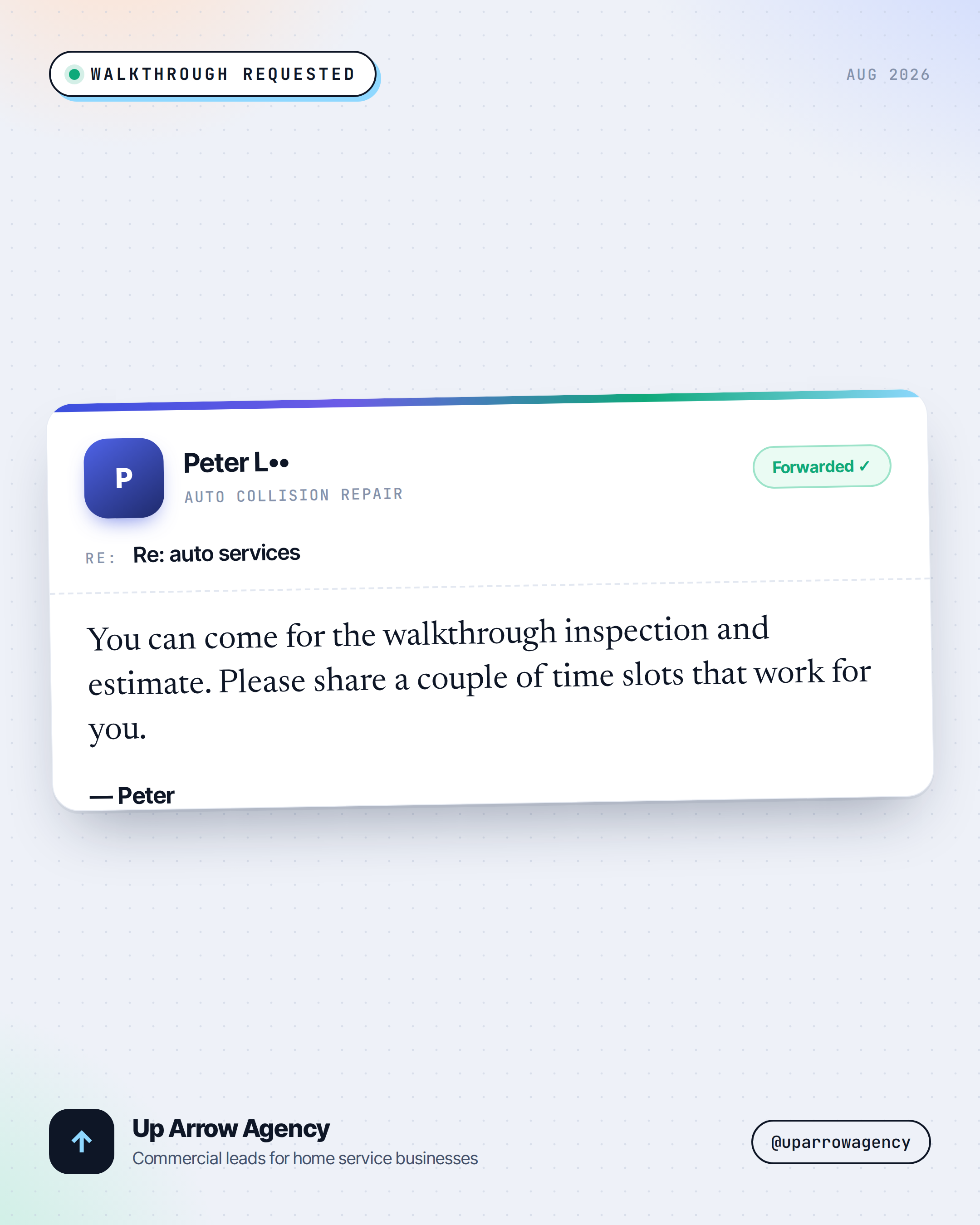
Only a small share asked for a walkthrough on their own, which is exactly why you offer it. Most buyers will not request the high-value step. You have to propose it.
Why the walkthrough wins the contract
If someone asks for pricing, the best next move is to ask to see the space. Carpet cost depends on square footage, soil load, foot traffic, fiber type, furniture, access hours, and what the manager is actually worried about. Quoting blind ignores all of that and turns you into a line item that can be undercut.
The walkthrough does four jobs at once:
- You learn what they care about: lobby appearance, a bad stain history, a lease renewal, an upcoming inspection.
- You show you know the work by pointing at the high-traffic path they hadn't thought about.
- You meet in person, which is how a facilities manager decides if they can rely on you.
- You can take the risk off them with a clear scope, a named lead, and a simple way to check the results.
Then your proposal is tailored to the building they just showed you. That is a very different document from a generic rate sheet. The price is still on it, but it is no longer the first thing they judge you on.
Make the yes easy
A free walkthrough with no obligation lowers the effort and risk for the buyer. Keep the ask small, offer two time windows, and handle everything else yourself. The less the manager has to organize, the more likely the visit happens.
A composite example
Picture a facilities manager at a mid-size office with several floors. They reply to a short email with a one-line question about cost. A vendor who sends a number gets compared against two others by Friday. A vendor who answers the question honestly and offers a short walkthrough this week gets to see the elevator lobby, the corridor that takes the worst of the foot traffic, and the conference area the manager is nervous about. By the end of the visit, the manager has a person in mind, not just a quote. That is the whole difference.
If you want to see how this plays out across the broader category, our guides on commercial cleaning lead generation and janitorial contracts cover the same sales motion for adjacent services.
The short version
Get the right person's attention, answer their first question like a human, and bring them into a walkthrough. Show a process they can inspect, propose a recurring program, and make the next step small. Results follow from that: other campaigns we have run produced 48 commercial leads in 6 weeks and 12 commercial opportunities in 26 days, and each of those started with a conversation, not a price list.
Frequently asked questions
How do you find commercial carpet cleaning contracts?
Should I send a price when a prospect asks for a quote?
What credentials help win commercial carpet cleaning contracts?
Are carpet cleaning contracts usually recurring?
Want these replies landing in your inbox?
We run the whole cold-email engine for commercial cleaning & pressure washing companies — targeting, inboxes, and booking — so you get decision-maker conversations without ads or cold calling.
Book a 30-minute callMore from the guides: How to get commercial cleaning contracts · Lead generation: DIY vs. done-for-you · All guides